
Mammal · GBIF taxon 2437437
Colorado Chipmunk
Tamias quadrivittatusColorado chipmunks dart across boulder fields and subalpine forest floors in search of pine seeds, berries, and acorns. Active throughout the spring and summer, these vocal rodents construct underground burrows or hollow log dens to store cache reserves for cold mountain winters. Their sharp alarm trills warn nearby kin of approaching raptors or land predators.
DiurnalForest DwellerMammal
—observations
—countries
—peak records
Least ConcernConservation statusIUCN Red List categoriesLCNTVUENCREWEXLeast ConcernRed List categories, explained →
Diet & prey
- Conifer seeds
- Berries
- Insects
Predators
- Hawks
- Coyotes
- Weasels
ThreatsHabitat fragmentation, severe wildfires, climate change
HabitatsConiferous forests, pinyon-juniper woodlands, rocky canyons, shrublands
Life span3–7 years in the wild
Classification
- FamilySciuridae
- SpeciesTamias quadrivittatus
Range data is not available yet.
Interaction riskLow
- Low
- Moderate
- High
- Very high
- Why interaction risk is low
- Capable of a quick bite if cornered or handled; observe from a safe distance.
Responsible observation
- Spotting: Look for active foraging around rocky outcrops and fallen logs during early morning.
- Respecting Space: Avoid feeding human snacks to prevent habituation and health problems.
- Handling: Keep a safe distance and never attempt to handle wild chipmunks.
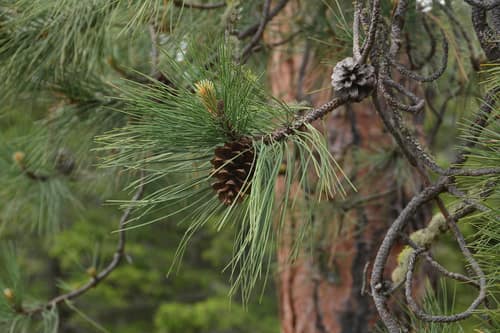
Food Source no rights reserved, uploaded by Julia Carr · cc0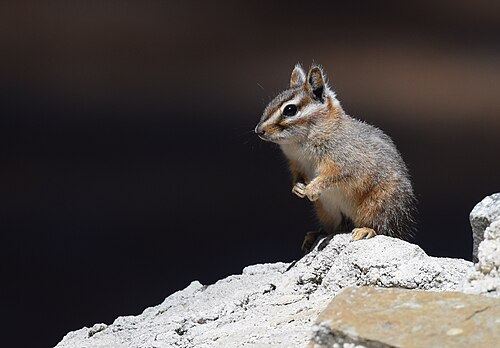
Close Relative Andy Reago & Chrissy McClarren / CC BY 2.0 · cc-by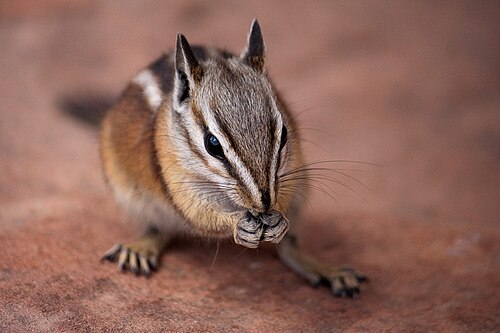
Close Relative Tdomhan / CC BY-SA 3.0 · cc-by-sa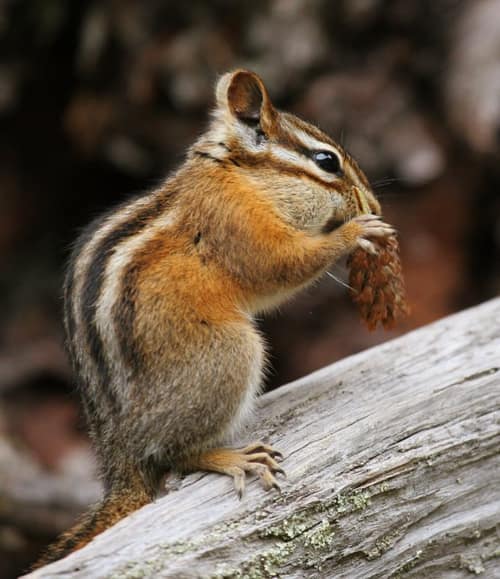
Close Relative Phil Armitage / Public domain · cc0
Help improve the field guideSomething wrong?
Checking your Fauna account…Report a name, category, or profile issue for review.