
Mammal
Cliff Chipmunk
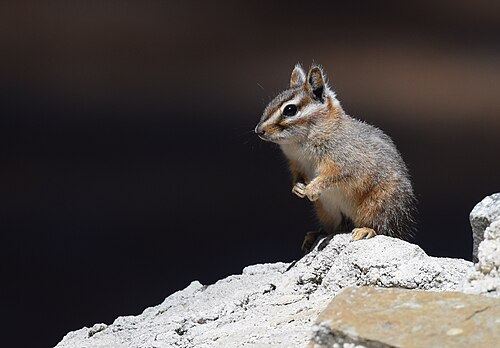
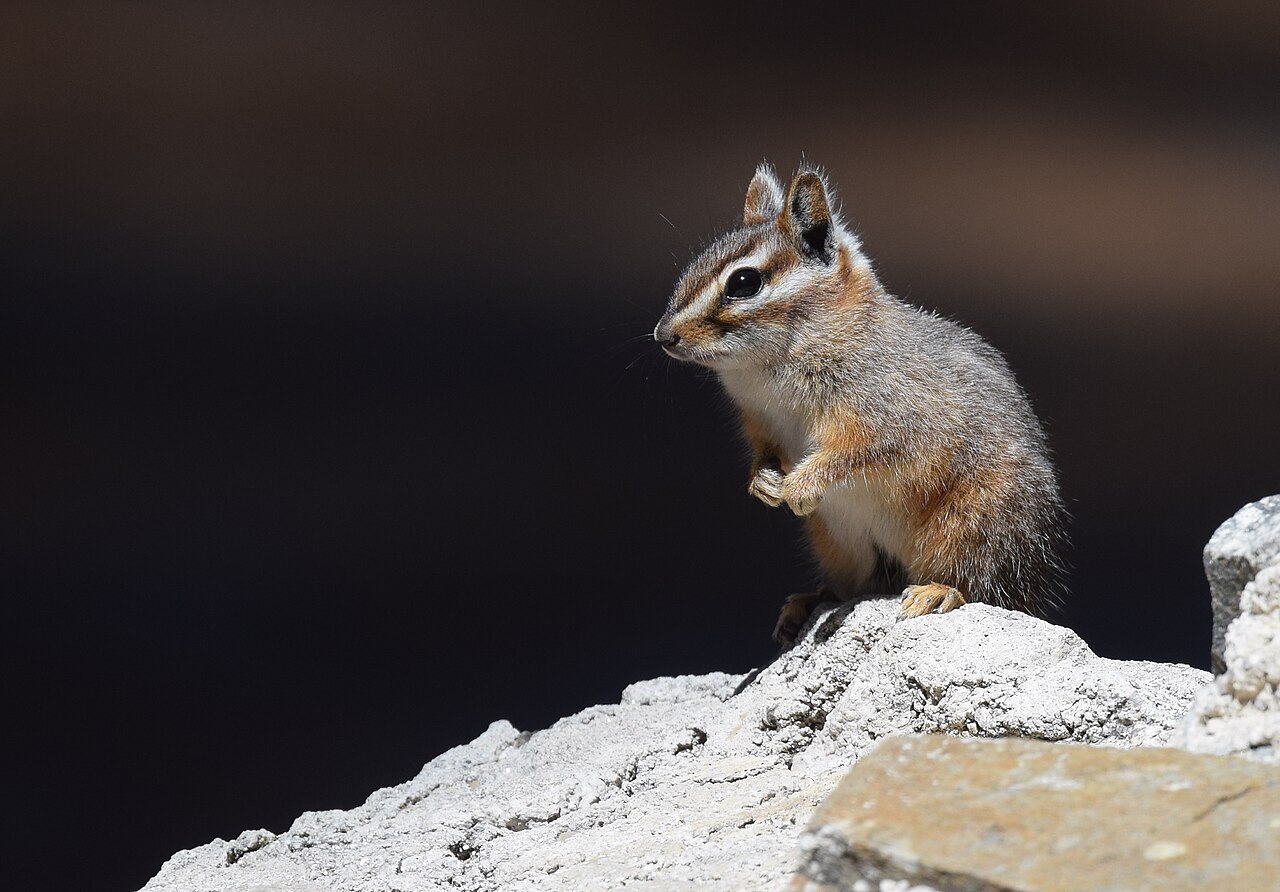
Tamias dorsalisCliff chipmunks dart across sheer rock faces and talus slopes with remarkable agility, flicking their bushy tails side to side as they navigate vertical sandstone cliffs. Unlike ground-dwelling relatives that store copious body fat, they rely entirely on winter food caches stashed deep in rocky crevices and subterranean burrows. When alarmed, they produce sharp, piercing chips that echo across canyon walls to alert nearby neighbors to overhead raptors.
DiurnalAgile ClimberDesert Native
—observations
—countries
—peak records
Least ConcernConservation statusIUCN Red List categoriesLCNTVUENCREWEXLeast ConcernRed List categories, explained →
Diet & preyPinyon pine seeds, Juniper berries, Beetles and grasshoppers
Predators
- Red-tailed Hawk
- Bobcat
- Coyote
ThreatsHabitat disruption from wildfire, severe drought, and climate shifts altering pine cone yields
HabitatsCliffs, canyon rims, boulder piles, and pinyon-juniper woodlands
Life span3–5 years in the wild
Classification
- FamilySciuridae
- SpeciesTamias dorsalis
Range data is not available yet.
Interaction riskModerate
- Low
- Moderate
- High
- Very high
- Why interaction risk is moderate
- Wild rodents can bite defensively and carry flea-borne pathogens; observe from a respectful distance without feeding.
- Why it is dangerous
- Wild rodents can harbor fleas carrying Yersinia pestis (plague) or shed other zoonotic pathogens, and deliver painful defensive bites if touched.
- How to recognize a risky encounter
- Distinguished by faint, washed-out dorsal stripes and a prominent greyish back bordered by steep canyon rock habitat.
- What to do
- Maintain several meters of space, never attempt to feed or corner them, and secure all camping food supplies.
Responsible observation
- Scan rock faces: Look for quick, jerky movement along vertical cracks and boulders rather than flat dirt trails.
- Listen for alarm calls: High-pitched whistling chips often betray an individual perched atop a canyon lookout.
- Do not feed: Hand-feeding habituates chipmunks to human food and increases disease transmission risks.
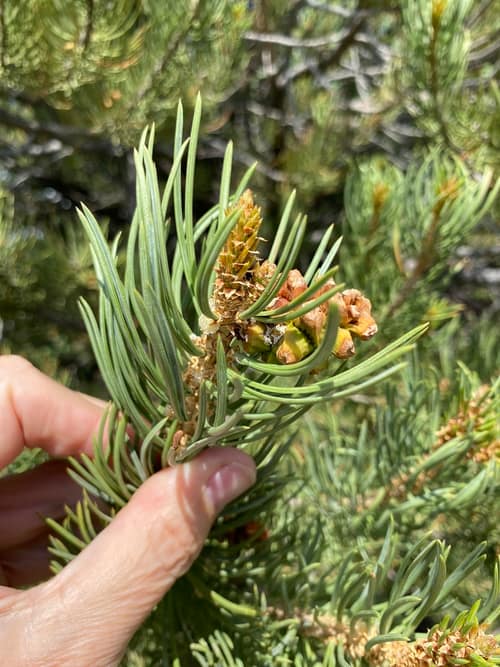
Host Plant no rights reserved · cc0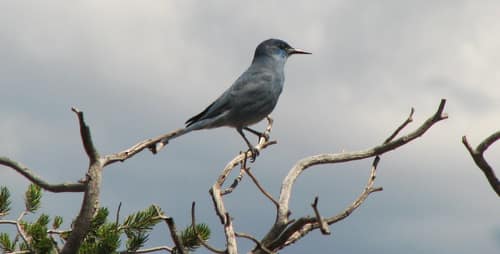
Competitor "Gymnorhinus cyanocephalus (pinyon jay) (Canyon de Chelly National Monument, Arizona, USA)" by James St. John is licensed under CC BY 2.0. To view a copy of this license, visit https://creativecommons.org/licenses/by/2.0/. · cc-by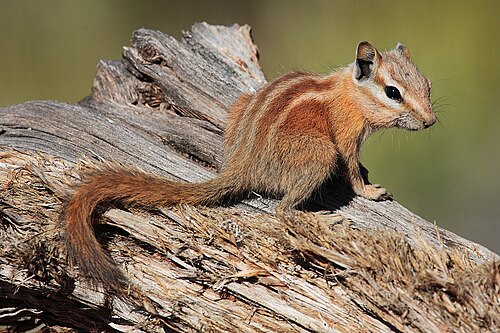
Close Relative Mdf / CC BY-SA 3.0 · cc-by-sa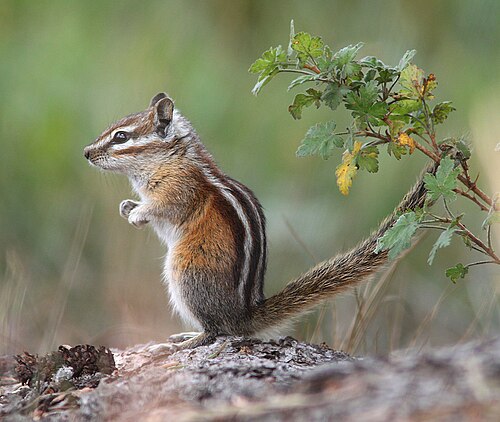
Close Relative ALAN SCHMIERER / CC0 · cc0
Help improve the field guideSomething wrong?
Checking your Fauna account…Report a name, category, or profile issue for review.