
Mammal
Northern Flying Squirrel
Glaucomys sabrinusAlso known as Hudsonian Flying Squirrel
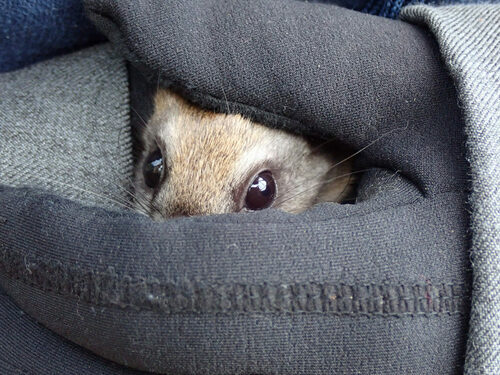
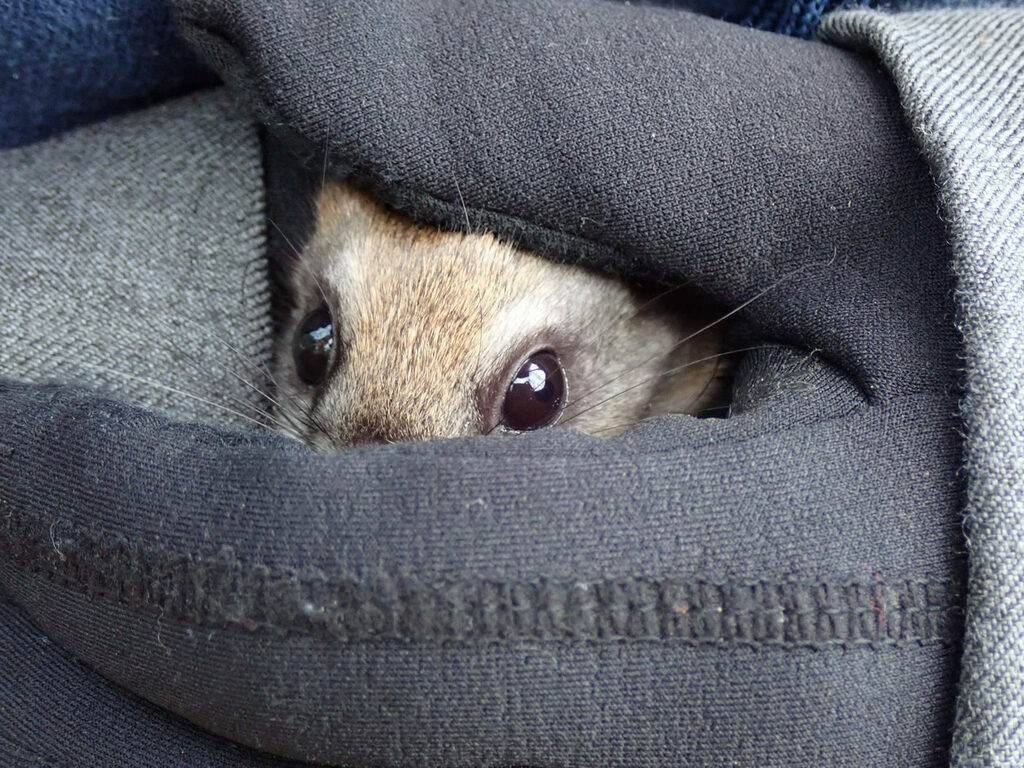
Northern flying squirrels navigate dense canopy mid-layers by extending a furry membrane called a patagium, enabling glides of up to 45 meters between trees. These strictly nocturnal rodents rely heavily on subterranean truffles, playing a critical ecological role by spreading beneficial fungal spores across conifer forests. During harsh winter months, small groups huddle together inside hollow snags or lichen-lined nests to preserve body heat.
NocturnalArborealGliding
—observations
—countries
—peak records
Least ConcernConservation statusIUCN Red List categoriesLCNTVUENCREWEXLeast ConcernRed List categories, explained →
Diet & preyFungi and Truffles, Tree Lichens, Tree Sap
Predators
- Great Horned Owl
- American Marten
- Domestic Cat
ThreatsDeforestation, habitat fragmentation, and climate warming
HabitatsConiferous and mixed boreal forests
Life span4–7 years
Classification
- FamilySciuridae
- SpeciesGlaucomys sabrinus
Native
Interaction riskLow
- Low
- Moderate
- High
- Very high
- Why interaction risk is low
- Safe to observe at a distance; can deliver a sharp bite if handled.
Responsible observation
- Night Listening: Listen for high-pitched chirps and soft scratching on bark after dark.
- Red Light: Use a red-filtered flashlight when scanning forest canopies at night.
- Snag Preservation: Leave dead standing trees in place to preserve essential nesting hollows.
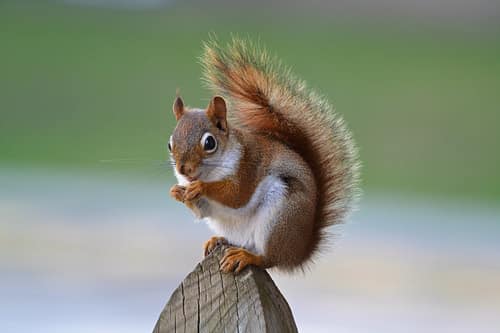
Competitor (c) DaPuglet, some rights reserved (CC BY-SA) · cc-by-sa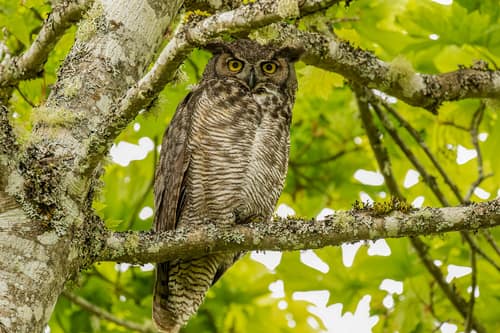
Predator "Great Horned Owl, the first I've seen in decent light this year. Didn't want to disturb it for too long so we continued along the trail" by island deborah- is licensed under CC BY-SA 2.0. To view a copy of this license, visit https://creativecommons.org/licenses/by-sa/2.0/. · cc-by-sa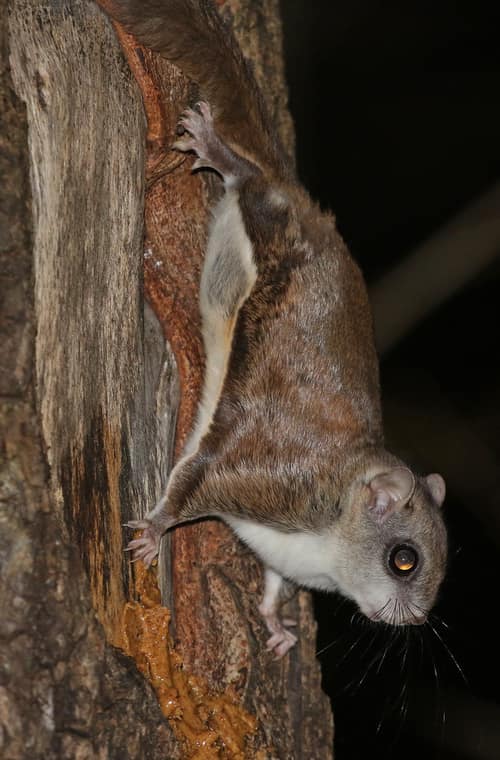
Close Relative "Southern Flying Squirrel - Glaucomys volans, Long Branch Nature Center, Arlington, Virginia, December 22, 2020" by Judy Gallagher is licensed under CC BY 2.0. To view a copy of this license, visit https://creativecommons.org/licenses/by/2.0/. · cc-by
Help improve the field guideSomething wrong?
Checking your Fauna account…Report a name, category, or profile issue for review.