
Mammal
Four-toed Hedgehog
Atelerix albiventrisAlso known as African Pygmy Hedgehog, White-bellied Hedgehog
Four-toed hedgehogs are solitary, nocturnal insectivores that roam across open savannahs and semi-arid scrublands each night in search of prey. When startled, they roll into a tight defensive ball using a specialized orbicularis muscle, presenting an impenetrable shield of sharp, banded quills. They frequently practice self-anointing, producing frothy saliva upon encountering unfamiliar scents and smearing it meticulously over their spines.
NocturnalSpinyInsectivore
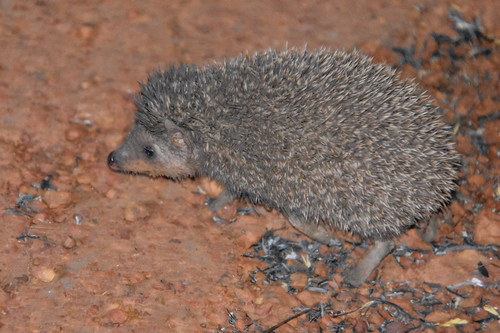
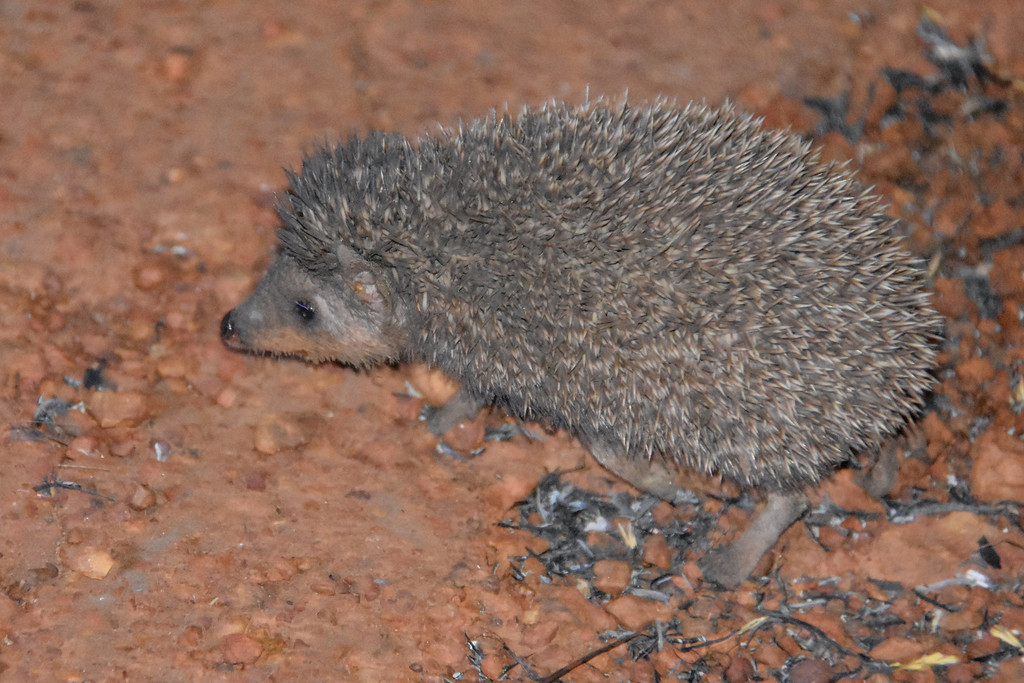
—observations
—countries
—peak records
Least ConcernConservation statusIUCN Red List categoriesLCNTVUENCREWEXLeast ConcernRed List categories, explained →
Diet & preyScorpions, Dung Beetles, Termites
Predators
- Verreaux's Eagle-Owl
- Spotted Hyena
- Honey Badger
ThreatsHabitat conversion, vehicle collisions, severe drought, and local traditional harvest
HabitatsSavannahs, semi-arid scrublands, dry grasslands, and light agricultural woodland
Life span3–5 years in the wild; up to 8–10 years in captivity
Classification
- OrderErinaceomorpha
- FamilyErinaceidae
- GenusAtelerix
- SpeciesAtelerix albiventris
Range data is not available yet.
Interaction riskLow
- Low
- Moderate
- High
- Very high
- Why interaction risk is low
- Spines can prick skin and cornered individuals may bite; observe without touching or handling.
- Why it is dangerous
- Possesses sharp keratin spines that easily pierce soft skin and sharp incisors that deliver a painful defensive bite.
- How to recognize a risky encounter
- Look for a pale underside, a dark facial mask, banded spines, and hind feet with only four toes.
- What to do
- Maintain a respectful observation distance and do not reach into leaf litter or attempt to hold a curled hedgehog.
Responsible observation
- Use a red light: Watch nocturnal foraging quietly after dusk without blinding sensitive eyes.
- Give ample space: Avoid cornering or attempting to pick up wild individuals to prevent curling stress.
- Listen carefully: Trace soft rustling and snuffling noises along scrub borders during warm nights.
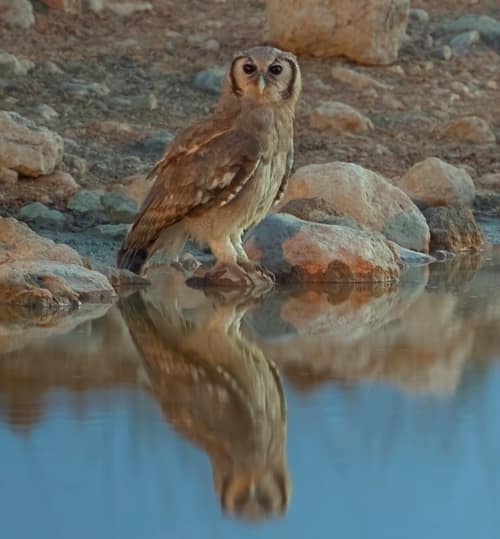
Predator Yathin S Krishnappa / CC BY-SA 3.0 · cc-by-sa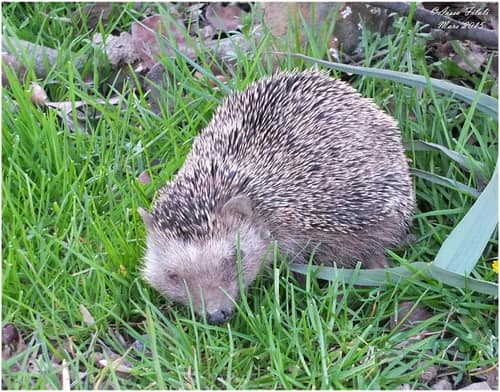
Close Relative (c) Aissa Djamel Filali, some rights reserved (CC BY-SA), uploaded by Aissa Djamel Filali · cc-by-sa Image unavailable
Close Relative 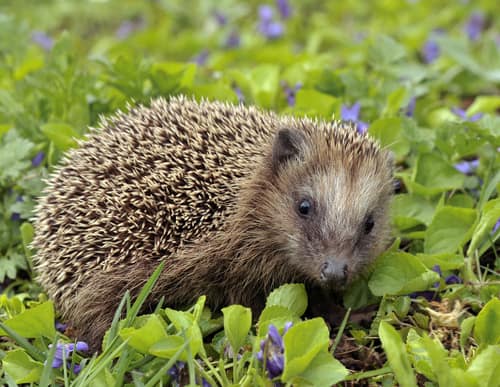
Same Family (c) Michael Gäbler, some rights reserved (CC BY-SA) · cc-by-sa
Help improve the field guideSomething wrong?
Checking your Fauna account…Report a name, category, or profile issue for review.