Also known as Red-backed Squirrel Monkey, Mono Titi
Central American squirrel monkeys travel through the subcanopy in vocal troops of up to seventy individuals, foraging intensely for insects and ripe fruits while maintaining contact through high-pitched chirps. Unlike many other Neotropical primates, their long, black-tipped tails are used strictly for balance rather than grasping branches as they bound between slender limbs. Mating is tightly synchronized to the dry season so that females give birth when arthropod abundance peaks, ensuring infants gain weight rapidly during the rainy months.
ThreatsHabitat fragmentation, deforestation, electrocution on power lines, and road collisions
HabitatsPacific lowland rainforests, secondary gallery forests, and coastal mangroves
Life span15–20 years
Size / weightNot available
Classification
FamilyCebidae
SpeciesSaimiri oerstedii
Range & activity
Native
Safe observation
Interaction riskModerate
Low
Moderate
High
Very high
Why interaction risk is moderate
Wild primates can bite defensively and transmit zoonotic pathogens; observe peacefully from a safe distance.
Why it is dangerous
Bites or scratches inflicted by startled individuals can cause lacerations and transmit zoonotic pathogens, including bacterial infections and intestinal parasites.
How to recognize a risky encounter
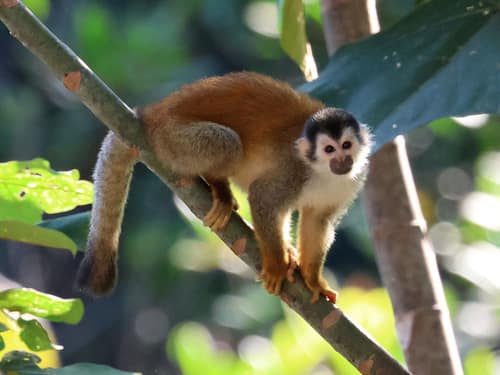
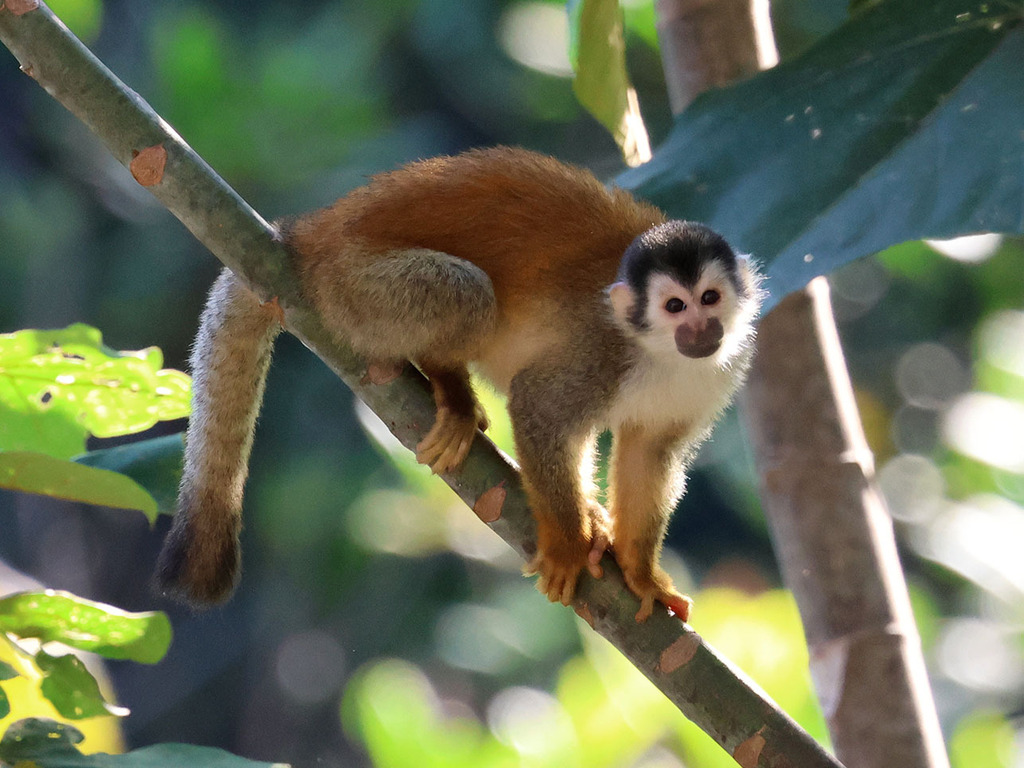
Recognizable by their small size, golden-orange back, white face mask, and black muzzle as they scurry through the trees.
What to do
Maintain a minimum distance of 5 meters, never attempt to touch habituated individuals, and back away slowly if a troop moves overhead.
What to notice
Look for fast-moving, noisy bands of small orange-and-grey monkeys in the coastal forests of southwestern Costa Rica and adjacent Panama.
Support conservation
Stay on marked park trails, keep noise to a minimum, and support local arboreal rope-bridge initiatives that connect fragmented canopy patches.
Responsible observation
Patience at Forest Edges: Scan secondary forest borders and mangrove fringes early in the morning when troops are actively foraging.
Strict No-Feeding: Never offer food, which disrupts natural hunting habits and encourages risky road crossings.
Binocular Viewing: Watch from established trails with optics to observe grooming and leaping behaviors without triggering alarm calls.

 1 / 7
1 / 7