
Mammal · GBIF taxon 2436643
Central American Spider Monkey
Ateles geoffroyiAlso known as Geoffroy's Spider Monkey, Black-handed Spider Monkey
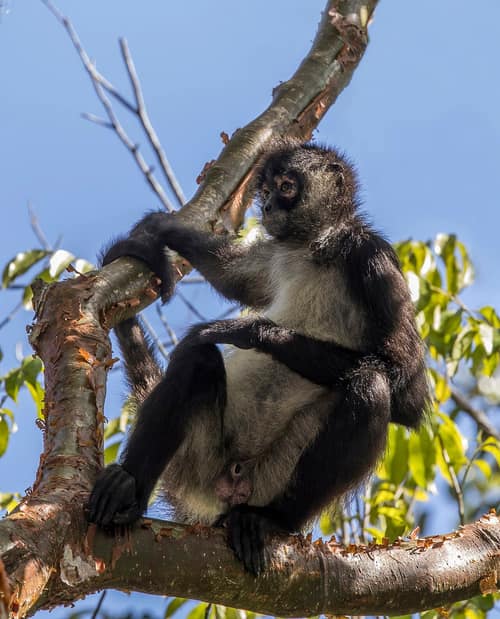
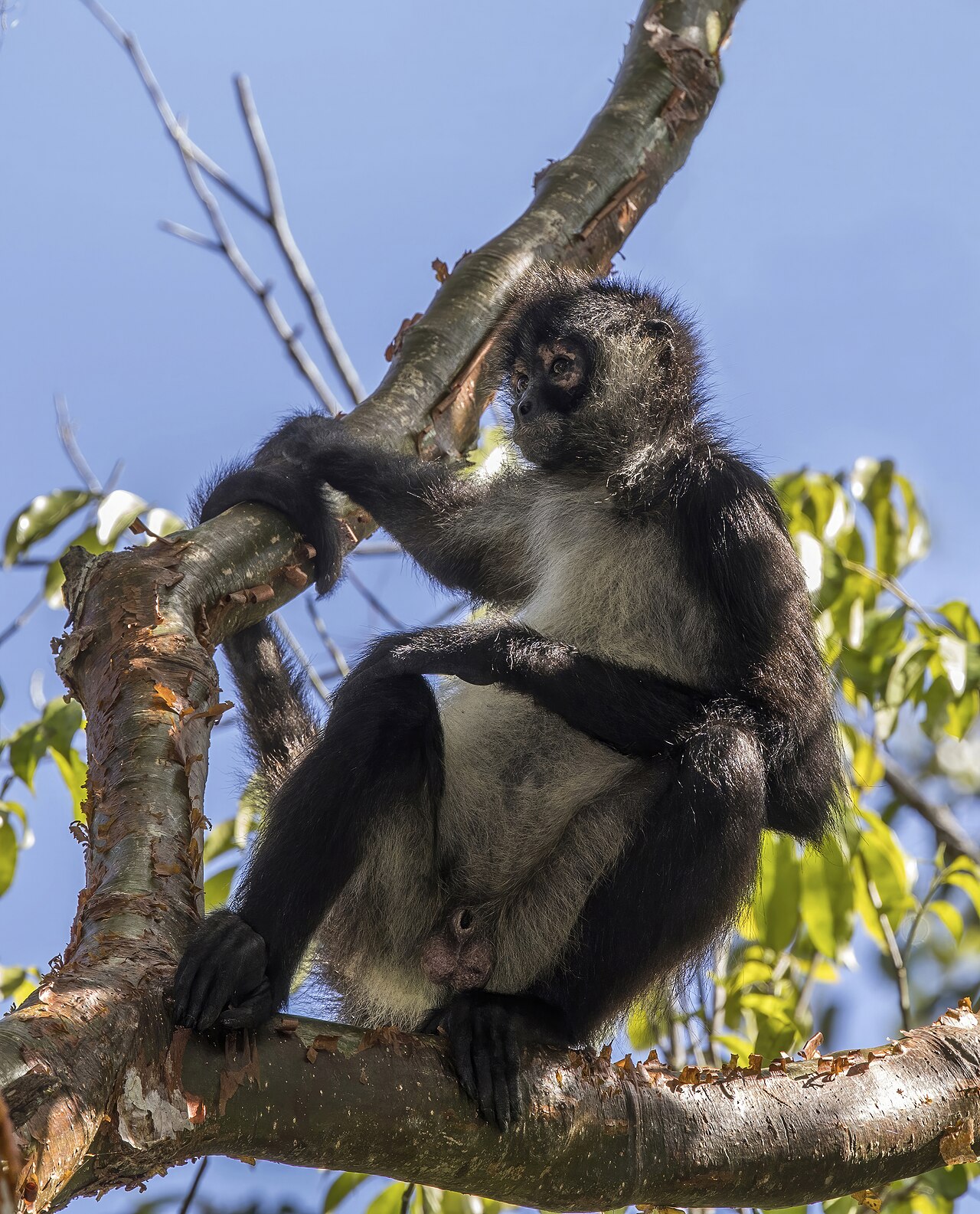
Central American spider monkeys swing effortlessly through the high forest canopy using long, slender limbs and a remarkably strong prehensile tail that acts as a fifth hand. Living in fluid fission-fusion communities, small subgroups split during the day to forage for ripe fruits before gathering in larger roosting groups at dusk. Their high-pitched whinnies and barking calls echo across primary rainforests, where they serve as vital seed dispersers for canopy trees.
ArborealFrugivoreSocial
—observations
—countries
—peak records
EndangeredConservation statusIUCN Red List categoriesLCNTVUENCREWEXEndangeredRed List categories, explained →
Diet & prey
- Ripe Fruits
- Young Leaves
- Nuts and Seeds
Predators
- Harpy Eagle
- Jaguar
- Puma
ThreatsDeforestation, habitat fragmentation, illegal pet trade, and hunting
HabitatsLowland and montane tropical rainforests, mangrove forests, dry forests
Life span20–30 years in the wild (up to 40+ years in captivity)
Size / weightNot available
Classification
- OrderPrimates
- FamilyAtelidae
- GenusAteles
- SpeciesAteles geoffroyi
Native
Interaction riskLow
- Low
- Moderate
- High
- Very high
- Why interaction risk is low
- Wild primates can deliver severe bites if threatened or cornered; keep a respectful distance.
- Why it is dangerous
- Can inflict painful bites or scratches with powerful jaws and teeth when threatened or defending young.
- How to recognize a risky encounter
- Look for long thin limbs, a hairless prehensile tail tip, and dark hands and feet.
- What to do
- Never approach or feed wild troops; remain quiet and keep a safe distance underneath the canopy.
- What to notice
- Distinguished by lanky limbs, long gripping tail, dark hands, and agile brachiation through upper branches.
- Support conservation
- Avoid using drones or making loud noises near canopy troops, and report illegal hunting or pet trade activity.
Responsible observation
- Observe from below: Keep a safe distance on ground trails and look up into the upper canopy.
- Listen for calls: Listen for distinct whinnying calls or barking alerts that announce their troop.
- Do not feed: Handouts habituate wild groups, causing stress and health issues.
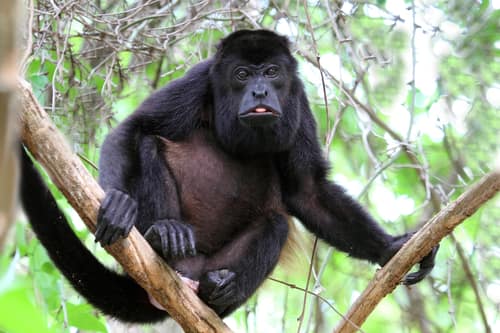
Frequent Companion (c) Cephas, some rights reserved (CC BY-SA) · cc-by-sa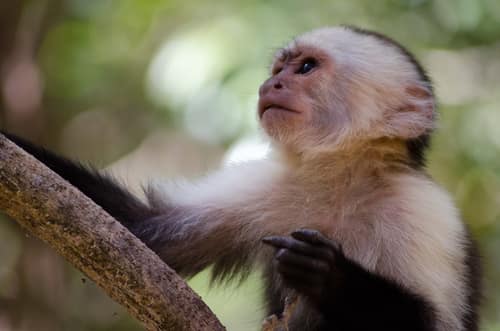
Competitor "Agitated white-faced capuchin, Santa Rosa, Bosque seco (dry forest), Guanacaste, Costa Rica" by thejaan is licensed under CC BY 2.0. To view a copy of this license, visit https://creativecommons.org/licenses/by/2.0/. · cc-by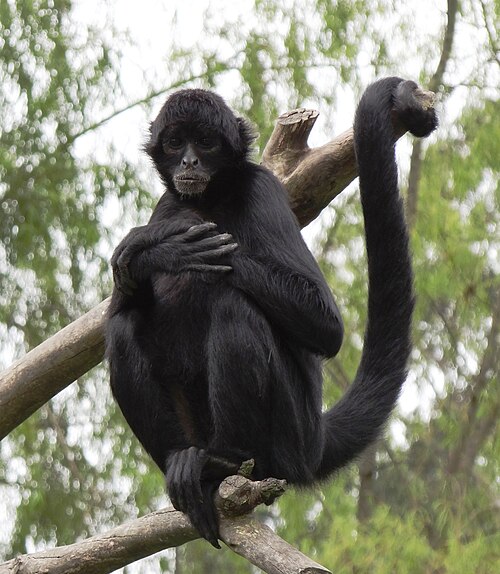
Close Relative Petruss / CC BY-SA 3.0 · cc-by-sa
Keep collecting in Fauna
Found in Collections
Species set Pro
Emerald Kingdom
Central American Spider Monkey is found in this collection. Identify it in Fauna to fill this slot and continue your progress.
Unlock to track progress
Help improve the field guideSomething wrong?
Checking your Fauna account…Report a name, category, or profile issue for review.