
Mammal
Southern Pig-tailed Macaque
Macaca nemestrinaAlso known as Sundaland Pig-tailed Macaque, Sunda Pig-tailed Macaque, Beruk
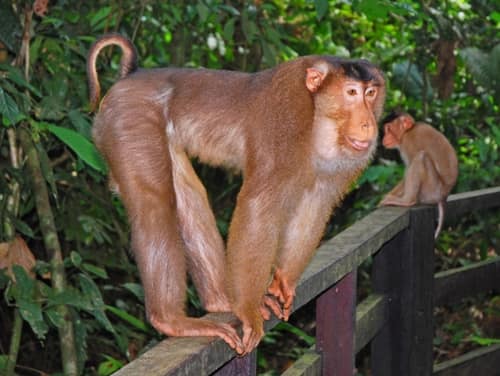
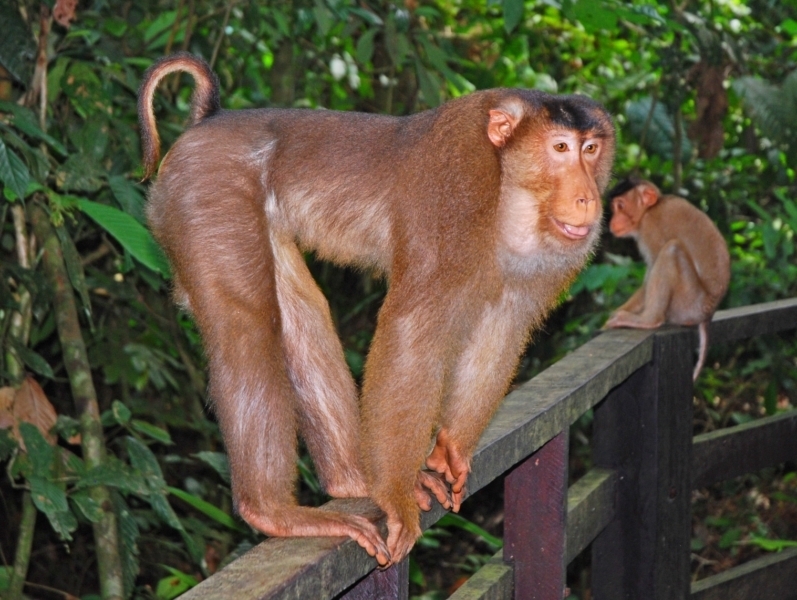
Southern pig-tailed macaques spend much of their day foraging on the rainforest floor in complex social troops led by dominant matriarchs. Adults carry their short, sparsely haired tails in an upright arch that gives the group its distinctive silhouette. When traveling through dense canopy or entering oil palm edges, troop members maintain cohesion using low grunts and expressive facial gestures.
DiurnalSocialForest Dweller
—observations
—countries
—peak records
EndangeredConservation statusIUCN Red List categoriesLCNTVUENCREWEXEndangeredRed List categories, explained →
Diet & preyWild Figs, Oil Palm Fruit, Wood-boring Beetles
Predators
- Sunda Clouded Leopard
- Reticulated Python
- Crested Serpent Eagle
ThreatsHabitat destruction for oil palm, hunting, and illegal trade
HabitatsTropical lowland rainforests, swamp forests, and coastal margins
Life span20–26 years in the wild
Classification
- FamilyCercopithecidae
- SpeciesMacaca nemestrina
Range data is not available yet.
Interaction riskModerate
- Low
- Moderate
- High
- Very high
- Why interaction risk is moderate
- Wild macaques carry transmissible pathogens and bite defensively; observe from a distance and do not feed.
- Why it is dangerous
- Large canines can inflict severe lacerations, and wild populations can carry Macacine alphaherpesvirus 1 (Herpes B) which is fatal to humans.
- How to recognize a risky encounter
- Stocky build, olive-brown fur with a darker back, and a distinctive short tail carried in a raised arch.
- What to do
- Never corner, feed, or tease these monkeys; back away slowly if an individual yawns broadly or lunges.
- What to notice
- Large, terrestrial monkey with an arched, pig-like tail and radiating crown hair around a central whorl.
- Support conservation
- Stay on marked trails to minimize disturbance to maternal foraging groups and avoid patronizing tourist shows using captive macaques.
Responsible observation
- Keep Food Concealed: Secure backpacks and avoid snacking, as habituated troops will aggressively snatch visible food.
- Give Adequate Space: Remain at least ten meters away to avoid triggering defensive posturing or charges.
- Avoid Direct Staring: Sustained eye contact is interpreted by dominant individuals as a direct threat.
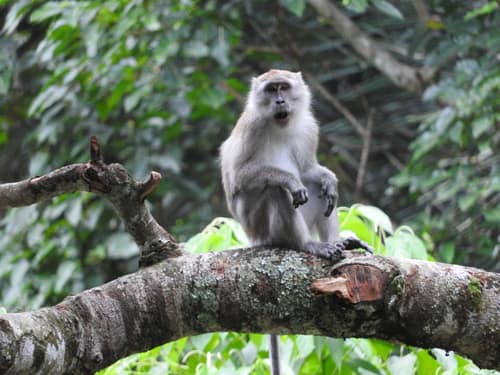
Competitor (c) Subir B. Shakya, some rights reserved (CC BY), uploaded by Subir B. Shakya · cc-by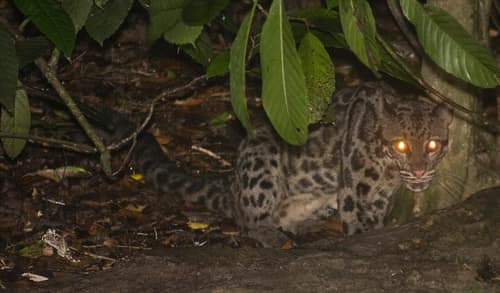
Predator www.photosbypaulo.com / CC BY-SA 3.0 · cc-by-sa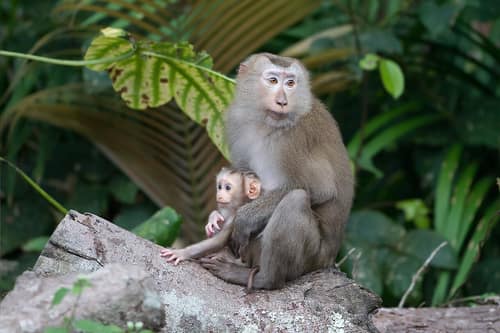
Close Relative JJ Harrison (https://www.jjharrison.com.au/) / CC BY-SA 3.0 · cc-by-sa
Help improve the field guideSomething wrong?
Checking your Fauna account…Report a name, category, or profile issue for review.