
Mammal · GBIF taxon 2436346
Giant Anteater
Myrmecophaga tridactylaAlso known as Ant Bear, Tamandua Bandeira
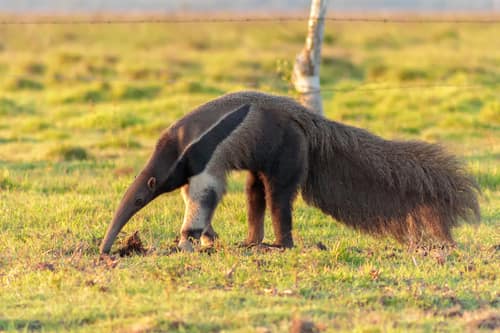
Giant anteaters wander grasslands and forests in search of insect mounds, consuming tens of thousands of ants and termites daily with a rapid, sticky tongue. Mother anteaters carry their single pup on their backs for up to a year, aligning the juvenile's stripe with their own for seamless camouflage. When threatened, these solitary mammals rear onto their hind legs and use massive front claws to deliver formidable defensive slashes.
InsectivoreSolitaryMammal

—observations
—countries
—peak records
VulnerableConservation statusIUCN Red List categoriesLCNTVUENCREWEXVulnerableRed List categories, explained →
Diet & prey
- Ants
- Termites
Predators
- Jaguar
- Puma
ThreatsHabitat destruction, wildfires, roadkills, hunting
HabitatsSavannas, grasslands, rainforests, dry forests
Life span14–26 years
Size / weightNot available
Classification
- FamilyMyrmecophagidae
- SpeciesMyrmecophaga tridactyla
Range data is not available yet.
Interaction riskHigh
- Low
- Moderate
- High
- Very high
- Why interaction risk is high
- Powerful claws can inflict serious defensive injuries; maintain a safe distance if encountered.
- Why it is dangerous
- Front claws measure up to 10 cm and can slash open predators or humans when the animal rears up on its hind legs.
- How to recognize a risky encounter
- Identified by its long tubular snout, distinct black chest diagonal stripe, and massive bushy tail.
- What to do
- Never approach or corner a wild giant anteater; give it a wide berth and back away if it rears onto its hind legs.
- What to notice
- Recognized by its long grey fur, black-and-white shoulder stripe, and low, slow-walking gait.
- Support conservation
- Report sightings to local wildlife monitoring programs and keep vehicles at low speeds in known corridor areas.
Responsible observation
- Safe Distance: Maintain at least 15 to 20 meters to avoid startling this powerful mammal.
- Quiet Observation: Watch quietly during early morning or dusk when foraging activity peaks.
- Clear Path: Ensure the animal has an unobstructed escape route to prevent defensive posture.

Tree-Dwelling Kin Quinten Questel / CC BY-SA 3.0 · cc-by-sa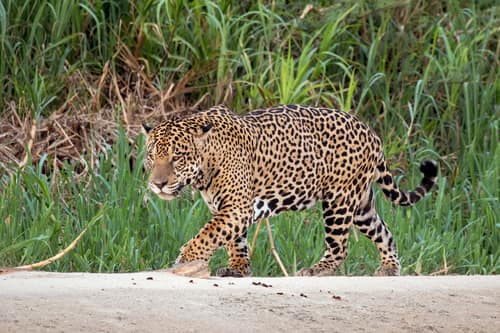
Predator (c) Charles J. Sharp , some rights reserved (CC BY-SA) · cc-by-sa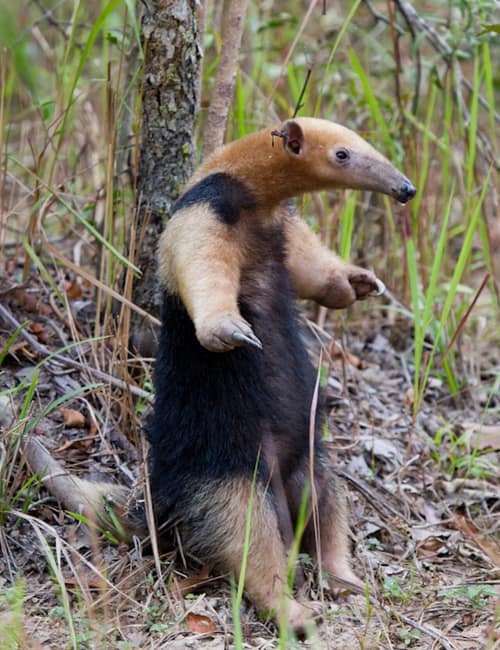
Close Relative Sinara Conessa / CC BY 2.0 · cc-by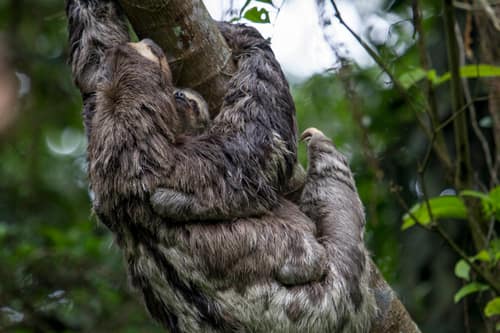
Pilosa Relative (c) Bruno Henrique Aranda, some rights reserved (CC BY), uploaded by Bruno Henrique Aranda · cc-by
Help improve the field guideSomething wrong?
Checking your Fauna account…Report a name, category, or profile issue for review.