
Mammal
Rusty-spotted Cat
Prionailurus rubiginosusWeighing barely a kilogram, these diminutive felines navigate rocky scrub and tree limbs with astonishing agility, using their exceptional night vision to hunt after dusk. Solitary hunters spend the dark hours stalking through dense underbrush, ambushing rodents, frogs, and roosting birds with lightning-fast pounces. Females shelter litters of one to three kittens inside hollow logs or rock crevices, moving dens frequently to protect them from larger carnivores.
NocturnalCarnivoreAgile Climber
—observations
—countries
—peak records
Near ThreatenedConservation statusIUCN Red List categoriesLCNTVUENCREWEXNear ThreatenedRed List categories, explained →
Diet & preyField mice, Geckos, Grasshoppers
Predators
- Leopard
- Golden Jackal
- Indian Eagle-Owl
ThreatsHabitat loss, agricultural expansion, forest fragmentation, road collisions
HabitatsDry deciduous forests, scrub forests, rocky hills, grasslands
Life span8–12 years
Classification
- FamilyFelidae
- SpeciesPrionailurus rubiginosus
Range data is not available yet.
Interaction riskLow
- Low
- Moderate
- High
- Very high
- Why interaction risk is low
- Can scratch or bite sharply if cornered or handled; observe from a respectful distance.
- Why it is dangerous
- Sharp canine teeth and retractile claws can inflict deep scratches and puncture wounds prone to bacterial infection.
- How to recognize a risky encounter
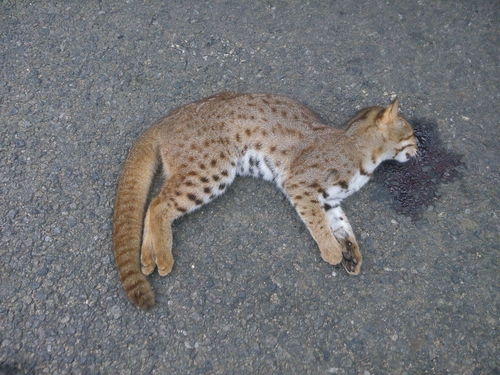
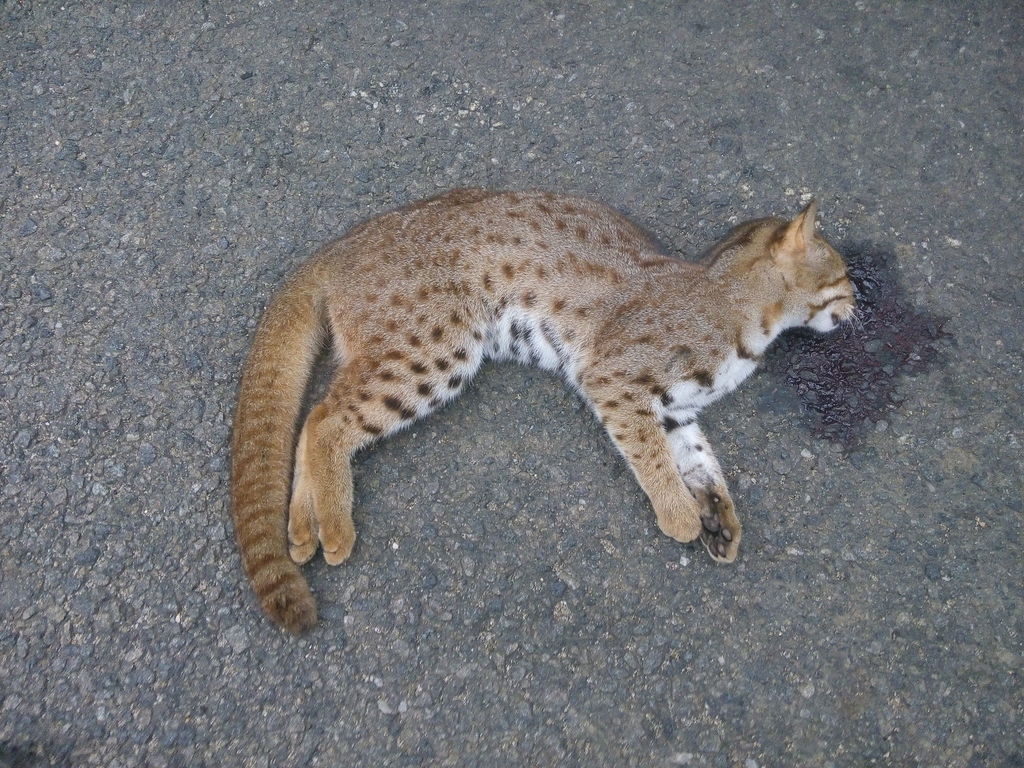
- Look for a cat roughly half the size of a domestic feline, marked with rust-colored spots arranged in long rows.
- What to do
- Give cornered individuals a clear escape path and never attempt to handle an injured cat without specialized rescue equipment.
- What to notice
- Watch for a tiny, reddish-gray feline with rounded ears and dark facial stripes active after sunset.
- Support conservation
- Keep off-trail vehicle travel to a minimum in known territories and report verifiable sightings to local wildlife databases.
Responsible observation
- Night Spotting: Use a dim red light during nocturnal surveys to avoid dazzling sensitive eyes.
- Field Signs: Check soft mud along forest trails for tiny four-toed tracks lacking claw marks.
- Camera Trapping: Position trail cameras low along rocky crevices and scrub paths to detect them.
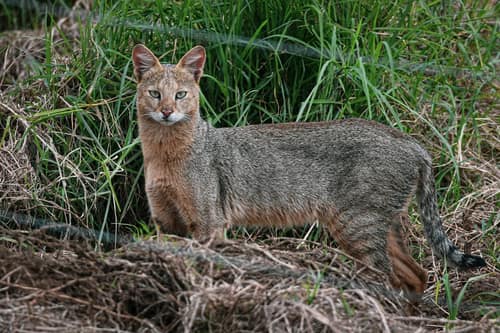
Competitor (c) Harshad Sharma, some rights reserved (CC BY), uploaded by Harshad Sharma · cc-by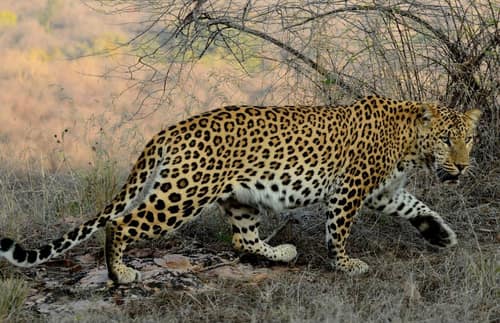
Predator (c) Raja bandi, some rights reserved (CC BY), uploaded by Raja bandi · cc-by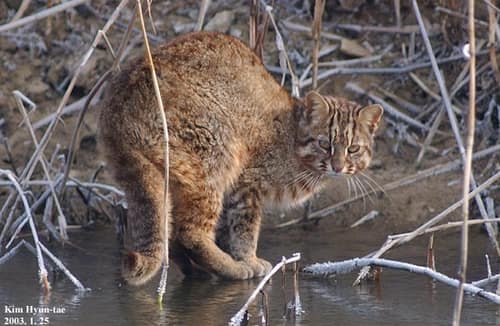
Close Relative (c) Kim, Hyun-tae, some rights reserved (CC BY), uploaded by Kim, Hyun-tae · cc-by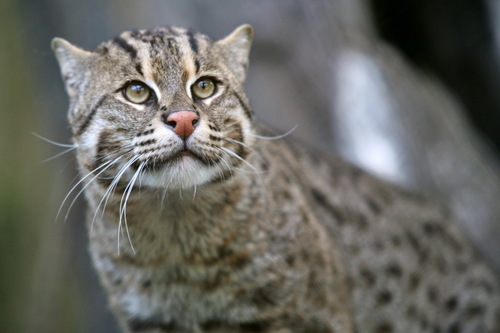
Close Relative (c) Cliff, some rights reserved (CC BY) · cc-by
Help improve the field guideSomething wrong?
Checking your Fauna account…Report a name, category, or profile issue for review.