
Mammal
Meerkat
Suricata suricattaAlso known as Suricate
Meerkats live in highly social subterranean clans called mobs, working together to forage, watch for danger, and raise offspring in the arid landscapes of southern Africa. Dedicated sentinels stand on their hind legs atop mounds or bushes, scanning the skies and horizon while whistling or barking warnings to the foraging group. Their dark eye patches act like natural sunglasses, cutting glare from the intense desert sun so they can spot distant aerial predators.
SocialDesertDiurnal
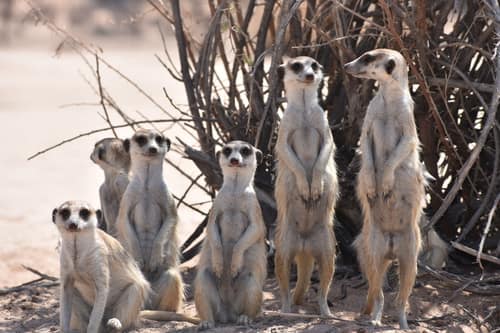
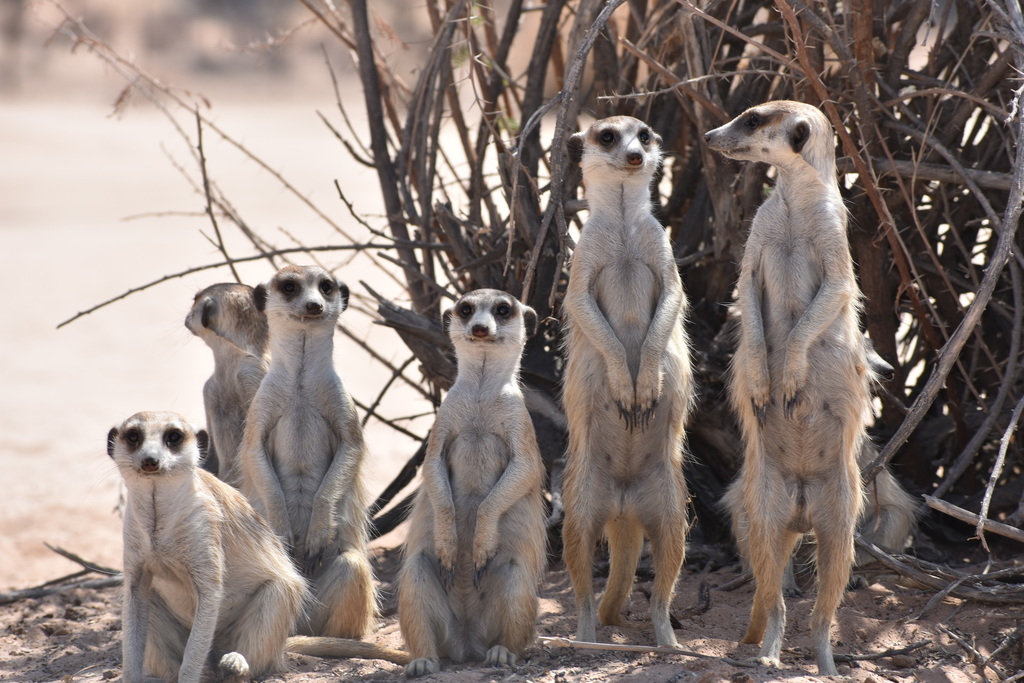
—observations
—countries
—peak records
Least ConcernConservation statusIUCN Red List categoriesLCNTVUENCREWEXLeast ConcernRed List categories, explained →
Diet & preyScorpions, Beetles, Lizards
Predators
- Martial Eagle
- Jackal
- Cape Cobra
ThreatsPredation, drought, and viral outbreaks such as rabies
HabitatsDeserts, arid scrublands, and open savannahs
Life span10–14 years in the wild
Classification
- OrderCarnivora
- FamilyHerpestidae
- GenusSuricata
- SpeciesSuricata suricatta
Range data is not available yet.
Interaction riskLow
- Low
- Moderate
- High
- Very high
- Why interaction risk is low
- Safe to observe from a distance; wild meerkats may deliver a painful bite if cornered or handled.
Responsible observation
- Observing sentinels: Watch for perched sentinels standing upright on elevated rocks or bushes.
- Maintaining distance: Keep a respectful distance to avoid causing false alarm calls or scaring the mob underground.
- Listening for calls: Listen for quiet peeping sounds that keep foraging group members in contact.
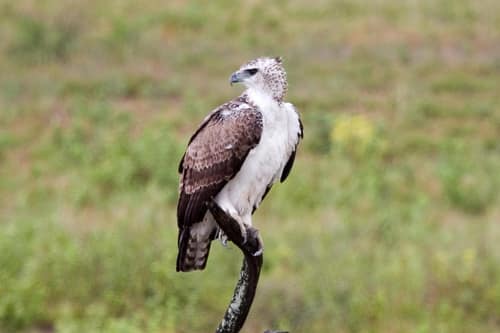
Predator (c) Dan Harville, some rights reserved (CC BY-SA), uploaded by Dan Harville · cc-by-sa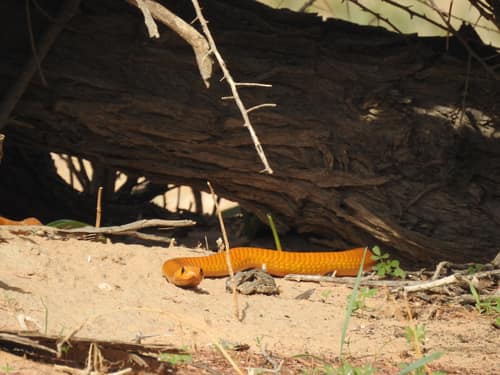
Predator (c) Ryan van Huyssteen, some rights reserved (CC BY) · cc-by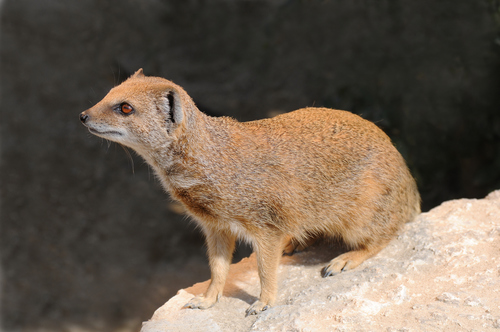
Close Relative (c) Böhringer Friedrich, some rights reserved (CC BY-SA) · cc-by-sa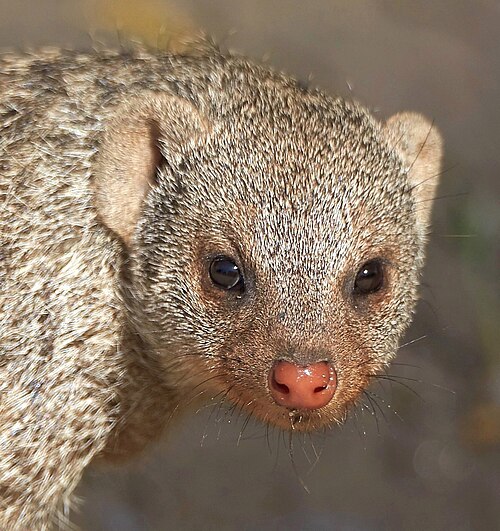
Close Relative Axel Tschentscher / CC BY-SA 4.0 · cc-by-sa
Help improve the field guideSomething wrong?
Checking your Fauna account…Report a name, category, or profile issue for review.