
Mammal · GBIF taxon 2433403
Sun Bear
Helarctos malayanusAlso known as Malayan Sun Bear, Honey Bear
Sun bears spend much of their lives high in the tropical rainforest canopy, using long, sickle-shaped claws to tear into tree trunks for honey and stingless bees. Their remarkably long tongue, extending up to 25 centimeters, acts as an efficient probe to extract insects from deep crevices. Defensive mother bears and territorial adults defend themselves fiercely when surprised, though loss of habitat remains their greatest struggle.
ArborealTropicalMammal

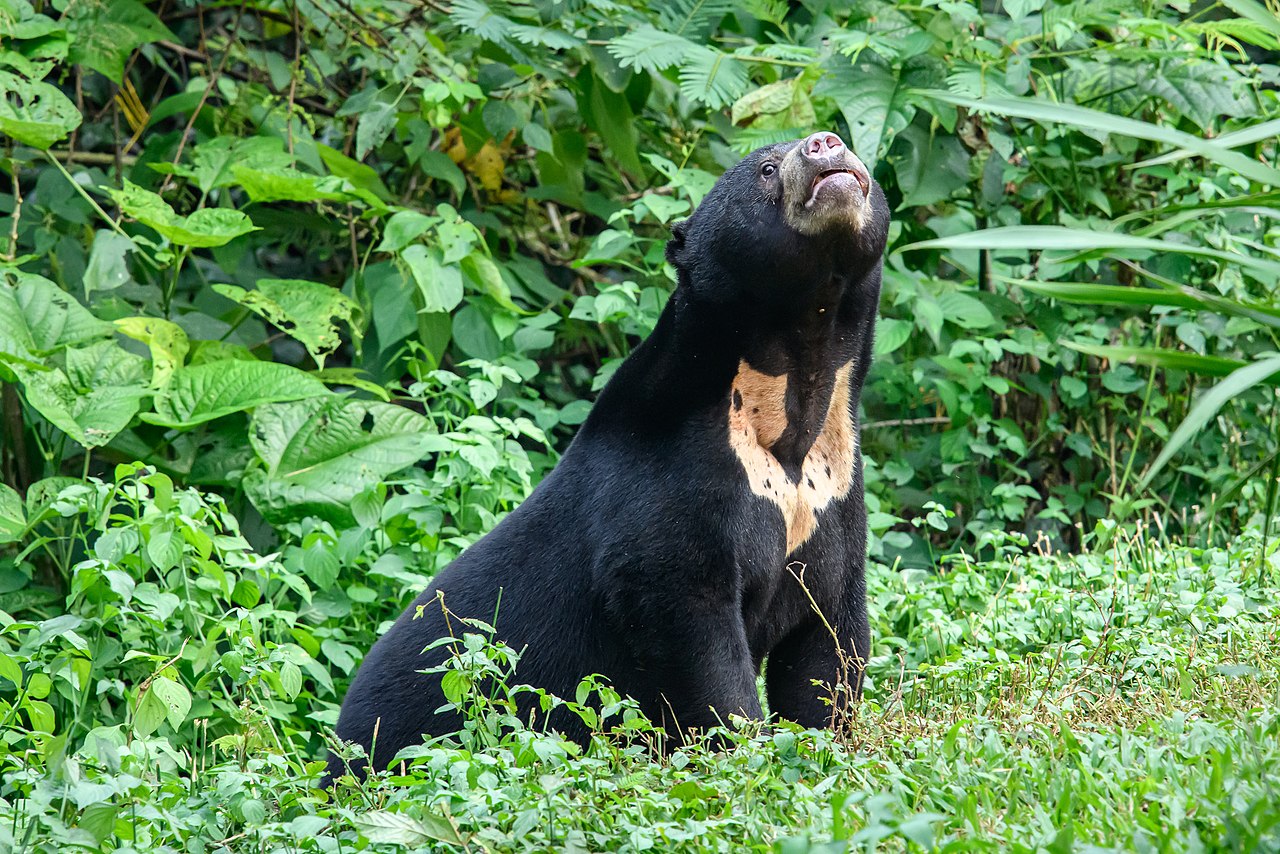
—observations
—countries
—peak records
VulnerableConservation statusIUCN Red List categoriesLCNTVUENCREWEXVulnerableRed List categories, explained →
Diet & prey
- Termites
- Stingless Bees
- Figs
Predators
- Indochinese Tiger
- Clouded Leopard
- Reticulated Python
ThreatsDeforestation, poaching for traditional medicine, human-wildlife conflict
HabitatsTropical rainforests, lowland evergreen forests
Life span15–25 years in the wild
Size / weightNot available
Classification
- FamilyUrsidae
- SpeciesHelarctos malayanus
Range data is not available yet.
Interaction riskHigh
- Low
- Moderate
- High
- Very high
- Why interaction risk is high
- Capably defends itself with sharp claws and strong jaws if cornered; keep a respectful distance in the wild.
- Why it is dangerous
- Equipped with strong jaws and elongated claws designed for breaking hardwood, capable of inflicting severe defensive wounds.
- How to recognize a risky encounter
- Characterized by a compact build, jet-black coat, short muzzle, and a bright cream or yellow chest patch.
- What to do
- Never approach a wild bear or get between a sow and her cubs; back away slowly without running.
- What to notice
- Smaller than all other bear species, found primarily in mature lowland rainforests of Southeast Asia.
- Support conservation
- Avoid publishing precise sighting locations on social media to protect local individuals from illegal hunting.
Responsible observation
- Observer Etiquette: Keep a safe distance and stay on designated forest trails, as surprised adults can react aggressively.
- Spotting Guide: Look high in the forest canopy or scan rotting logs for signs of freshly torn bark and claw marks.
- Habitat Preservation: Support local conservation initiatives that protect connected tracts of lowland Southeast Asian rainforest.
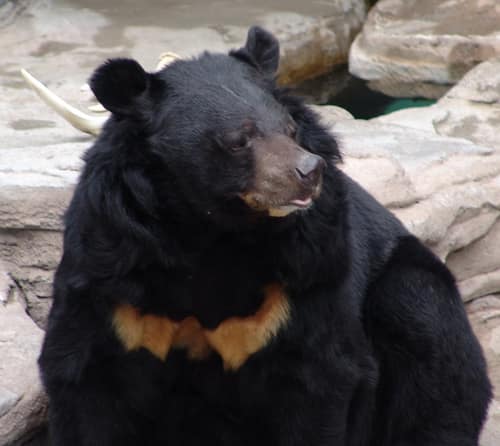
Close Relative "Asiatic Black Bear {Ursus thibetanus}" by Drew Avery is licensed under CC BY 2.0. To view a copy of this license, visit https://creativecommons.org/licenses/by/2.0/. · cc-by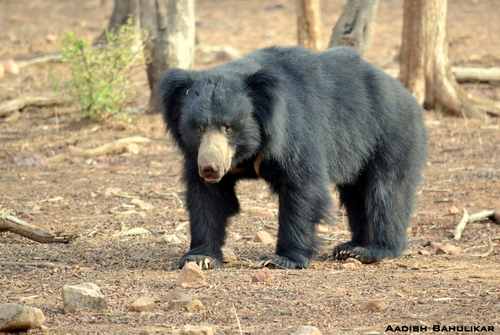
Close Relative (c) Aadishbahulikar18, some rights reserved (CC BY-SA) · cc-by-sa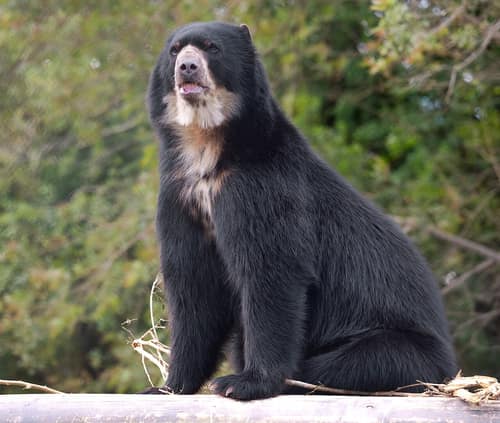
Close Relative Wilfredor / CC0 · cc0
Help improve the field guideSomething wrong?
Checking your Fauna account…Report a name, category, or profile issue for review.