
Mammal
Big Brown Bat
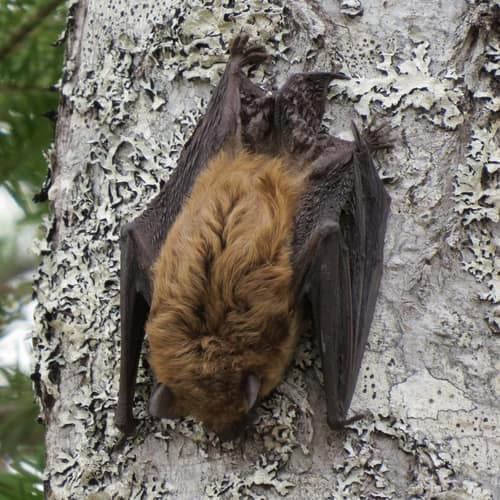
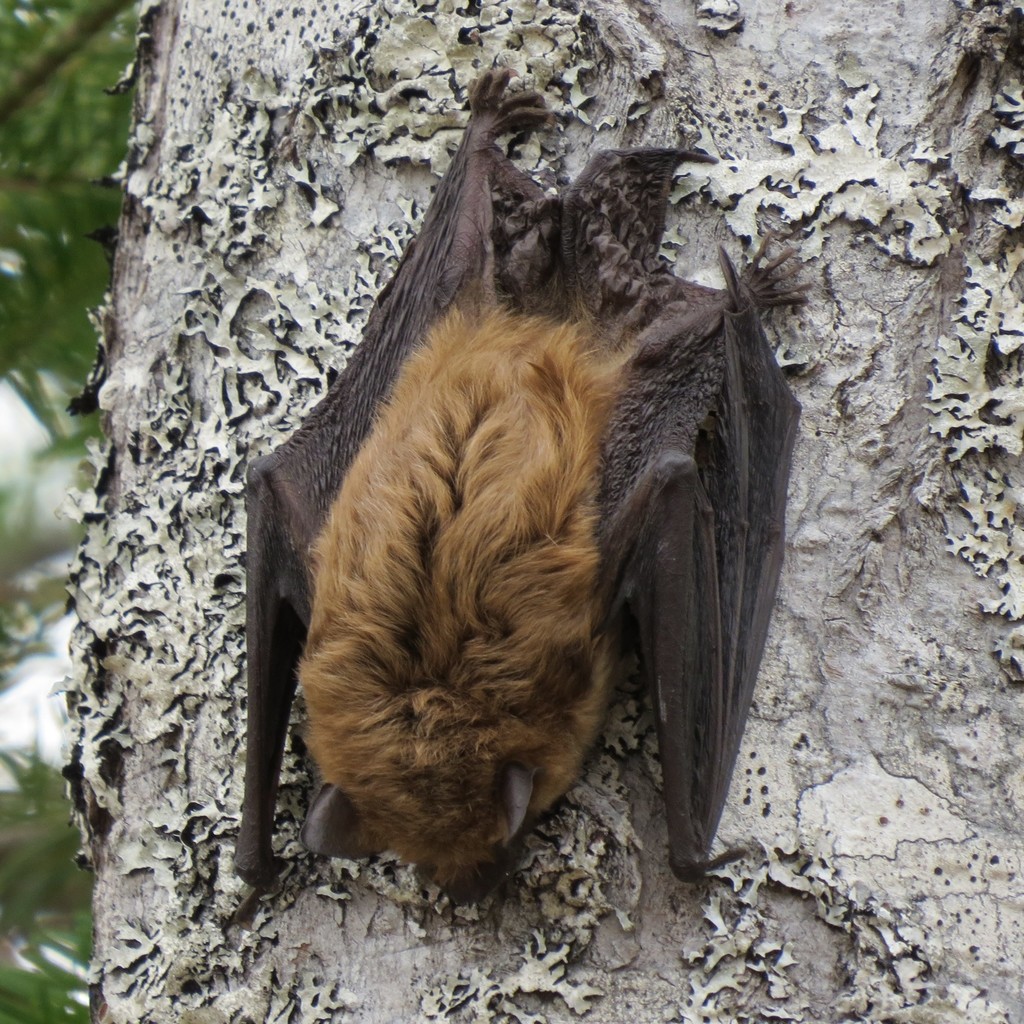
Eptesicus fuscusBig brown bats are robust insect-hunting microbats recognized by their glossy copper-brown fur, dark leathery wings, and broad snouts. They emerge near dusk to hunt beetles, moths, and agricultural pests over forest canopies, fields, and suburban yards using powerful echolocation. During winter, they often hibernate in caves, mines, and sheltered human structures such as attics and barns.
NocturnalInsectivoreMammal
—observations
—countries
—peak records
Least ConcernConservation statusIUCN Red List categoriesLCNTVUENCREWEXLeast ConcernRed List categories, explained →
Diet & preyBeetles, Moths, True Bugs
Predators
- Great Horned Owl
- Domestic Cat
- Black Rat Snake
ThreatsWhite-nose syndrome, wind turbine collisions, pesticide accumulation, habitat loss
HabitatsForests, woodlands, agricultural fields, suburban areas, and urban spaces
Life span15–19 years in the wild
Classification
- OrderChiroptera
- FamilyVespertilionidae
- GenusEptesicus
- SpeciesEptesicus fuscus
Native
Interaction riskModerate
- Low
- Moderate
- High
- Very high
- Why interaction risk is moderate
- Can carry rabies and bite defensively if handled; never touch with bare hands.
- Why it is dangerous
- Can carry the rabies virus and inflicts painful defensive bites with sharp teeth if handled.
- How to recognize a risky encounter
- Recognized by glossy golden to dark brown fur paired with dark, hairless wing membranes and ears.
- What to do
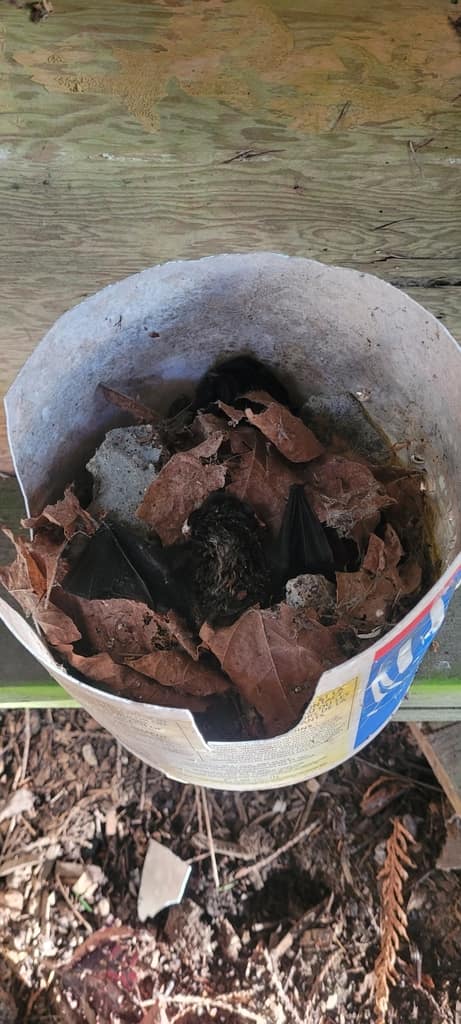
- Do not handle directly; secure grounded bats under a box and contact local animal control.
Responsible observation
- Roost Exclusion: Install bat houses nearby before sealing attic access points during late autumn.
- Viewing Advice: Watch open fields or tree lines at twilight to observe acrobatic foraging flights.
- Safe Handling: Leave grounded bats untouched and contact a local licensed wildlife rehabilitator.
Ecological Neighbor no rights reserved · cc0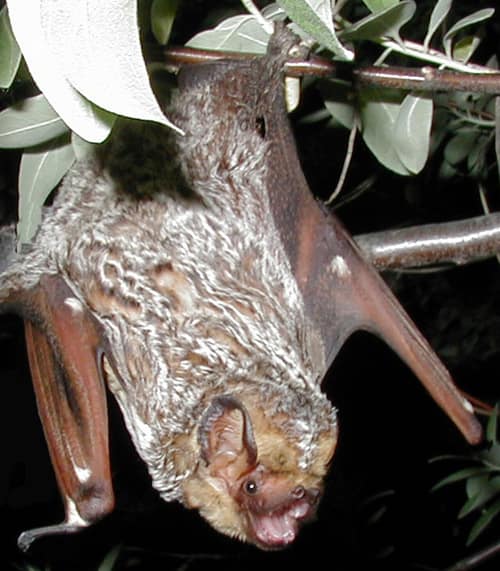
Ecological Neighbor Photographer: Paul Cryan, U.S. Geological Survey / Public domain · cc0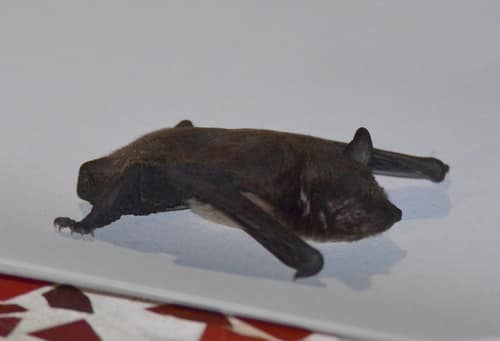
Similar Species (c) Jody Shugart, some rights reserved (CC BY), uploaded by Jody Shugart · cc-by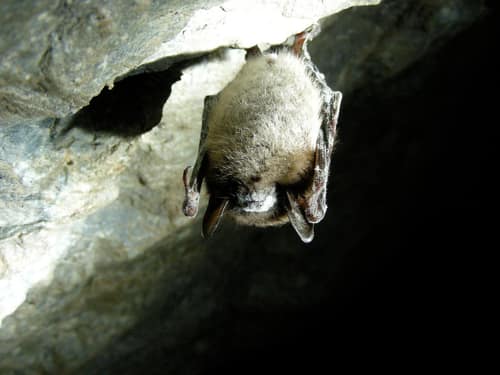
Close Relative "Little brown bat affected by White-nose Syndrome" by U. S. Fish and Wildlife Service - Northeast Region is marked with Public Domain Mark 1.0. To view the terms, visit https://creativecommons.org/publicdomain/mark/1.0/. · cc0
Keep collecting in Fauna
Found in Collections
Species set
Moonlight Marvels
Big Brown Bat is found in this collection. Identify it in Fauna to fill this slot and continue your progress.
—/7
Help improve the field guideSomething wrong?
Checking your Fauna account…Report a name, category, or profile issue for review.