
Amphibian
Tiger Salamander
Ambystoma tigrinumAlso known as Eastern Tiger Salamander
Tiger salamanders spend most of their adult lives hidden underground in deep burrows excavated by themselves or borrowed from small mammals. Each late winter or early spring, heavy rains draw adults to fishless vernal pools, where males court females by nudging them toward deposited spermatophores. Voracious predators both as aquatic larvae and terrestrial adults, they consume virtually any animal small enough to fit inside their broad mouths.
AmphibianNocturnalBurrowing
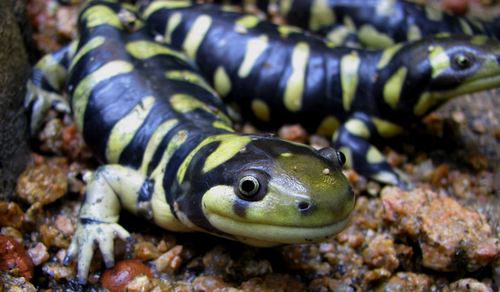
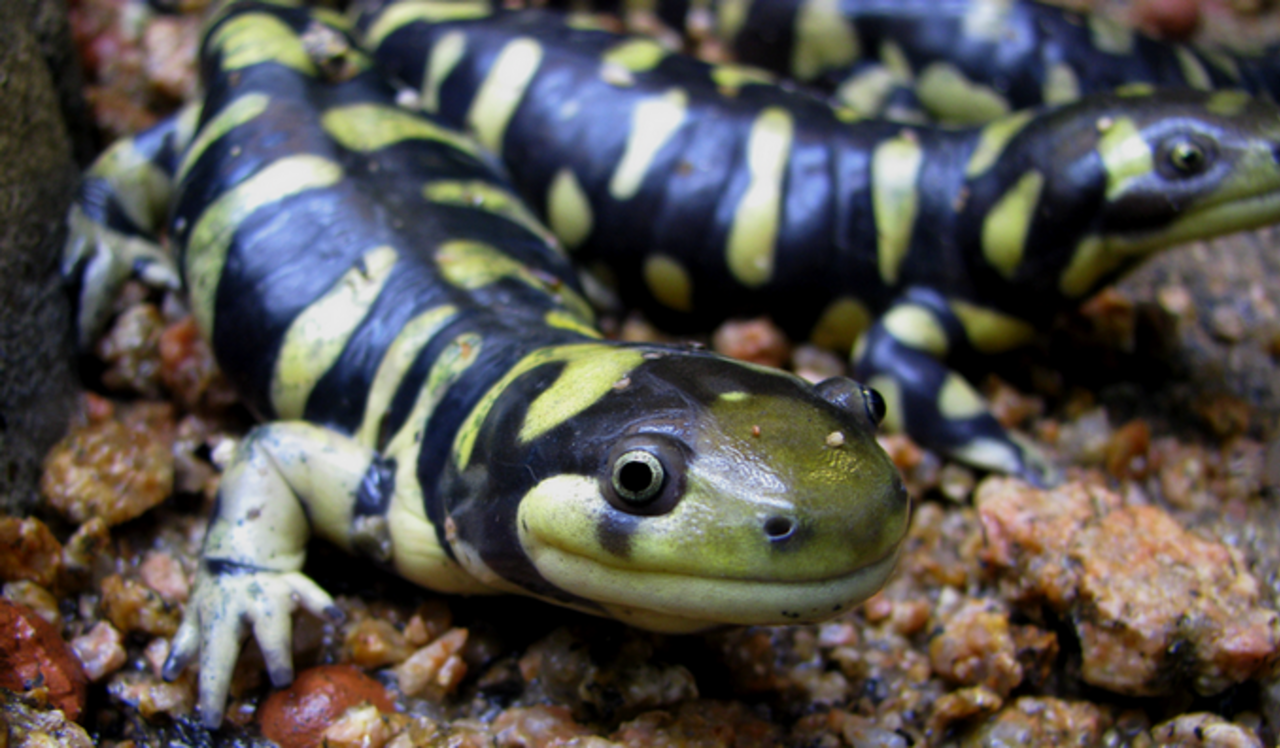
—observations
—countries
—peak records
Least ConcernConservation statusIUCN Red List categoriesLCNTVUENCREWEXLeast ConcernRed List categories, explained →
Diet & preyEarthworms, Beetles, Crickets
Predators
- Common Garter Snake
- Raccoon
- Great Blue Heron
ThreatsHabitat fragmentation, loss of vernal pools, road mortality during breeding migrations, and infectious diseases such as chytrid and ranavirus
HabitatsDeciduous and coniferous forests, grasslands, prairies, and agricultural edges near fishless ephemeral wetlands
Life span12–15 years in the wild, occasionally exceeding 20 years in captivity
Classification
- FamilyAmbystomatidae
- SpeciesAmbystoma tigrinum
Range data is not available yet.
Interaction riskLow
- Low
- Moderate
- High
- Very high
- Why interaction risk is low
- Safe to observe at a normal distance.
Responsible observation
- Breeding Migrations: Scan quiet roadways near wetlands on warm, rainy nights in late winter and early spring to spot migrating adults.
- Skin Sensitivity: Refrain from handling them, as their porous skin absorbs harmful lotions, bug sprays, and natural salts from human hands.
- Log Etiquette: Always gently roll back any fallen logs or rocks exactly as found to protect the damp microclimates beneath.

Close Relative D. Gordon E. Robertson / CC BY-SA 3.0 · cc-by-sa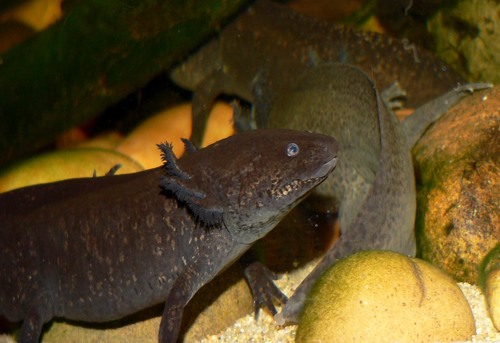
Close Relative (c) Stan Shebs, some rights reserved (CC BY-SA) · cc-by-sa
Close Relative (c) evangrimes, some rights reserved (CC BY), uploaded by evangrimes · cc-by
Close Relative Adam Cushen / CC BY 4.0 · cc-by
Help improve the field guideSomething wrong?
Checking your Fauna account…Report a name, category, or profile issue for review.