
Amphibian
Marbled Salamander
Ambystoma opacumAlso known as Banded Salamander
Marbled salamanders stand out among North American mole salamanders by breeding in autumn rather than spring. Females lay eggs beneath leaf litter in dry vernal pool basins and guard them until autumn rains fill the depressions. Their striking pattern of black-and-silver crossbands provides surprisingly effective camouflage against dappled woodland light and shadow.
NocturnalAmphibianBurrowing


—observations
—countries
—peak records
Least ConcernConservation statusIUCN Red List categoriesLCNTVUENCREWEXLeast ConcernRed List categories, explained →
Diet & preyEarthworms, Slugs, Beetle larvae
Predators
- Garter snakes
- Banded water snakes
- Raccoons
ThreatsHabitat fragmentation, wetland drainage, deforestation
HabitatsDeciduous forests, damp oak-hickory woodlands, floodplain forests
Life span8–10 years
Classification
- FamilyAmbystomatidae
- SpeciesAmbystoma opacum
Range data is not available yet.
Interaction riskLow
- Low
- Moderate
- High
- Very high
- Why interaction risk is low
- Safe to observe at a normal distance.
- What to notice
- Look for distinct silvery white or grey crossbands contrasting against a dark black body.
- Support conservation
- Watch from a step back on rainy nights; avoid stepping into dry pool beds containing hidden egg nests.
Responsible observation
- Timing: Look for adults migrating to dry vernal pool edges during warm, rainy autumn nights.
- Handling: Keep hands off, as skin oils and chemical lotions easily harm permeable amphibian skin.
- Log flipping: Gently return any turned forest logs or rocks back to their exact original position.

Close Relative D. Gordon E. Robertson / CC BY-SA 3.0 · cc-by-sa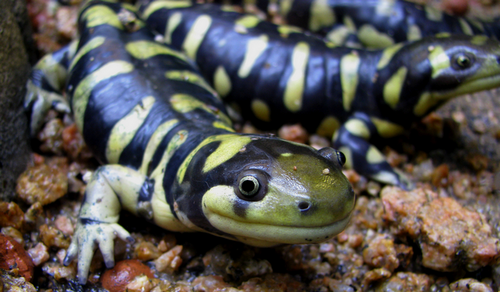
Close Relative Carla Isabel Ribeiro / CC BY-SA 3.0 · cc-by-sa
Close Relative Adam Cushen / CC BY 4.0 · cc-by
Close Relative (c) Dan MacNeal, some rights reserved (CC BY) / CC BY 4.0 · cc-by
Help improve the field guideSomething wrong?
Checking your Fauna account…Report a name, category, or profile issue for review.