
Amphibian
Eastern Red-backed Salamander
Plethodon cinereusAlso known as Redback Salamander, Northern Red-backed Salamander, Lead-backed Salamander
Eastern red-backed salamanders are completely lungless, absorbing oxygen directly through their thin, moist skin and lining of the mouth. Found under rotting logs, stones, and damp forest litter, they occur in two main color phases: a striking red-striped morph and a dark gray lead-backed morph. Females lay small clutches of eggs in decaying wood and remain coiled around them until they hatch directly into fully formed terrestrial juveniles.
WoodlandLunglessPolymorphic
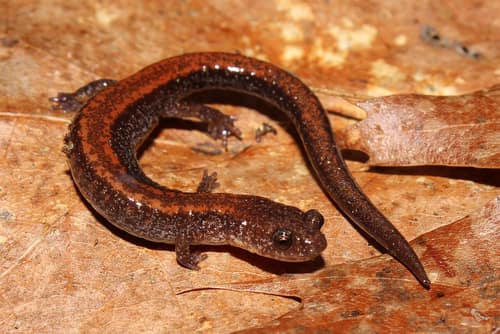

—observations
—countries
—peak records
Least ConcernConservation statusIUCN Red List categoriesLCNTVUENCREWEXLeast ConcernRed List categories, explained →
Diet & preyMites, Springtails, Ants
Predators
- Common garter snakes
- Woodland birds
- Shrews
ThreatsHabitat fragmentation, severe deforestation, acid rain, soil drying from climate change
HabitatsDeciduous and mixed coniferous forests, moist leaf litter, rotting logs
Life span10–15 years
Classification
- OrderCaudata
- FamilyPlethodontidae
- GenusPlethodon
- SpeciesPlethodon cinereus
Range data is not available yet.
Interaction riskLow
- Low
- Moderate
- High
- Very high
- Why interaction risk is low
- Safe to observe at a normal distance.
Responsible observation
- Habitat Care: Gently lower flipped logs and rocks back into place to protect delicate moist microclimates.
- Skin Sensitivity: Avoid handling with bare hands, as skin lotions, salt, and oils can harm amphibian skin.
- Optimal Timing: Look beneath damp leaf litter during humid weather or after light rain showers.
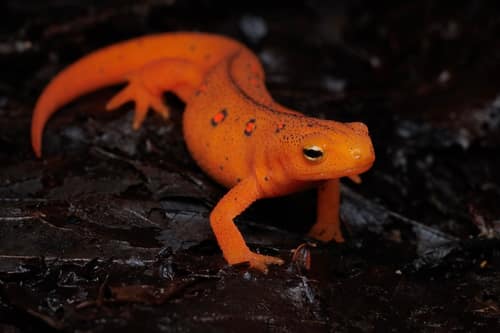
Competitor (c) Matt Felperin, some rights reserved (CC BY), uploaded by Matt Felperin · cc-by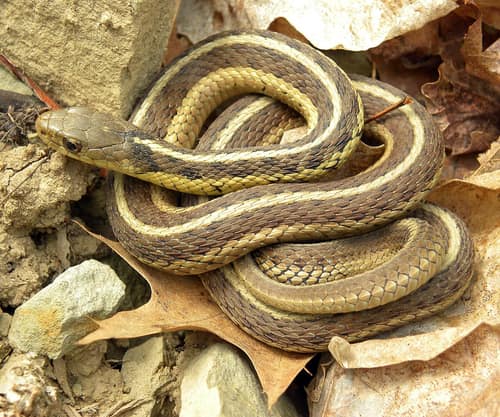
Predator Wilson44691 / Public domain · cc0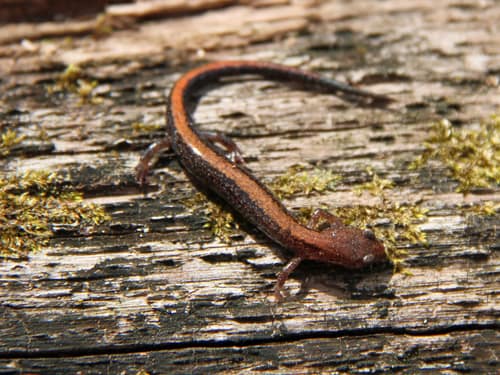
Close Relative (c) Greg Schechter, some rights reserved (CC BY) · cc-by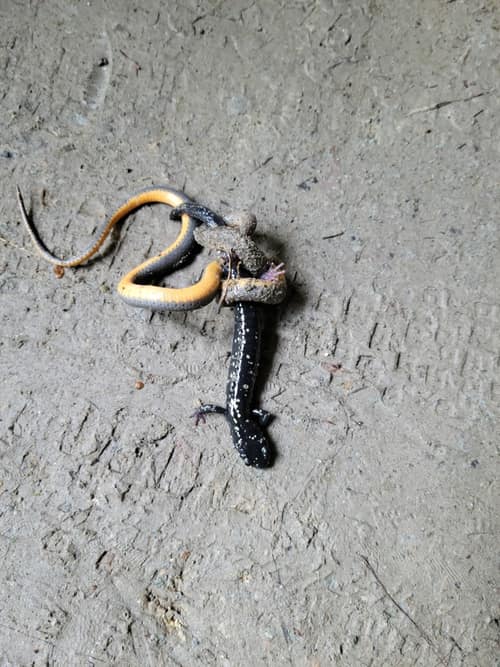
Close Relative (c) James Weaver, some rights reserved (CC BY) · cc-by
Help improve the field guideSomething wrong?
Checking your Fauna account…Report a name, category, or profile issue for review.