
Amphibian · GBIF taxon 2427599
Middle Eastern Tree Frog
Hyla savignyiAlso known as Savigny's Tree Frog, Lemon-yellow Tree Frog, Middle East Tree Frog
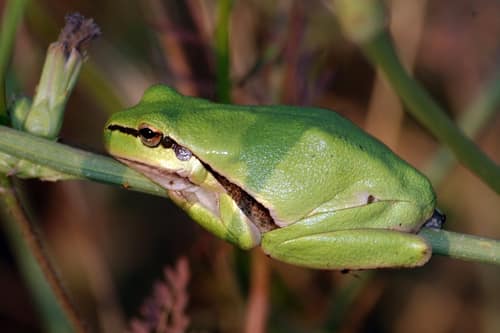
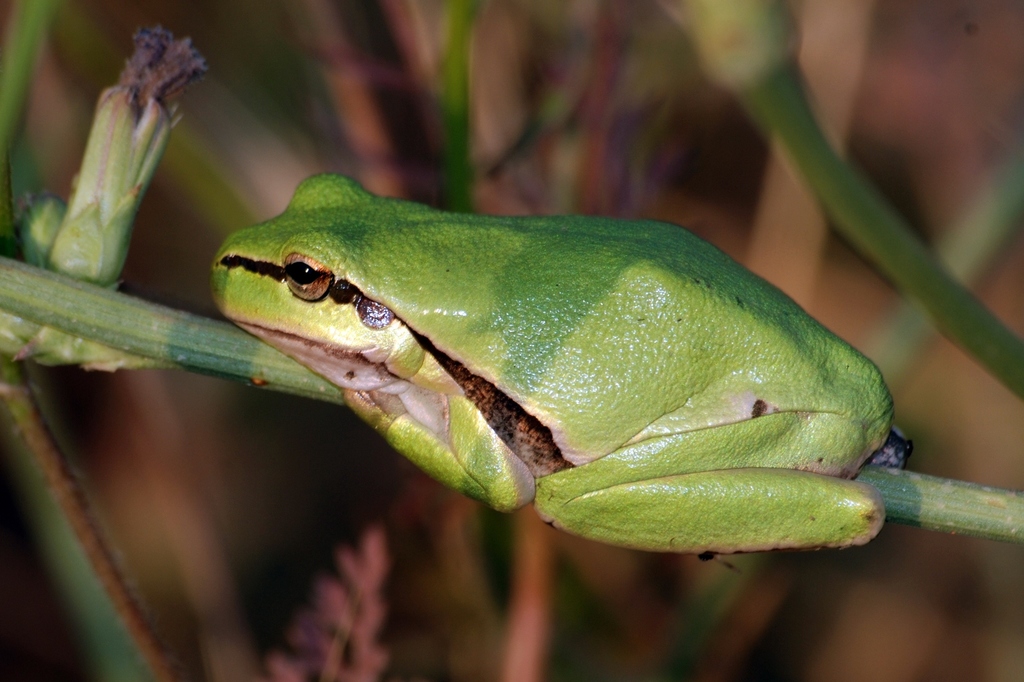
Capable of changing skin tone from vivid green to lemon yellow or earthy brown depending on temperature and light, Middle Eastern tree frogs are master navigators of vegetated wetlands. Males gather along stream banks and irrigation ditches after sunset, producing vibrant choruses that carry across open agricultural landscapes. Adhesive toe pads allow them to climb high into reeds and orchard foliage in search of small prey.
AmphibianNocturnalVocal
—observations
—countries
—peak records
Least ConcernConservation statusIUCN Red List categoriesLCNTVUENCREWEXLeast ConcernRed List categories, explained →
Diet & prey
- Moths
- Flies
- Spiders
Predators
- Herons
- Snakes
- Small mammals
ThreatsWetland destruction, water pollution, pesticide accumulation
HabitatsWetlands, stream banks, orchards, agricultural fields
Life span5–8 years
Size / weightNot available
Classification
- FamilyHylidae
- SpeciesHyla savignyi
Range data is not available yet.
Interaction riskLow
- Low
- Moderate
- High
- Very high
- Why interaction risk is low
- Safe to observe at a normal distance.
- What to notice
- Recognizable as a tiny green frog with circular toe pads and a dark stripe running from nostril through the eye.
- Support conservation
- Observe quietly from shoreline margins without trampling reed beds or entering breeding waters.
Responsible observation
- Night observation: Use a dimmed red flashlight around pond margins to avoid startling calling adults.
- Listen for calls: Locate hidden males during spring evenings by following their rhythmic croaking.
- Avoid direct contact: Keep hands clean and unwashed with synthetic soaps to protect sensitive skin.
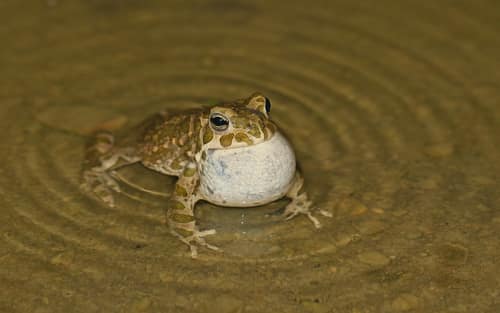
Frequent Companion (c) Christoph Moning, some rights reserved (CC BY), uploaded by Christoph Moning · cc-by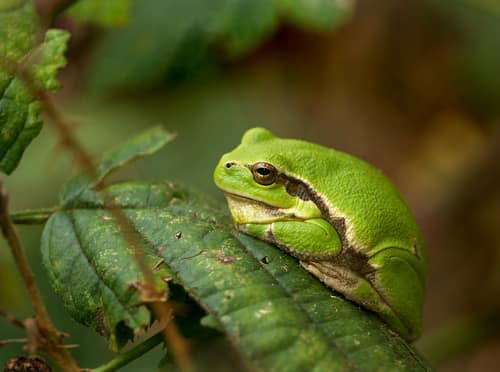
Close Relative "European Tree Frog (Hyla arborea), Province Limburg, Belgium" by Frank.Vassen is licensed under CC BY 2.0. To view a copy of this license, visit https://creativecommons.org/licenses/by/2.0/. · cc-by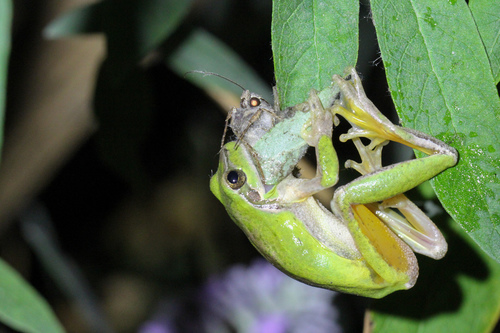
Close Relative (c) Thomas Galewski, some rights reserved (CC BY), uploaded by Thomas Galewski · cc-by
Help improve the field guideSomething wrong?
Checking your Fauna account…Report a name, category, or profile issue for review.