
Amphibian
River Frog
Lithobates heckscheriAlso known as Heckscher's Frog
River frogs are large, heavily mottled aquatic amphibians that inhabit slow-moving waterways and cypress swamps across the coastal plain. Unlike most solitary ranids, their enormous tadpoles form tightly synchronized, schooling aggregations of thousands of individuals that feed together along shallow margins. Adults are remarkably placid and often play dead or produce an unpleasant skin secretion when seized by a predator.
AmphibianAquaticNocturnal
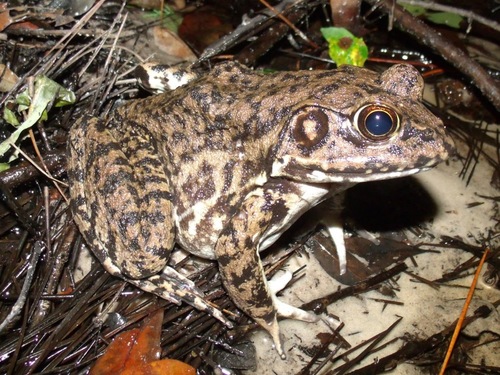
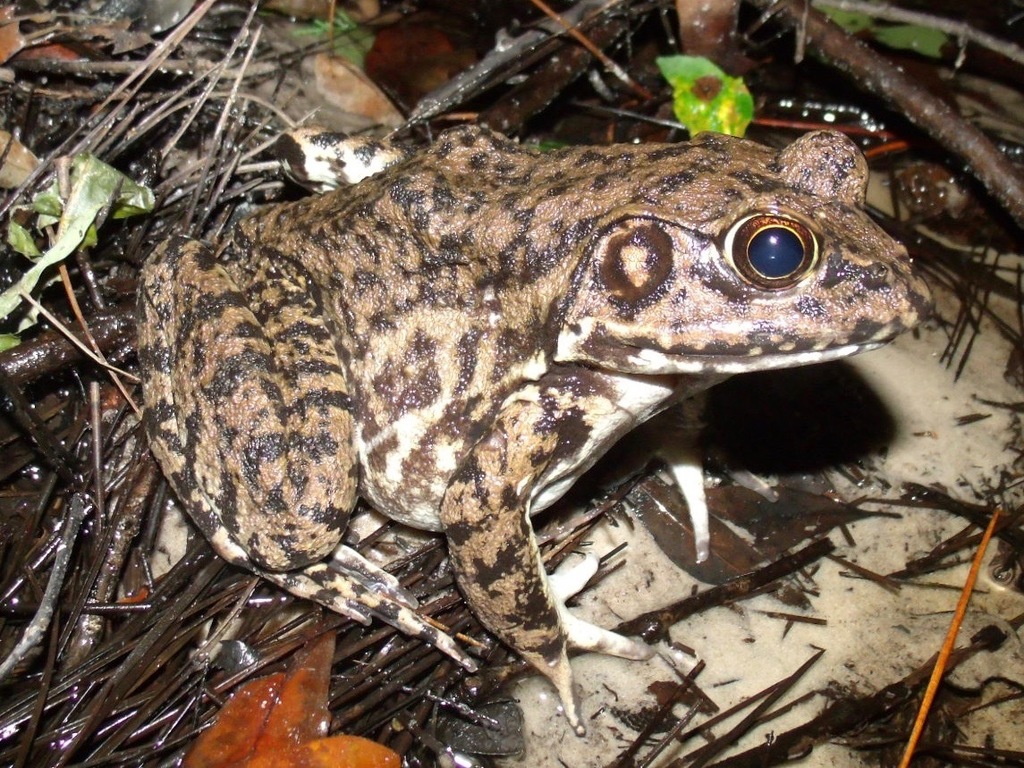
—observations
—countries
—peak records
Least ConcernConservation statusIUCN Red List categoriesLCNTVUENCREWEXLeast ConcernRed List categories, explained →
Diet & preyCrayfish, Aquatic beetles, Dragonfly nymphs
Predators
- Banded water snake
- Great blue heron
- American alligator
ThreatsWetland degradation, river channelization, invasive predators, and water pollution
HabitatsBlackwater rivers, cypress-gum swamps, floodplain marshes, and vegetated lake margins
Life span5–8 years
Classification
- FamilyRanidae
- SpeciesLithobates heckscheri
Range data is not available yet.
Interaction riskLow
- Low
- Moderate
- High
- Very high
- Why interaction risk is low
- Safe to observe at a normal distance.
Responsible observation
- Night Spotting: Scan slow riverbanks with a flashlight to catch eye-shine from resting adults.
- Tadpole Watching: Look for dense, dark schools of tadpoles grazing in shallow margins by day.
- Audio Surveys: Listen on humid summer nights for deep, guttural snoring bellows.
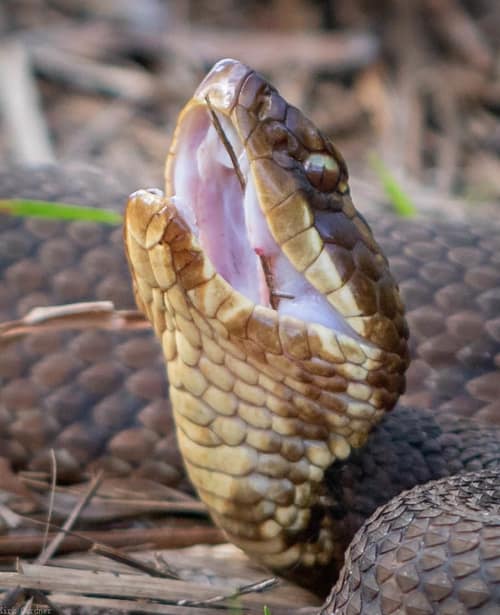
Predator (c) kirk gardner, some rights reserved (CC BY), uploaded by kirk gardner · cc-by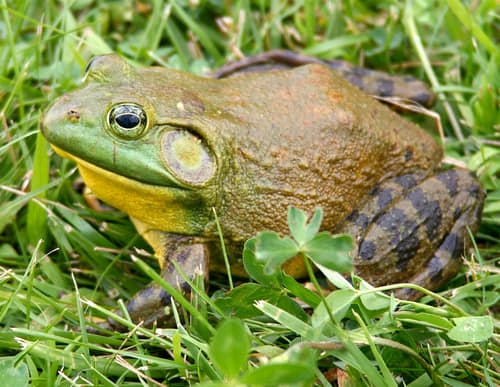
Close Relative Carl D. Howe / CC BY-SA 2.5 · cc-by-sa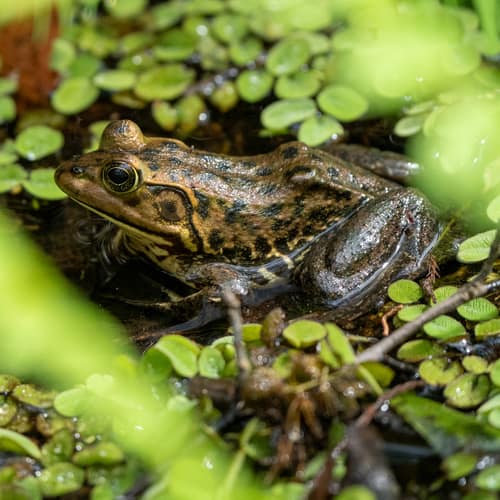
Close Relative (c) Anthony Batista, some rights reserved (CC BY), uploaded by Anthony Batista · cc-by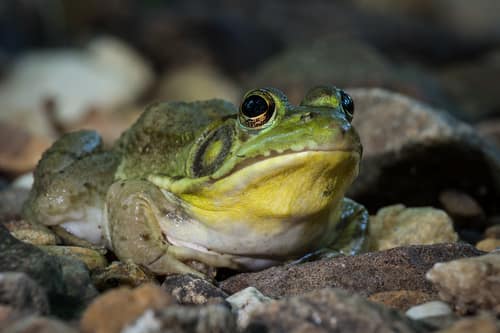
Close Relative "Green Frog" by AER Wilmington DE is licensed under CC BY 2.0. To view a copy of this license, visit https://creativecommons.org/licenses/by/2.0/. · cc-by
Help improve the field guideSomething wrong?
Checking your Fauna account…Report a name, category, or profile issue for review.