
Fish · GBIF taxon 2420764
Smalltooth Sand Tiger
Odontaspis feroxAlso known as Bumpytail Ragged-Tooth, Smalltooth Ragged-Tooth Shark, Herbst's Nurse Shark
Smalltooth sand tigers roam deep rocky reefs and continental drop-offs across tropical and warm temperate oceans worldwide. Despite their formidable rows of protruding, needle-like teeth, these slow-swimming giants are passive toward humans and feed primarily on bottom-dwelling fish, squid, and crustaceans. Females give birth to live young through a strategy where embryos feed on unfertilized eggs within the uterus.
DeepwaterPredatorRare
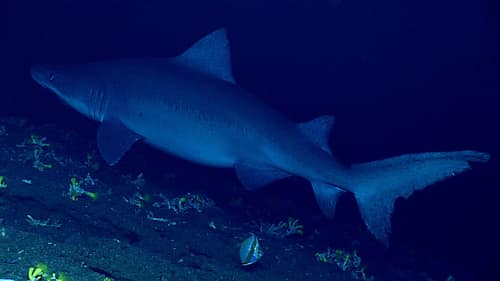
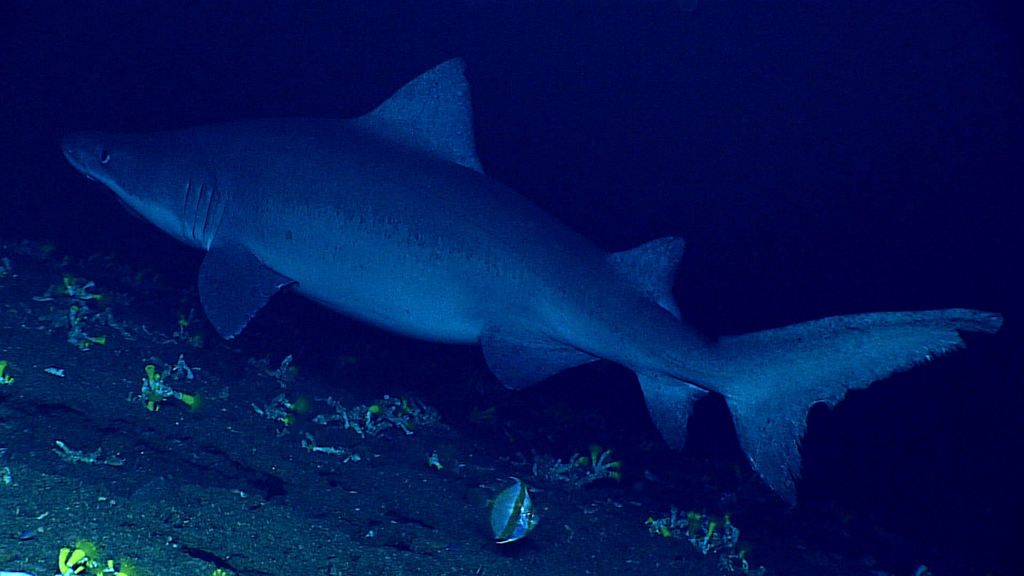
Licensed reference(c) NOAA Photo Library, some rights reserved (CC BY) · cc-by
—observations
—countries
—peak records
EndangeredConservation statusIUCN Red List categoriesLCNTVUENCREWEXEndangeredRed List categories, explained →
Diet & prey
- Benthic Bony Fish
- Squid
- Crustaceans
Predators
- Orca
- Great White Shark
ThreatsBycatch in deep-sea fisheries, low reproductive rate, and habitat degradation
HabitatsDeep rocky reefs, continental slopes, and submarine canyons
Life span20–40 years
Classification
- FamilyOdontaspididae
- SpeciesOdontaspis ferox
Range data is not available yet.
Interaction riskHigh
- Low
- Moderate
- High
- Very high
- Why interaction risk is high
- Capable of a powerful bite if provoked or entangled; observe from a safe distance.
- Why it is dangerous
- Possesses massive jaws lined with multiple rows of sharp, slender teeth capable of inflicting severe tissue damage if cornered or harassed.
- How to recognize a risky encounter
- Look for a heavy body, a first dorsal fin distinctly larger than the second, and protruding needle-like teeth visible when the mouth is closed.
- What to do
- Never approach, corner, or attempt to touch this large shark; give it plenty of space to navigate along reef walls.
- What to notice
- Recognizable by its pale grey coloration, slender protruding teeth, and large primary dorsal fin relative to its small secondary dorsal fin.
- Support conservation
- Avoid using intense dive lights inside deep caves and report any accidental fishing catches to local marine research authorities.
Responsible observation
- Submersible Observation: Maintain a non-intrusive distance when encountering these deepwater sharks along drop-offs.
- Diver Etiquette: Avoid blocking their swim path or cornering them inside underwater caves and arches.
- Reporting Sightings: Document encounters with clear photos of the dorsal fins to aid ongoing conservation monitoring.
 Image unavailable
Genus Member 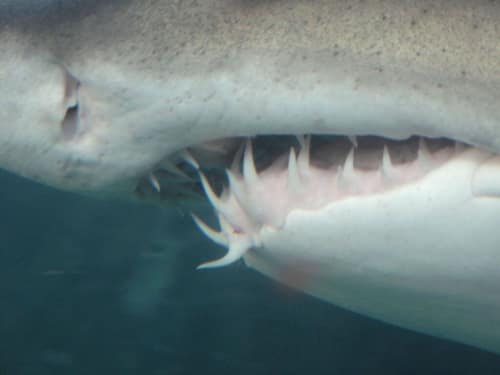
Close Relative (c) Ventus55, some rights reserved (CC BY-SA) · cc-by-sa
Order Relative (c) jidanchaomian, some rights reserved (CC BY-SA) · cc-by-sa
Help improve the field guideSomething wrong?
Checking your Fauna account…Report a name, category, or profile issue for review.