
Fish
Basking Shark
Cetorhinus maximusAlso known as Bone Shark, Elephant Shark, Sunfish, Sailfish
Basking sharks cruise slowly through temperate coastal waters with massive jaws agape, filtering hundreds of thousands of liters of seawater per hour through bristling gill rakers. These gentle giants undertake deep, long-distance seasonal migrations into offshore mesopelagic depths during the winter when surface plankton levels plummet. Though largely solitary while feeding, they occasionally gather in synchronized circular formations called toruses, likely for courtship.
MarineFilter Feeder
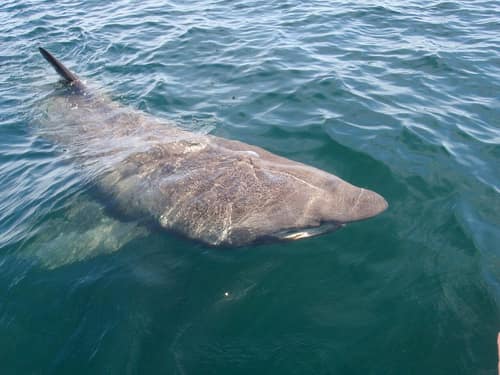
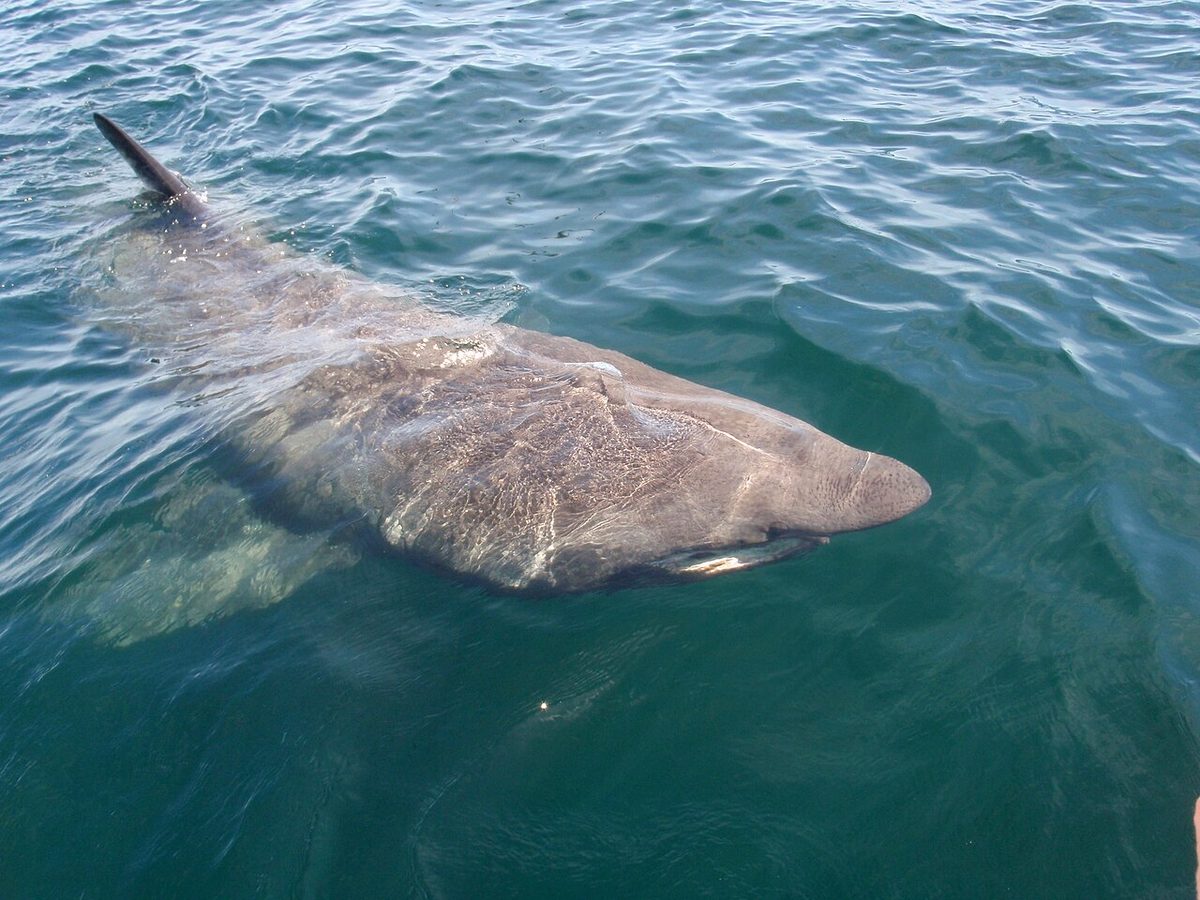
—observations
—countries
—peak records
EndangeredConservation statusIUCN Red List categoriesLCNTVUENCREWEXEndangeredRed List categories, explained →
Diet & preyCalanoid Copepod, Northern Krill, Fish Larvae
Predators
- Killer Whale
- Great White Shark
ThreatsCollisions with vessels, commercial fisheries bycatch, and marine debris entanglement.
HabitatsTemperate continental shelves, coastal bays, and pelagic open ocean.
Life span50 years
Classification
- FamilyCetorhinidae
- SpeciesCetorhinus maximus
Range data is not available yet.
Interaction riskHigh
- Low
- Moderate
- High
- Very high
- Why interaction risk is high
- Safe to observe at a respectful distance from a boat or kayak.
- What to notice
- Recognize by its colossal size, mottled grey skin, bulbous snout, and tall triangular dorsal fin riding high above the surface.
- Support conservation
- Give these animals a wide berth, cut motorized propellers if they approach, and never attempt to touch or crowd them in the water.
Responsible observation
- Boat Speed: Reduce vessel speed to below six knots when entering known feeding zones to prevent collisions.
- Safe Distance: Maintain at least 100 meters distance and never steer across the shark's swimming path.
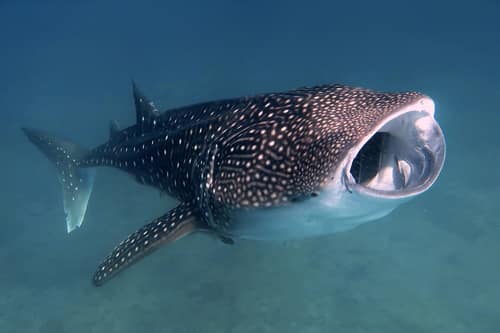
Fellow Filter Feeder (c) Daniel Benák, some rights reserved (CC BY), uploaded by Daniel Benák · cc-by Image unavailable
Fellow Filter Feeder 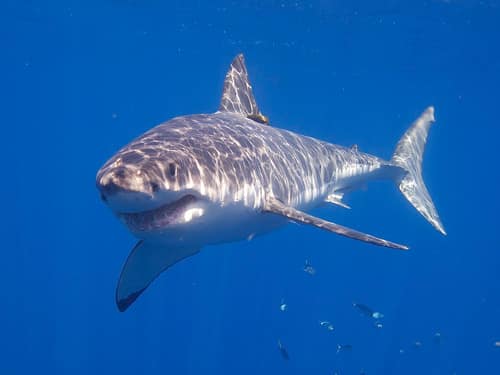
Order Member "Great White Shark" by Elias Levy is licensed under CC BY 2.0. To view a copy of this license, visit https://creativecommons.org/licenses/by/2.0/. · cc-by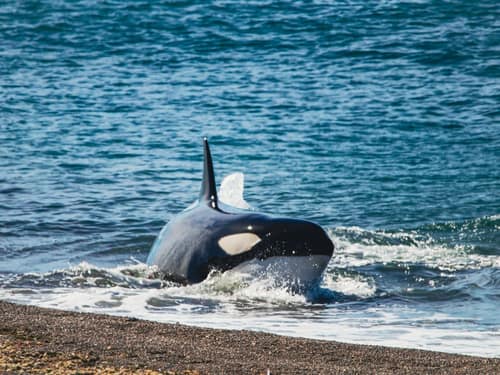
Predator (c) Martín Acosta Albarracín, some rights reserved (CC BY), uploaded by Martín Acosta Albarracín · cc-by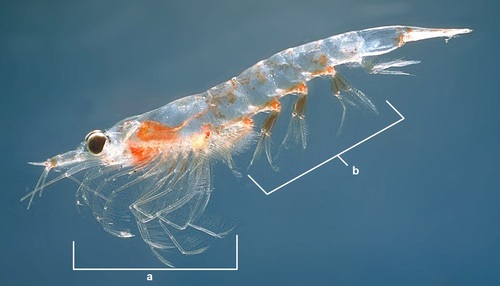
Prey (c) Øystein Paulsen, some rights reserved (CC BY-SA) · cc-by-sa
Help improve the field guideSomething wrong?
Checking your Fauna account…Report a name, category, or profile issue for review.