
Fish
Broadnose Sevengill Shark
Notorynchus cepedianusAlso known as Sevengill Shark, Cow Shark, Broadnose Shark, Mud Shark
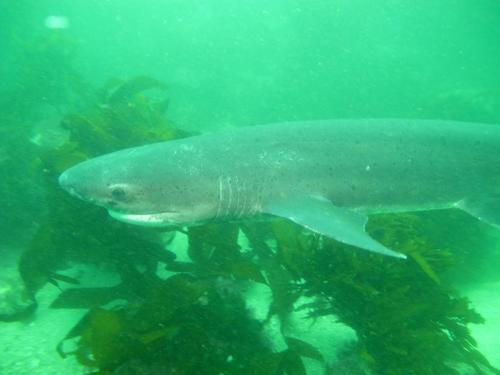
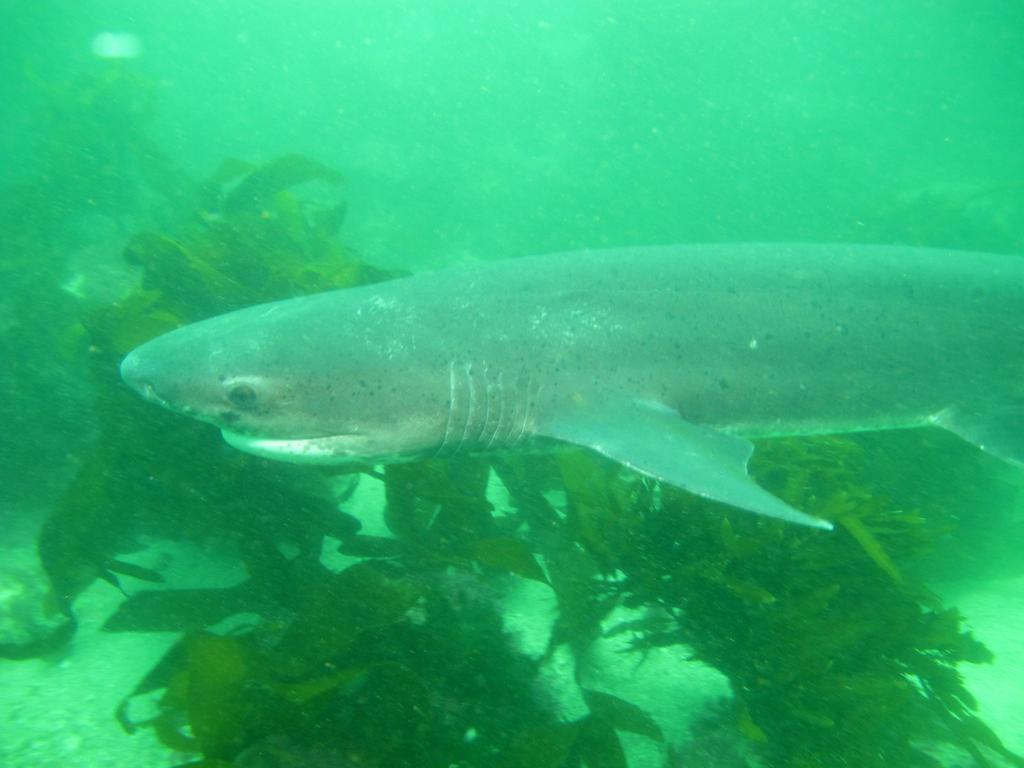
Broadnose sevengill sharks are opportunistic apex predators capable of coordinating tactical pack hunts to ambush marine mammals and large fish. Retaining primitive traits from the Jurassic period, they lack the typical second dorsal fin and possess unique comb-shaped lower teeth designed to shear flesh. Coastal bays and sheltered estuaries serve as critical seasonal pupping grounds, where females give birth to large litters of live young after an extensive gestation.
MarineApex PredatorPrimitive
—observations
—countries
—peak records
VulnerableConservation statusIUCN Red List categoriesLCNTVUENCREWEXVulnerableRed List categories, explained →
Diet & preyHarbor Seal, Bat Ray, Spiny Dogfish
Predators
- Killer Whale
- Great White Shark
ThreatsCommercial bycatch, targeted gillnet fishing, and coastal nursery habitat loss
HabitatsTemperate coastal bays, kelp forests, estuaries, and continental shelves
Life span30–50 years
Classification
- FamilyHexanchidae
- SpeciesNotorynchus cepedianus
Range data is not available yet.
Interaction riskHigh
- Low
- Moderate
- High
- Very high
- Why interaction risk is high
- Large apex predator capable of severe bites; maintain distance and avoid cornering in shallow water.
- Why it is dangerous
- Large jaws packed with multi-cusped upper teeth and serrated, comb-like lower teeth deliver catastrophic tearing bites capable of severing limbs.
- How to recognize a risky encounter
- Look for seven distinct gill slits, a wide blunt snout, a single dorsal fin set far back, and black-and-white spotted skin.
- What to do
- Never touch, corner, or spear this shark; slowly back away facing the animal if it circles closely.
- What to notice
- Recognized by a pale belly, speckled countershaded back, and an elongated upper caudal fin lobe.
- Support conservation
- Keep boat traffic slow and minimize water disturbance in shallow coastal bays during spring pupping season.
Responsible observation
- Diver Etiquette: Give approaching individuals clear right-of-way and avoid blocking escape paths or kelp channels.
- Shallow Water Care: Watch for moving dorsal silhouettes when wading near murky estuarine inlets during summer.
- Bait Awareness: Avoid swimming or diving near active spearfishing, hook-and-line angling, or fish cleaning stations.
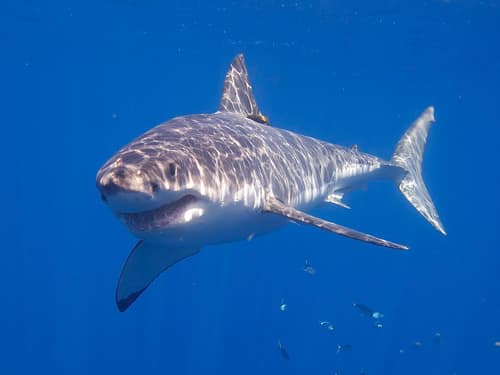
Predator "Great White Shark" by Elias Levy is licensed under CC BY 2.0. To view a copy of this license, visit https://creativecommons.org/licenses/by/2.0/. · cc-by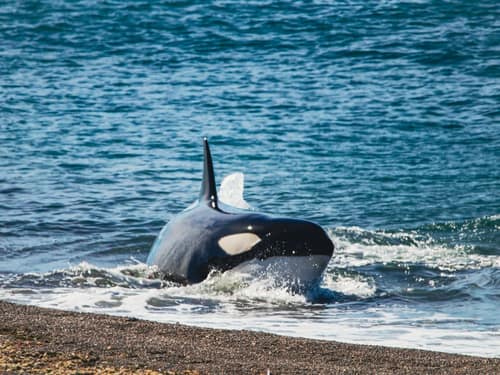
Predator (c) Martín Acosta Albarracín, some rights reserved (CC BY), uploaded by Martín Acosta Albarracín · cc-by
Prey Charles J. Sharp / CC BY-SA 4.0 · cc-by-sa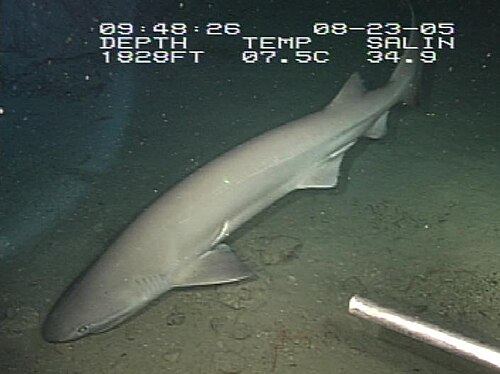
Same Family Operation Deep Scope 2005 Expedition: NOAA Office of Ocean Exploration; Harbor Branch Oceanographic Institution / Public domain · cc0 Image unavailable
Same Family
Help improve the field guideSomething wrong?
Checking your Fauna account…Report a name, category, or profile issue for review.