Also known as Cow Shark, Sixgill Shark, Mud Shark, Grey Shark
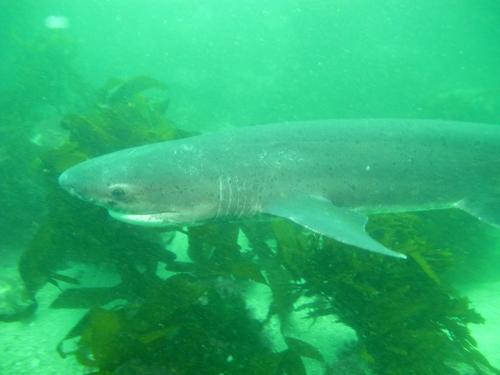
Bluntnose sixgill sharks represent an ancient lineage dating back over two hundred million years, easily recognized by their heavy bodies, single dorsal fin set far back, and primitive six pairs of gill slits. They spend daylight hours resting in deep ocean trenches and submarine canyons down to 2,500 meters, migrating into shallower waters at night to ambush seals, large fish, and other sharks. Slow swimming speeds conceal sudden bursts of speed powered by a broad, paddle-like caudal fin when striking prey.
ThreatsCommercial bycatch in bottom trawls, longline fishing, and slow reproductive rates
HabitatsContinental shelves, deep-sea trenches, and temperate to tropical coastal fjords
Life span70–80 years
Classification
FamilyHexanchidae
SpeciesHexanchus griseus
Range & activity
Range data is not available yet.
Safe observation
Interaction riskHigh
Low
Moderate
High
Very high
Why interaction risk is high
Massive apex predator with powerful jaws; maintain a respectful distance during rare diving encounters.
Why it is dangerous
Equipped with massive jaws lined with comb-like, multi-cusped lower teeth designed to saw through thick flesh, causing devastating traumatic wounds if provoked.
How to recognize a risky encounter
Look for a heavy cylindrical body in pale gray to dark brown, a single dorsal fin near the tail, and six gill slits on each side.
What to do
Never attempt to touch or corral this shark; back away slowly if one approaches out of curiosity in low light.
What to notice
Easily identified underwater by its blunt rounded snout, fluorescent green eyes, and distinct lack of an anterior dorsal fin.
Support conservation
Report sightings to local shark tagging and monitoring projects without disclosing precise recurring aggregation coordinates to unverified harvesters.
Responsible observation
Diver Etiquette: Give ample space if encountered during shallow night dives, avoiding cornering or pursuing them.
Lighting Caution: Minimize bright dive lights directly on their eyes, as deep-sea retinas are extremely sensitive to glare.
Angler Release: Cut lines promptly if caught accidentally on deep drops to facilitate survival.

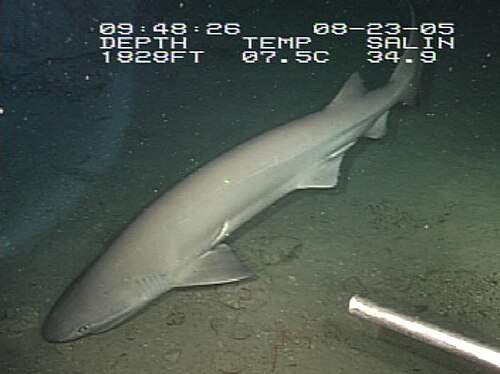
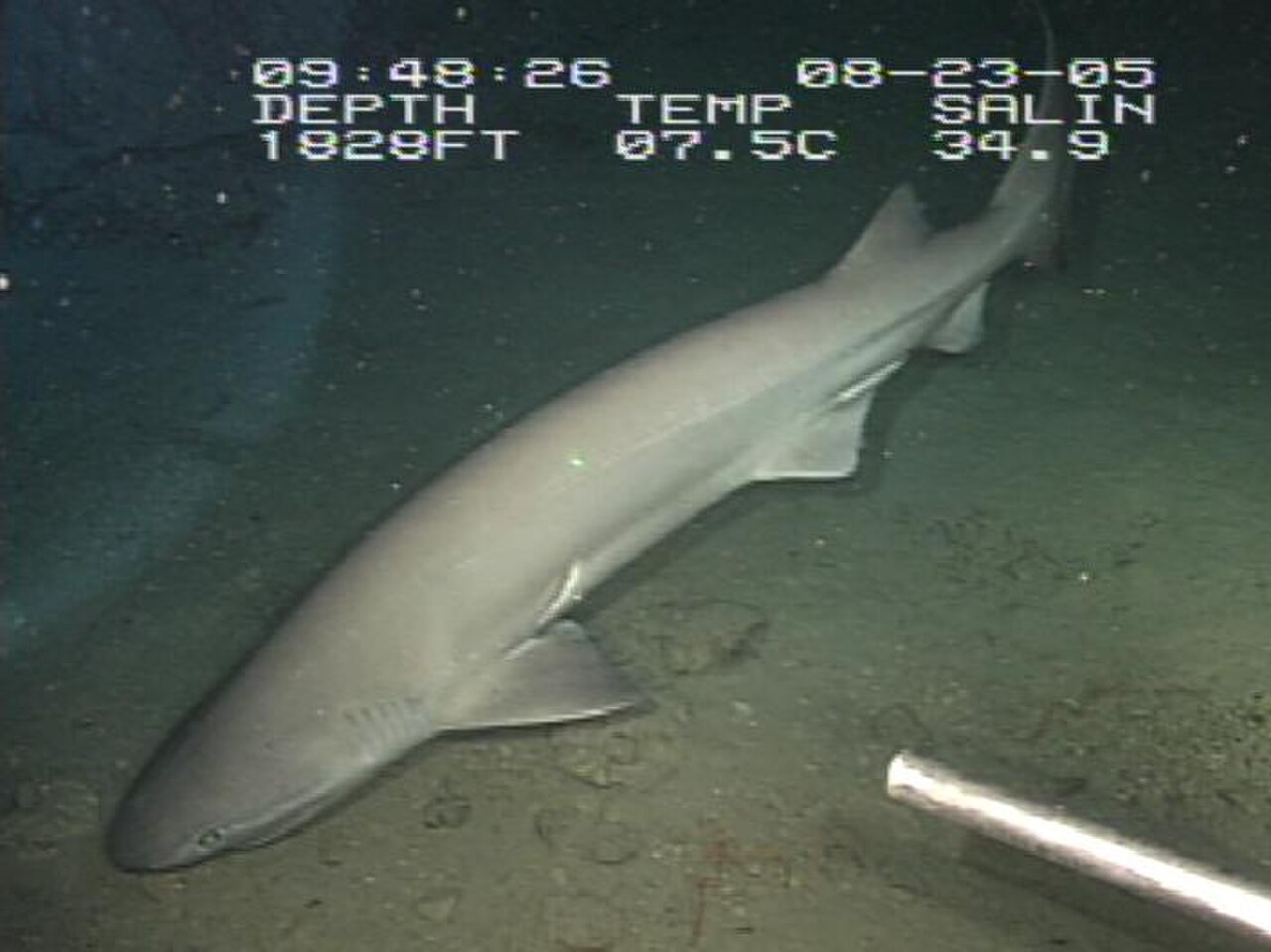
 Image unavailable