Also known as Smooth Stingray, Short-tailed Stingray, Giant Black Ray, Schreiner's Stingray
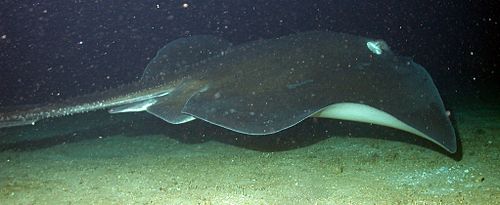
Short-tail stingrays are colossal bottom-dwellers known to glide effortlessly through temperate coastal shallows, kelp forests, and open ocean waters. Despite their massive girth and imposing presence, they are naturally placid creatures that often tolerate calm divers and congregate around rocky reefs and fish-cleaning stations. When hunting, they excavate sandy bottoms with powerful jets of water from their mouths to uncover buried bivalves and crabs.
Armed with a large venomous barb capable of inflicting deep puncture wounds; observe quietly from several meters away.
Why it is dangerous
The serrated tail spine is coated in toxic venom that induces excruciating local pain, tissue necrosis, and secondary infection, while its sheer mass can cause severe blunt trauma.
How to recognize a risky encounter
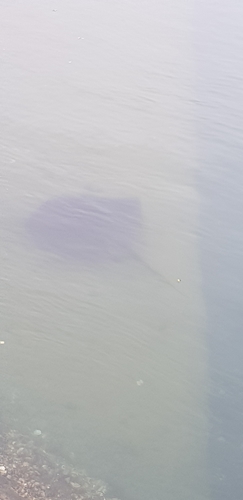
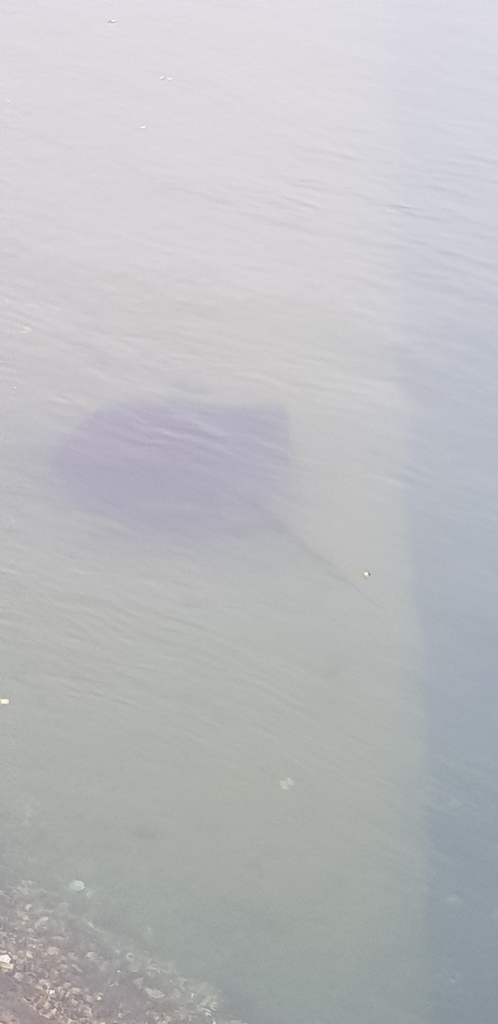
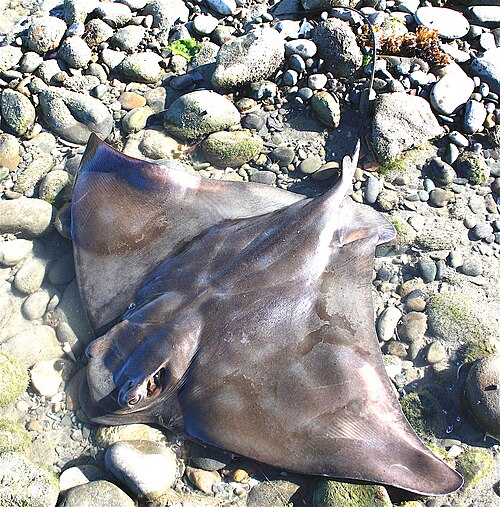
Look for a massive, diamond-shaped greyish-black disc with rows of faint white pores on either side of the snout and a short, thick tail.
What to do
Never touch, harass, or corner this ray; if an individual approaches while you are swimming, remain still and let it pass.
Responsible observation
Shuffle Feet: When wading through sandy shallows in ray habitat, drag your feet along the bottom to alert resting individuals before stepping on them.
Keep Your Distance: Divers and snorkelers should stay at least three to four meters away, never crowding the ray or hovering directly above its tail.
Avoid Cornering: Never block an individual against reefs or wharf pilings, giving the ray a clear path to swim away freely.