
Species
Pollock
Pollachius virensAlso known as Saithe, Coalfish, Coley, Boston Blue
Pollock form dense, fast-swimming pelagic schools in cold North Atlantic waters, roaming the continental shelf from rocky inshore kelp forests out to deep offshore banks. Juveniles spend their first two to three years grazing small crustaceans in coastal shallows before migrating to open water to hunt schooling fish. Their sleek, torpedo-shaped bodies and reflective greenish-black coloration provide excellent camouflage in turbulent open seas.
MarineSchoolingCarnivorous
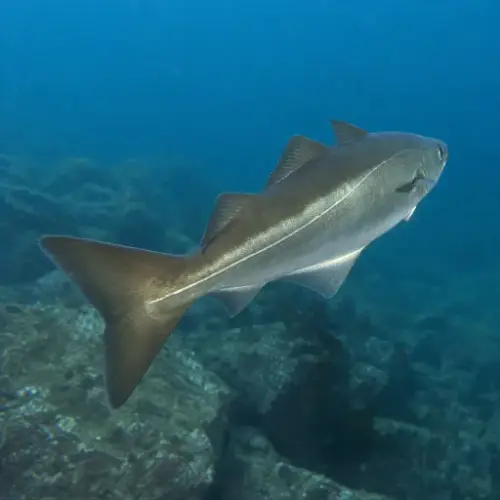
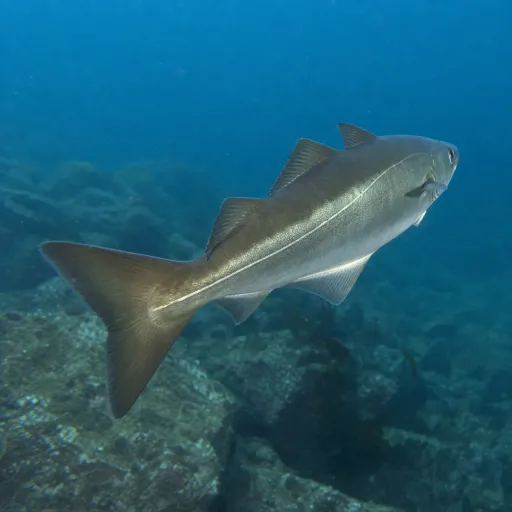
—observations
—countries
—peak records
Least ConcernConservation statusIUCN Red List categoriesLCNTVUENCREWEXLeast ConcernRed List categories, explained →
Diet & preyAtlantic Herring, Lesser Sandeel, Northern Krill
Predators
- Grey Seal
- Harbour Porpoise
- Atlantic Cod
ThreatsCommercial bottom trawling, overfishing pressures, marine warming, and habitat degradation
HabitatsCold temperate to subarctic coastal waters, rocky reefs, kelp forests, and offshore continental shelves down to 300 meters
Life span15–25 years
Classification
- FamilyGadidae
- SpeciesPollachius virens
Range data is not available yet.
Interaction riskLow
- Low
- Moderate
- High
- Very high
- Why interaction risk is low
- Safe to observe at a normal distance.
Responsible observation
- Coastal diving: Look for vibrant green shoals hovering along rocky drop-offs and kelp forest edges.
- Tidal timing: Observe inshore juveniles near harbors and jetties during incoming high tides.
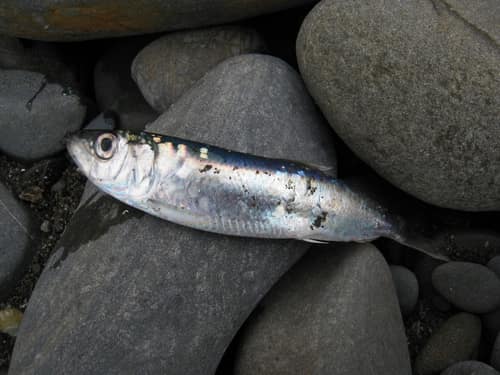
Prey (c) Simon Rolph, some rights reserved (CC BY), uploaded by Simon Rolph · cc-by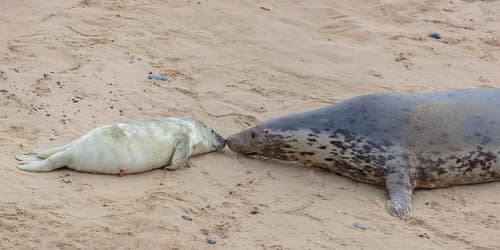
Predator Diego Delso / CC BY-SA 4.0 · cc-by-sa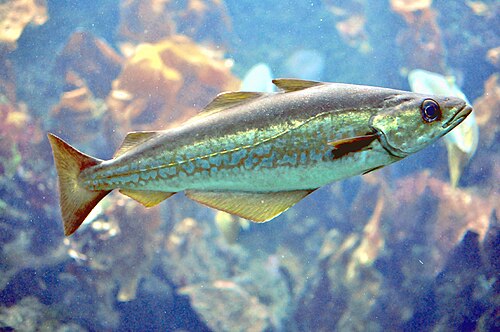
Close Relative This illustration was made by Citron You must credit this : Citron / CC-BY-SA-3.0 / CC BY-SA 3.0 · cc-by-sa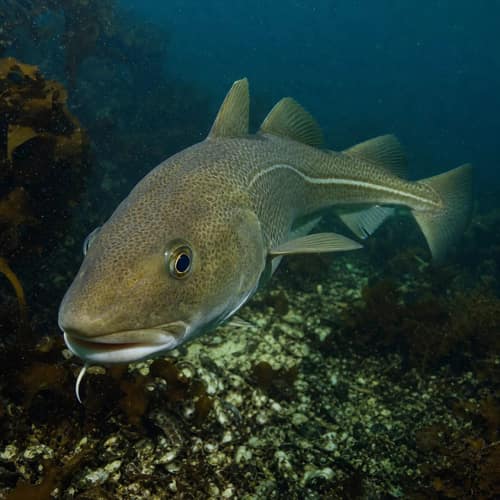
Same Family NOAA / Public Domain (NOAA) · Public Domain (NOAA)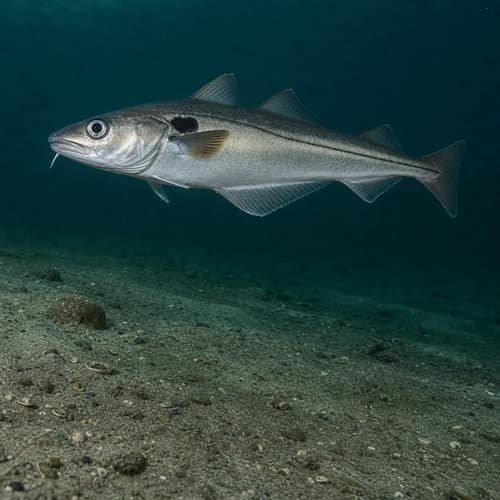
Same Family J. Deeds FDA / Public Domain (FDA) · Public Domain (FDA)
Help improve the field guideSomething wrong?
Checking your Fauna account…Report a name, category, or profile issue for review.