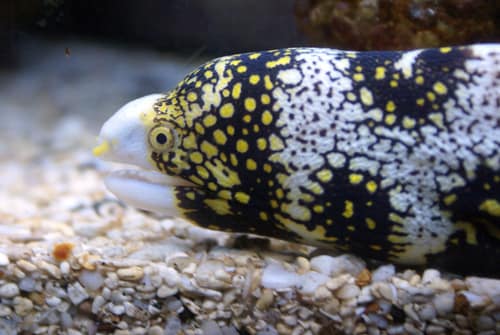
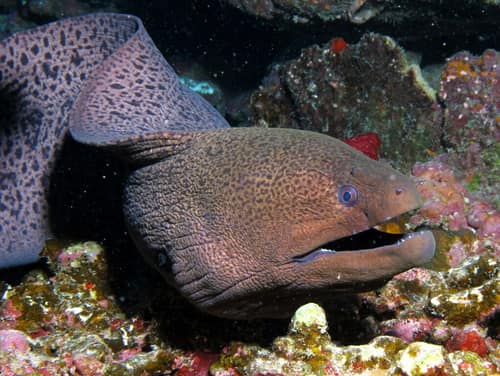
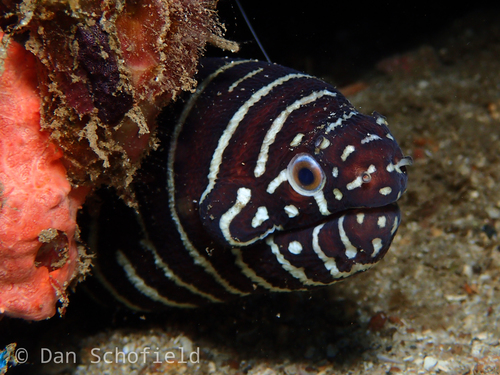
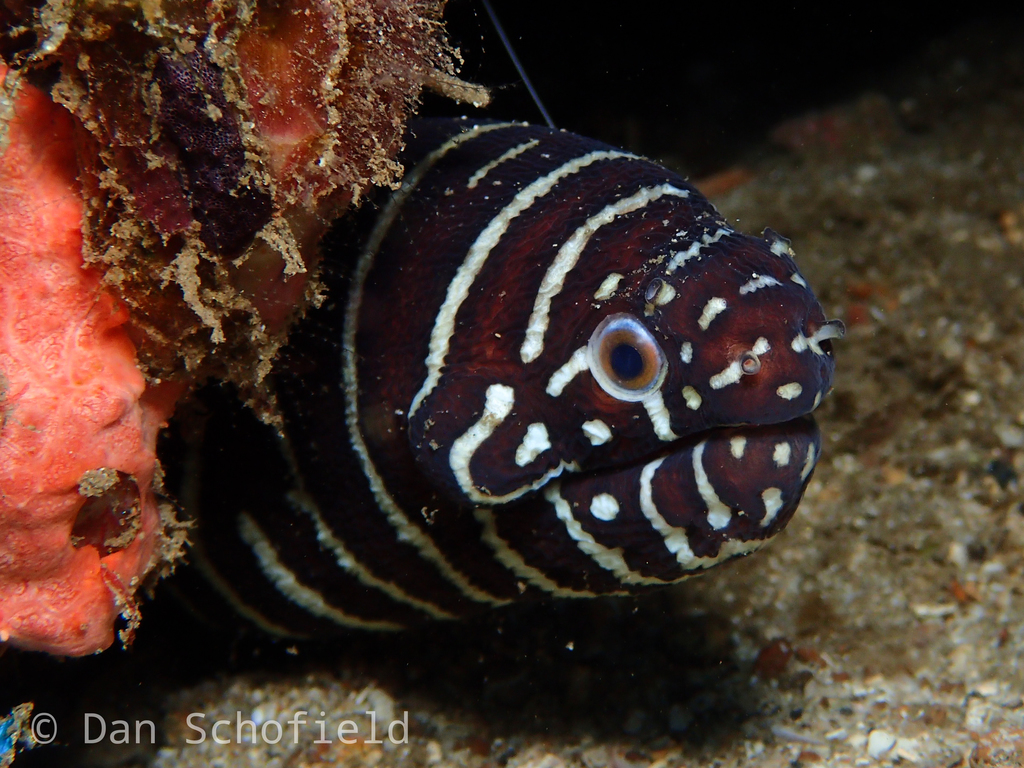
Zebra morays navigate tropical coral reefs with a distinctive dark body ringed by dozens of narrow white or pale yellow vertical bands. Unlike their fish-hunting relatives armed with needle-sharp fangs, they possess specialized, close-set molar-like teeth adapted for crushing hard-shelled prey like crabs and sea urchins. Primarily nocturnal and reclusive, they spend the daytime hours tucked into crevice labyrinths, poking only their blunt snouts out into the water column.
ThreatsCoral reef degradation, warming ocean waters, and collection for the marine aquarium trade.
HabitatsShallow tropical coral reefs, rocky reef crevices, and sandy reef flats down to 40 meters.
Life span15–20 years
Classification
FamilyMuraenidae
SpeciesGymnomuraena zebra
Range & activity
Range data is not available yet.
Safe observation
Interaction riskLow
Low
Moderate
High
Very high
Why interaction risk is low
Powerful crushing jaws can deliver a painful bite if handled; observe crevices without reaching in.
Why it is dangerous
Equipped with exceptionally strong jaw muscles and pebble-like crushing teeth designed to crack crab shells, producing severe crush injuries and high-risk bacterial wounds if provoked.
How to recognize a risky encounter
Recognizable by the bold, uniform zebra-like black and white bands running from snout to tail tip along a stout, cylindrical body.
What to do
Maintain a respectful distance when diving or snorkeling, and never attempt to hand-feed or grab hiding individuals.
Responsible observation
Keep Hands Clear: Never reach blindly into coral crevices or reef caves where eels shelter.
Night Dives: Use indirect light during night dives to watch them actively prowling for crustacean prey.

 1 / 7
1 / 7
 Image unavailable