
Species · GBIF taxon 2402122
Acipenser transmontanus
Acipenser transmontanusAlso known as Pacific Sturgeon, Columbia Sturgeon, Oregon Sturgeon, Sacramento Sturgeon
White sturgeon are North America's largest freshwater fish, easily recognized by their shark-like profile, prominent bony scutes, and sensitive barbels used to locate food along dark river bottoms. These ancient giants spend decades moving between estuaries, coastal oceans, and deep river channels before returning to swift river currents to spawn. Slow growth and late maturity make them exceptionally vulnerable to river damming, overfishing, and habitat loss.
PrehistoricAnadromousRiver Giant
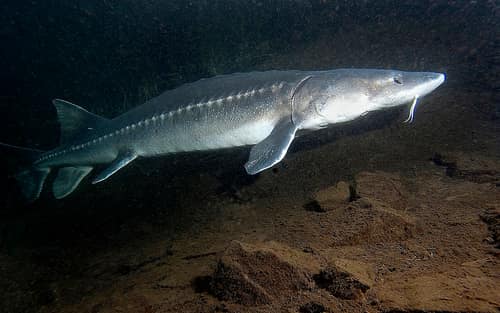
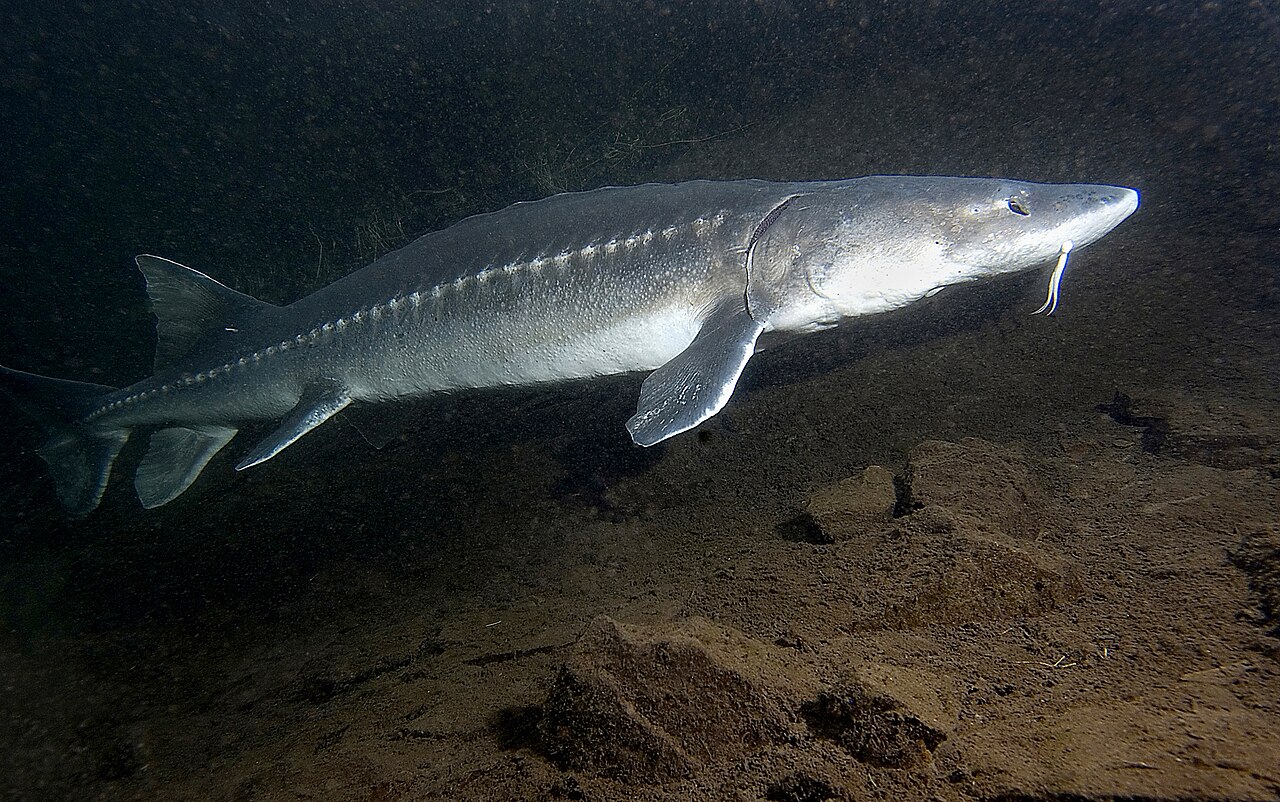
Licensed referenceOregon Department of Fish & Wildlife / CC BY-SA 2.0 · cc-by-sa
—observations
—countries
—peak records
VulnerableConservation statusIUCN Red List categoriesLCNTVUENCREWEXVulnerableRed List categories, explained →
Diet & prey
- Chinook Salmon
- Dungeness Crabs
- Clams
Predators
- California Sea Lions
- Orcas
- Humans
ThreatsDams, habitat degradation, historical overfishing, pollution
HabitatsLarge rivers, estuaries, bays, and coastal Pacific marine waters
Life span80–100+ years
Size / weightNot available
Classification
- OrderAcipenseriformes
- FamilyAcipenseridae
- GenusAcipenser
- SpeciesAcipenser transmontanus
Range data is not available yet.
Interaction riskHigh
- Low
- Moderate
- High
- Very high
- Why interaction risk is high
- Massive size and powerful thrashing can cause injury if landed; observe safely from boats or shore.
- What to notice
- Recognize by five rows of bony plates, a broad snout with four barbels, and massive size.
- Support conservation
- Keep landed fish submerged in water and release immediately without lifting by the tail or gills.
Responsible observation
- Responsible Angling: Use barbless single hooks and keep large fish submerged during handling.
- River Watching: Scan deep river bends and tailraces below dams during spring spawning migrations.
- Habitat Conservation: Support flow management initiatives that clear barriers for migratory fish.
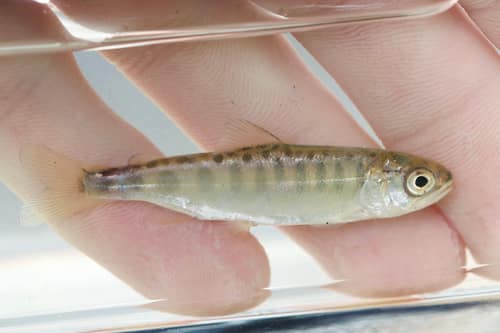
Prey (c) Owen Strickland, some rights reserved (CC BY), uploaded by Owen Strickland · cc-by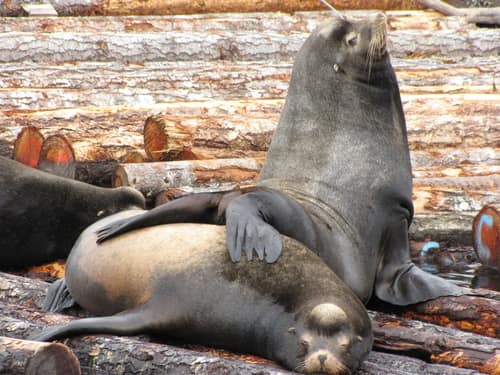
Predator (c) Liam Steele, some rights reserved (CC BY), uploaded by Liam Steele · cc-by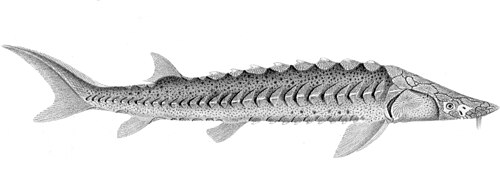
Close Relative Muséum d'histoire Naturelle / Public domain · cc0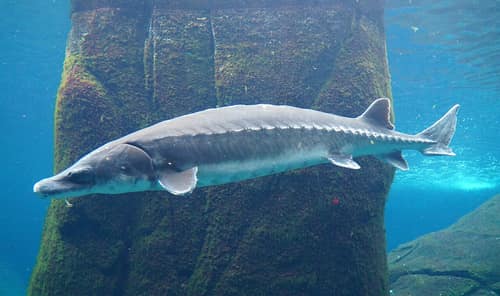
Close Relative Jiaqian AirplaneFan / CC BY 3.0 · cc-by
Help improve the field guideSomething wrong?
Checking your Fauna account…Report a name, category, or profile issue for review.