
Species
Atlantic Sturgeon
Acipenser oxyrinchusAlso known as Common Sturgeon, American Sturgeon, Sea Sturgeon, Baltic Sturgeon
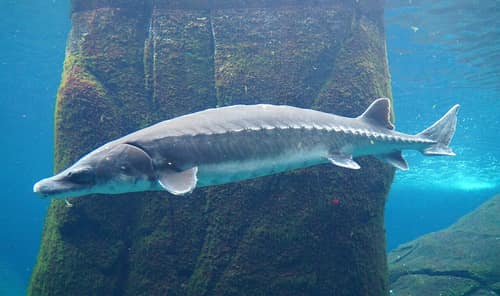
Atlantic sturgeon are ancient, armor-plated wanderers that spend most of their lives feeding in coastal ocean waters before ascending their natal rivers to spawn. These primitive bony fish can grow to massive lengths, navigating river bottoms with sensory barbels to locate soft-bodied benthic prey. Once abundant throughout major East Coast tributaries, their populations faced drastic declines due to historical overfishing for caviar and habitat loss from river damming.
AncientMigratoryAnadromous

—observations
—countries
—peak records
VulnerableConservation statusIUCN Red List categoriesLCNTVUENCREWEXVulnerableRed List categories, explained →
Diet & preyMollusks, Polychaete worms, Crustaceans
Predators
- Sharks
- Marine mammals
- Humans
ThreatsDam construction, vessel strikes, historical overfishing, water pollution, bycatch
HabitatsCoastal ocean waters, estuaries, large rivers
Life spanUp to 60 years
Classification
- FamilyAcipenseridae
- SpeciesAcipenser oxyrinchus
Range data is not available yet.
Interaction riskHigh
- Low
- Moderate
- High
- Very high
- Why interaction risk is high
- Large individuals can breach out of the water; maintain a safe boating speed in sturgeon rivers.
- Why it is dangerous
- Adults weighing hundreds of pounds occasionally breach high out of the water, creating severe collision hazards for fast-moving watercraft.
- How to recognize a risky encounter
- Recognized by a long pointed head, four sensory barbels near the mouth, and five rows of hard bony plates along the body.
- What to do
- Maintain slow speeds when boating in known sturgeon river corridors and stay clear of breaching areas.
- What to notice
- Look for a large torpedo-shaped fish covered in prominent armor plates rather than smooth scales.
- Support conservation
- Observe from watercraft at a respectful distance and report accidental bycatch to local wildlife authorities.
Responsible observation
- Boating Caution: Reduce speed in designated sturgeon spawning rivers during spring to avoid high-speed collisions with breaching fish.
- Estuary Spotting: Scan quiet river mouths and estuaries during summer months for massive leaps clear of the water.
- Catching Protocol: Return any incidentally hooked fish to the water immediately without lifting them by the tail.
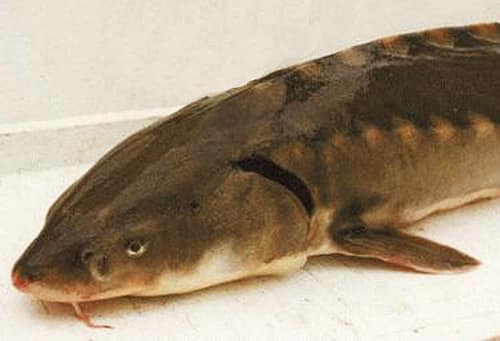
Sympatric Relative Unknown authorUnknown author / Public domain · cc0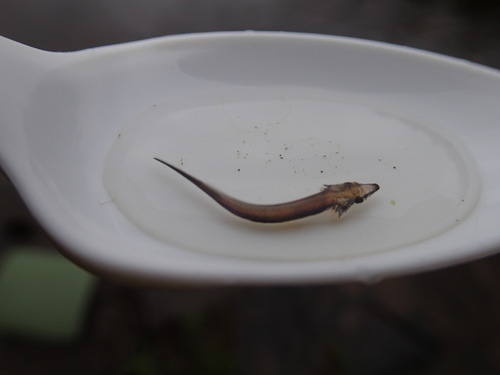
Freshwater Relative (c) Rob Foster, some rights reserved (CC BY) · cc-by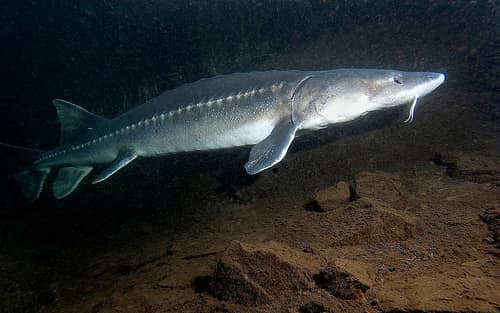
Pacific Relative Oregon Department of Fish & Wildlife / CC BY-SA 2.0 · cc-by-sa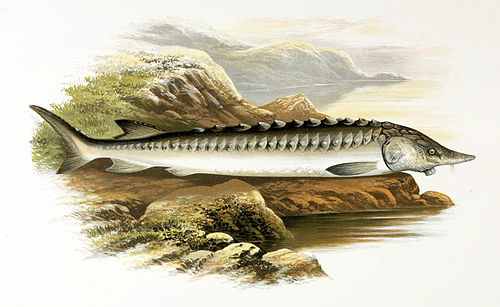
Close Relative Alexander Francis Lydon / Public domain · cc0
Help improve the field guideSomething wrong?
Checking your Fauna account…Report a name, category, or profile issue for review.