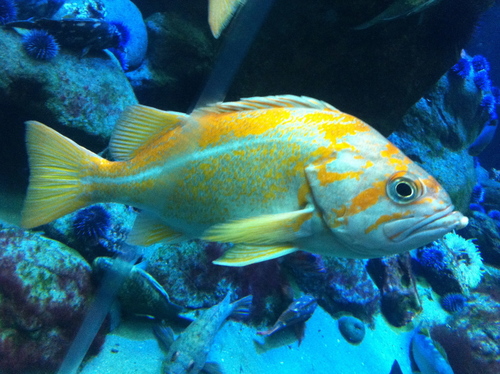
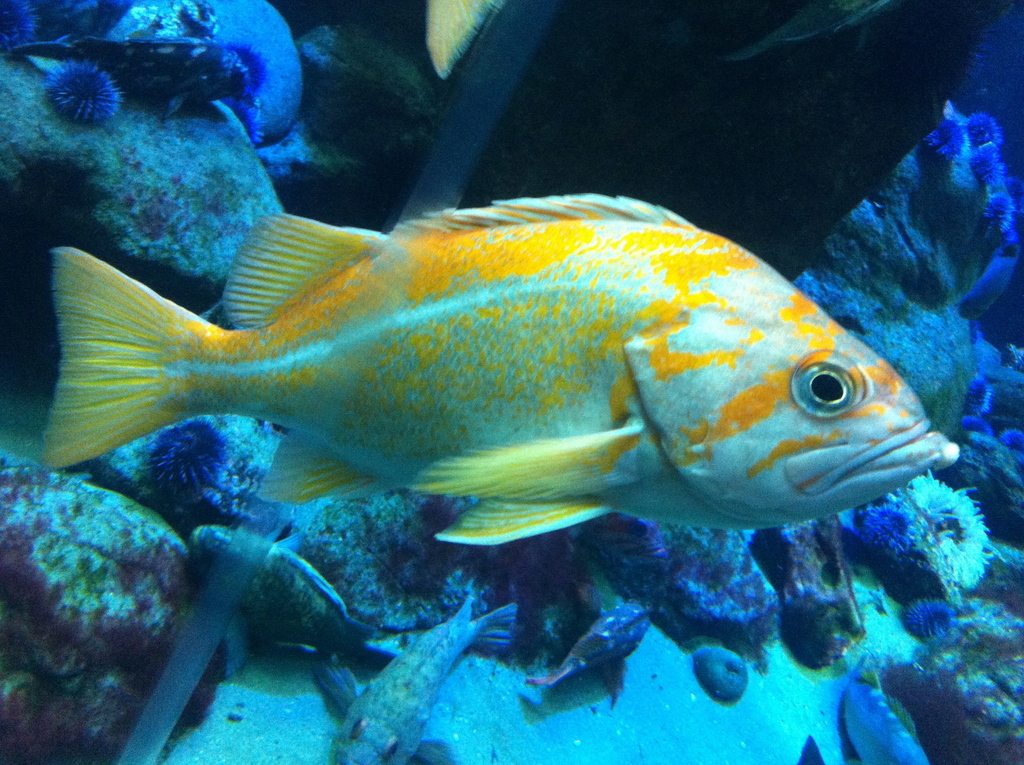
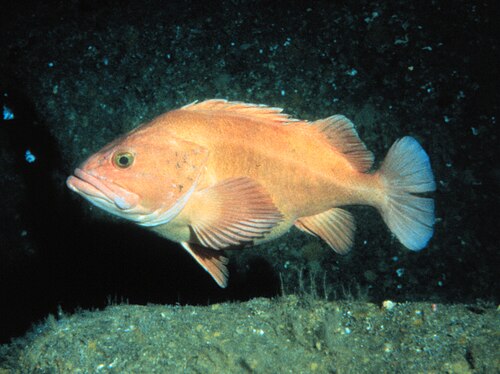
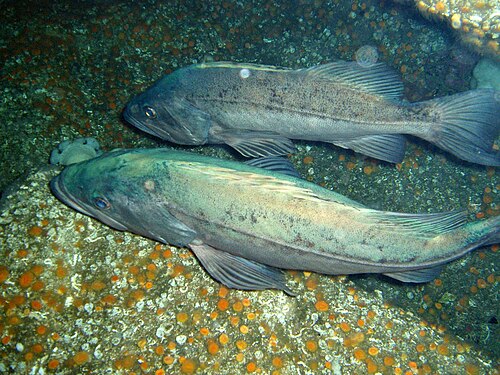
Also known as Orange Rockfish, Canary Cod, Red Snapper
Canary rockfish are vivid orange-and-white predators that dwell around temperate rocky reefs and deep continental shelves along the Pacific coast. They often hover in loose, midwater aggregations near high-relief pinnacles, darting out to ambush passing krill and small schooling fish. Exceptionally long-lived like many scorpaenids, individuals can survive for over eight decades, maturing slowly before contributing to seasonal winter spawning runs.
ThreatsCommercial bottom trawling, recreational overfishing, and barotrauma during capture
HabitatsRocky reefs, kelp beds, boulder fields, and continental shelf banks
Life spanUp to 84 years
Classification
OrderScorpaeniformes
FamilySebastidae
GenusSebastes
SpeciesSebastes pinniger
Range & activity
Range data is not available yet.
Safe observation
Interaction riskVery high
Low
Moderate
High
Very high
Why interaction risk is very high
Fin spines carry mild venom that causes intense pain upon puncture; avoid handling without heavy puncture-resistant gloves.
Why it is dangerous
Sharp dorsal, anal, and pelvic fin spines contain mild tissue toxins that cause rapid localized throbbing, swelling, and secondary infection.
How to recognize a risky encounter
Recognized by bright orange and yellow mottling over a pale body, three orange stripes radiating across the head, and black pigment along the rear edge of the spinous dorsal fin.
What to do
Do not grab the body with bare hands; if landed, immobilize the fish with lip grippers and keep fingers clear of fin rays.
What to notice
Look for a bright orange-yellow body with an unspotted lateral line running through a clear orange streak along deep coastal reefs.
Support conservation
Maintain non-contact observation while diving, and support marine protected areas where benthic rockfish communities can mature undisturbed.
Responsible observation
Diver Etiquette: Approach slowly without shining high-power dive lights directly into their eyes to avoid disorienting them.
Angler Release: Use descending devices to return unintentionally caught rockfish to depth, reversing fatal barotrauma.