
Invertebrate
Black Abalone
Haliotis cracherodiiAlso known as Black Ear Shell
Black abalone cling tenaciously to rocky intertidal crevices along the North American Pacific coast, feeding on drift kelp swept into their deep rock fissures. Their dark, porcelain-smooth shells house a muscular foot capable of anchoring them against violent wave action. Decimated by a bacterial infection called withering syndrome, remaining populations survive in isolated pockets where cold water suppresses disease outbreaks.
MarineHerbivorousIntertidal
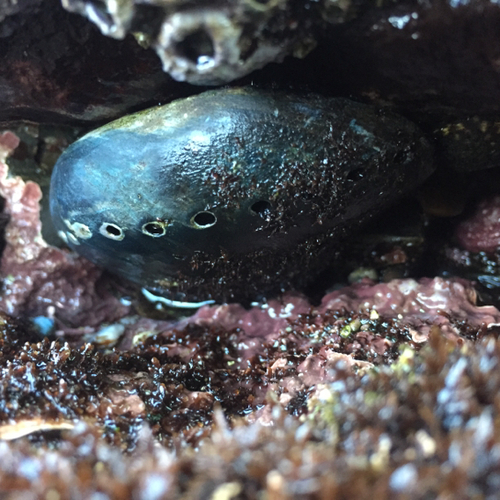
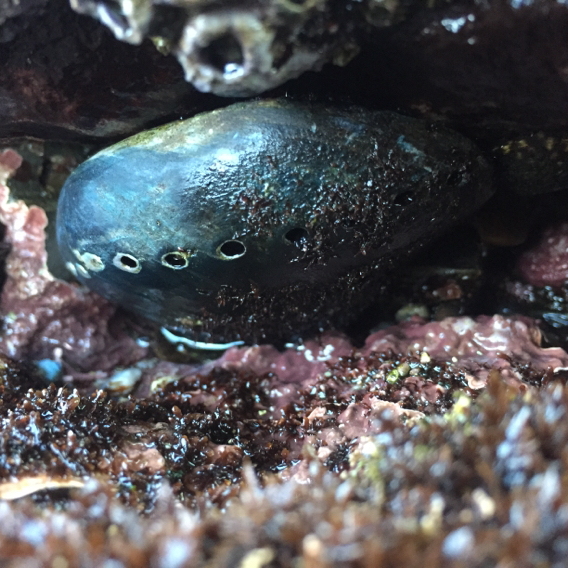
—observations
—countries
—peak records
Critically EndangeredConservation statusIUCN Red List categoriesLCNTVUENCREWEXCritically EndangeredRed List categories, explained →
Diet & preyGiant Kelp, Feather Boa Kelp, Marine Drift Algae
Predators
- Southern Sea Otter
- California Two-Spot Octopus
- Sunflower Sea Star
ThreatsWithering syndrome, historical overharvesting, ocean warming
HabitatsRocky intertidal and shallow subtidal coasts
Life span25–30 years
Classification
- FamilyHaliotidae
- SpeciesHaliotis cracherodii
Range data is not available yet.
Interaction riskLow
- Low
- Moderate
- High
- Very high
- Why interaction risk is low
- Safe to observe at a normal distance; strictly protected from collection or handling.
- What to notice
- Recognizable by a smooth, dark blue or black shell featuring 5 to 9 low, circular breathing pores.
- Support conservation
- Leave animals entirely undisturbed in their rock crevices and report observations to wildlife conservation agencies.
Responsible observation
- Observation Etiquette: View intertidal individuals during low tide without disturbing their rocky crevices or touching their shells.
- Legal Protection: Never attempt to remove or collect black abalone, as harvesting carries severe legal penalties.
- Habitat Care: Step carefully on rocky reefs to avoid crushing young individuals concealed under ledges.
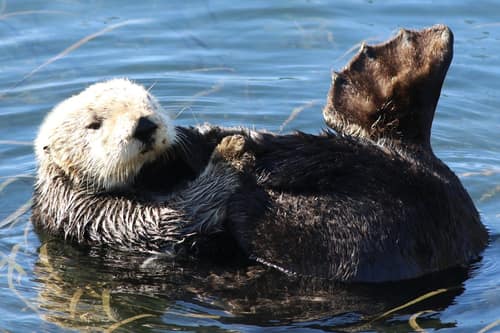
Predator (c) Cricket Raspet, some rights reserved (CC BY), uploaded by Cricket Raspet · cc-by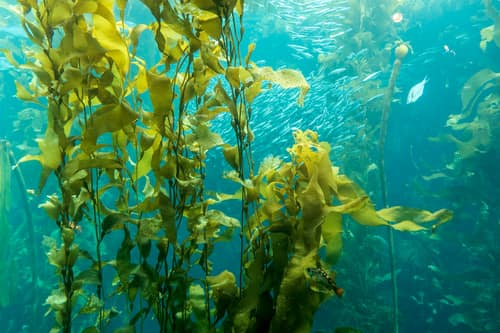
Food Source "Giant kelp (Macrocystis pyrifera), Monterey Bay aquarium, California" by LT&C is licensed under CC BY 2.0. To view a copy of this license, visit https://creativecommons.org/licenses/by/2.0/. · cc-by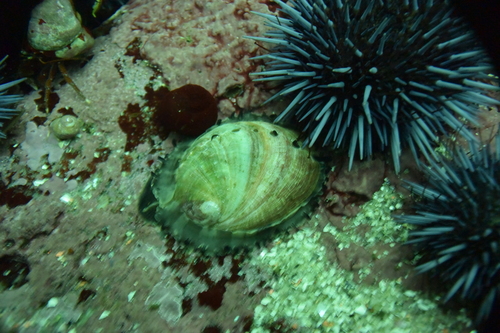
Close Relative (c) J.R.Frey, some rights reserved (CC BY) · cc-by Image unavailable
Close Relative
Help improve the field guideSomething wrong?
Checking your Fauna account…Report a name, category, or profile issue for review.