
Invertebrate
Angelwing
Cyrtopleura costataAlso known as Angel Wing Clam, Costate Angel Wing
Angelwings spend their adult lives buried deep within soft coastal mud and clay, extending long paired siphons up to the water surface to filter food and oxygen. Their bright white, sculpted shells feature radiating ribs that resemble delicate feathered wings, though these fragile valves cannot close completely over the fleshy body. Incapable of leaving their deep burrows once established, they rely on a steady flow of seawater to survive.
BivalveDeep BurrowerMarine Mollusk
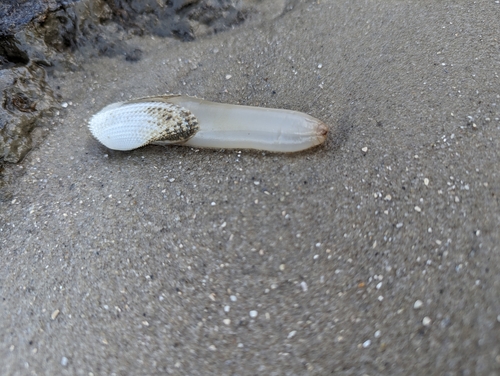
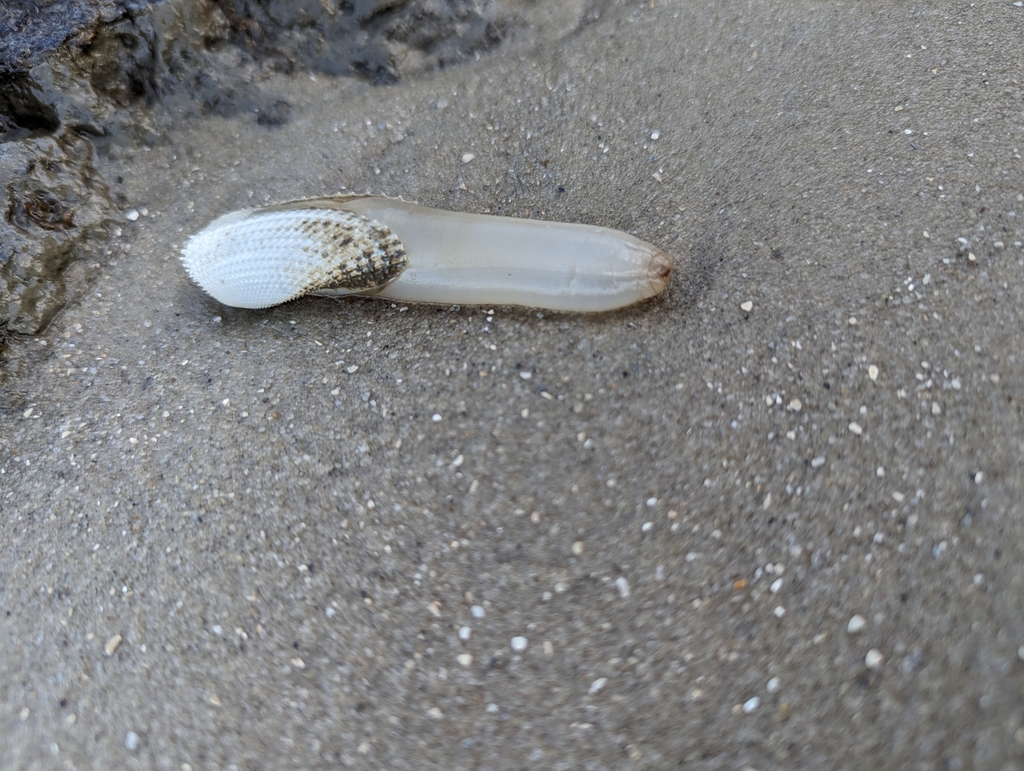
—observations
—countries
—peak records
Not EvaluatedConservation statusIUCN Red List categoriesLCNTVUENCREWEXNot Evaluated — not placed on the risk ladderRed List categories, explained →
Diet & preyPhytoplankton, Microscopic algae, Detritus
Predators
- Sea stars
- Crabs
- Predatory marine snails
ThreatsDredging, coastal development, and marine pollution
HabitatsIntertidal and shallow subtidal mud, sand, or clay beds
Life span10–20 years
Classification
- OrderMyida
- FamilyPholadidae
- GenusCyrtopleura
- SpeciesCyrtopleura costata
Range data is not available yet.
Interaction riskLow
- Low
- Moderate
- High
- Very high
- Why interaction risk is low
- Safe to observe at a normal distance.
Responsible observation
- Finding Shells: Search along sandy beaches after winter storms for intact washed-up valves.
- Observing Live Clams: Look for tiny paired siphon holes in low-tide mudflats without digging.
- Handle Shells Gently: Exercise caution with beach finds as the papery shells crush easily.
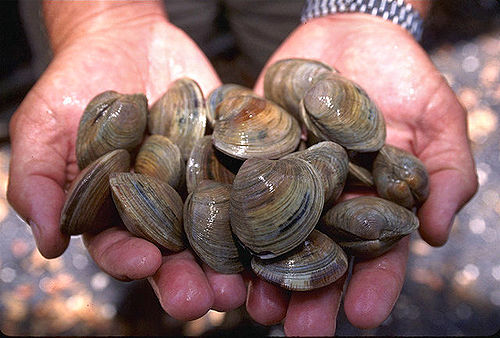
Co-occurring Clam Ken Hammond / Public domain · cc0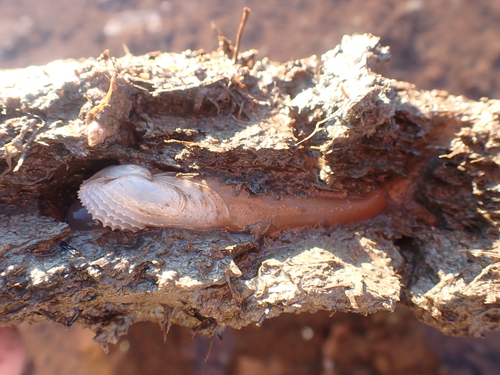
Close Relative (c) Ian Manning, some rights reserved (CC BY) · cc-by Image unavailable
Close Relative
Help improve the field guideSomething wrong?
Checking your Fauna account…Report a name, category, or profile issue for review.