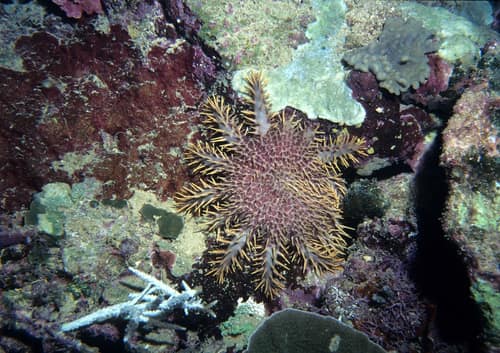
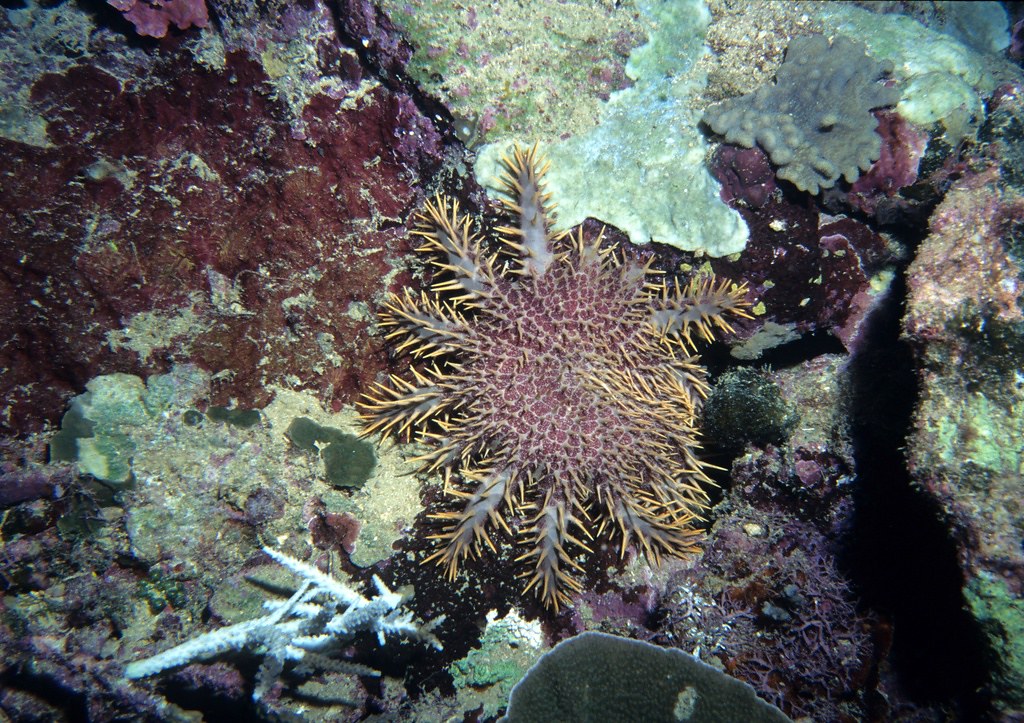
Crown-of-thorns starfish are voracious corallivores that climb atop stony reef structures, invert their stomachs through their mouths, and digest living coral tissue externally. When population blooms occur, vast feeding fronts can strip square kilometers of pristine reef down to bare white skeletons in weeks. Each female can release tens of millions of eggs during a single spawning event, driving cyclical population surges that severely reshape tropical marine ecosystems.
ThreatsOvercollection of predators, reef degradation, and targeted eradication culls
HabitatsTropical coral reefs and shallow lagoon slopes
Life span10–15 years
Classification
FamilyAcanthasteridae
SpeciesAcanthaster planci
Range & activity
Range data is not available yet.
Safe observation
Interaction riskVery high
Low
Moderate
High
Very high
Why interaction risk is very high
Spines deliver potent venom that causes severe pain and nausea; never touch or step on them.
Why it is dangerous
Spines contain asterosaponins and plancitoxins that cause immediate, excruciating pain, severe local tissue necrosis, vomiting, and protracted joint swelling if punctured.
How to recognize a risky encounter
Look for a large disc bordered by 14 to 21 arms carpeted in stout, sharp spines ranging from greyish-green to fiery red.
What to do
Never handle, kick, or attempt to dislodge from the reef; if punctured, immerse the wound in non-scalding hot water and seek urgent medical care.
Responsible observation
Buoyancy Control: Maintain neutral buoyancy well above the reef floor to prevent accidental contact with venomous spines.
Report Outbreaks: Document dense feeding aggregations and log sightings with local marine park authorities for monitoring.