
Species · GBIF taxon 2264603
Upside-down Jellyfish
Cassiopea andromedaAlso known as Upside-Down Jelly, Andromeda Jellyfish, Mangrove Jellyfish
These unusual jellyfish spend almost their entire lives resting upside down on the shallow sea floor, exposing their frilly, branching arms to the sunlight. This posture allows the microscopic algae living inside their tissues to photosynthesize, producing vital nutrients that sustain the jellyfish. When disturbed, they release clouds of stinging mucus into the surrounding water to deter potential predators.
MarineSymbioticBenthic
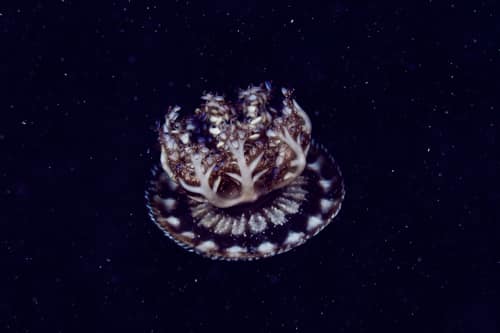
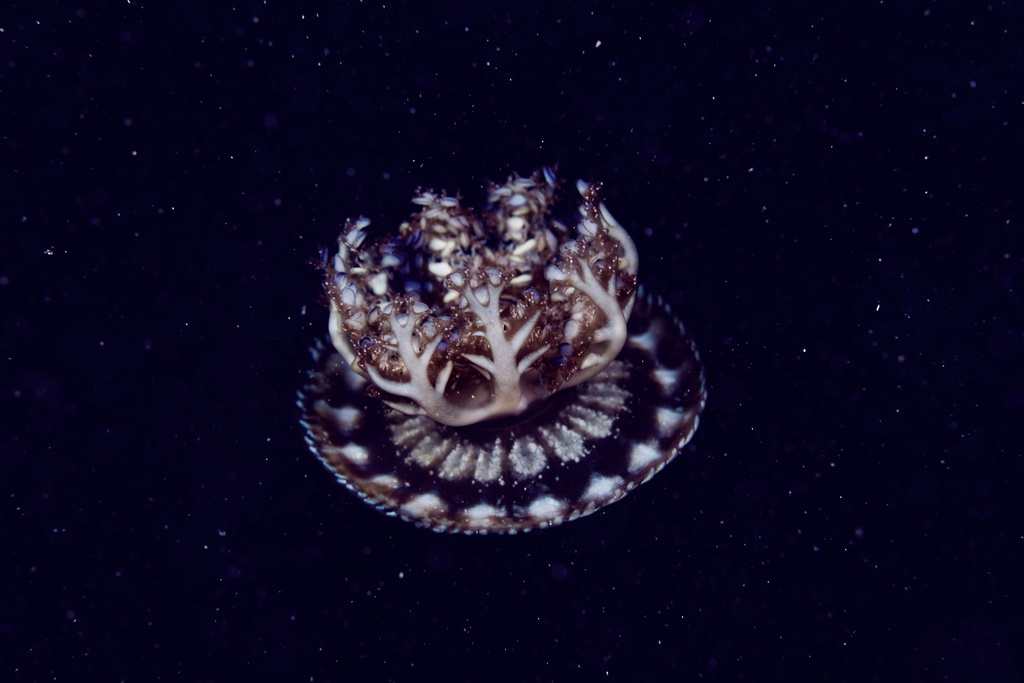
Licensed reference(c) prilfish, some rights reserved (CC BY) · cc-by
—observations
—countries
—peak records
Not EvaluatedConservation statusIUCN Red List categoriesLCNTVUENCREWEXNot Evaluated — not placed on the risk ladderRed List categories, explained →
Diet & prey
- Microscopic zooplankton
- Organic particles
- Dissolved nutrients
Predators
- Sea turtles
- Nudibranchs
- Crabs
ThreatsCoastal development, mangrove deforestation, water pollution, and extreme ocean warming
HabitatsShallow lagoons, mangrove swamps, intertidal mudflats, and sandy sea floors
Life span1 to 2 years
Size / weightNot available
Classification
- FamilyCassiopeidae
- SpeciesCassiopea andromeda
Range data is not available yet.
Interaction riskVery high
- Low
- Moderate
- High
- Very high
- Why interaction risk is very high
- Releases stinging mucus into the water; avoid swimming directly over or handling them.
- Why it is dangerous
- Releases microscopic stinging structures called cassiosomes in mucus clouds, causing itchy rashes and burning sensations.
- How to recognize a risky encounter
- Recognized by its upside-down position on the seabed, resembling a brownish-green sea anemone with frilly, upward-facing arms.
- What to do
- Do not touch or disturb the jellyfish, and wear protective footwear or a wetsuit when wading in their habitat.
Responsible observation
- Observe from above: Look for them in shallow, calm waters where they carpet the sandy bottom.
- Keep your distance: Avoid wading barefoot near them as they release stinging mucus clouds when disturbed.
- Watch the pulse: Observe the gentle, rhythmic contraction of the bell used to pump water over their arms.
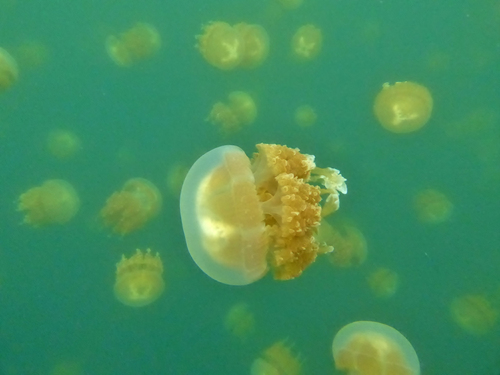
Symbiont Partner (c) Thibaud Aronson, some rights reserved (CC BY-SA), uploaded by Thibaud Aronson · cc-by-sa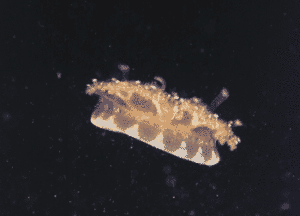
Close Relative (c) Pérez-Vigo, some rights reserved (CC BY-SA) · cc-by-sa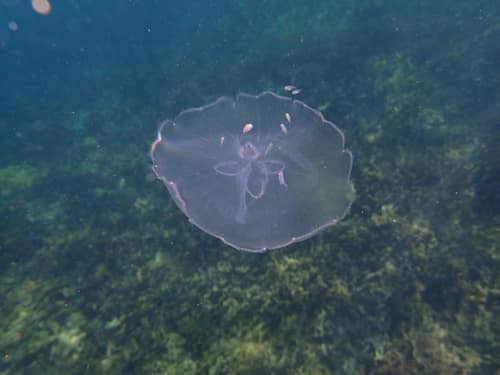
Distant Relative (c) A H, some rights reserved (CC BY), uploaded by A H · cc-by
Help improve the field guideSomething wrong?
Checking your Fauna account…Report a name, category, or profile issue for review.