
Invertebrate
Egg-yolk Jelly
Phacellophora camtschaticaAlso known as Fried Egg Jellyfish, Egg Yolk Jellyfish, Fried Egg Jelly
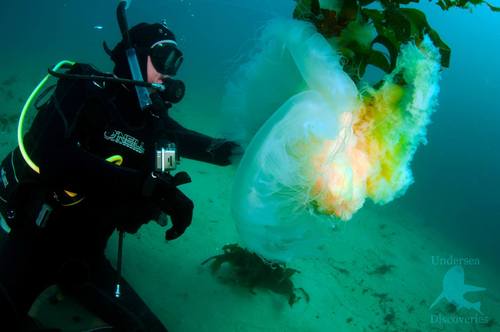
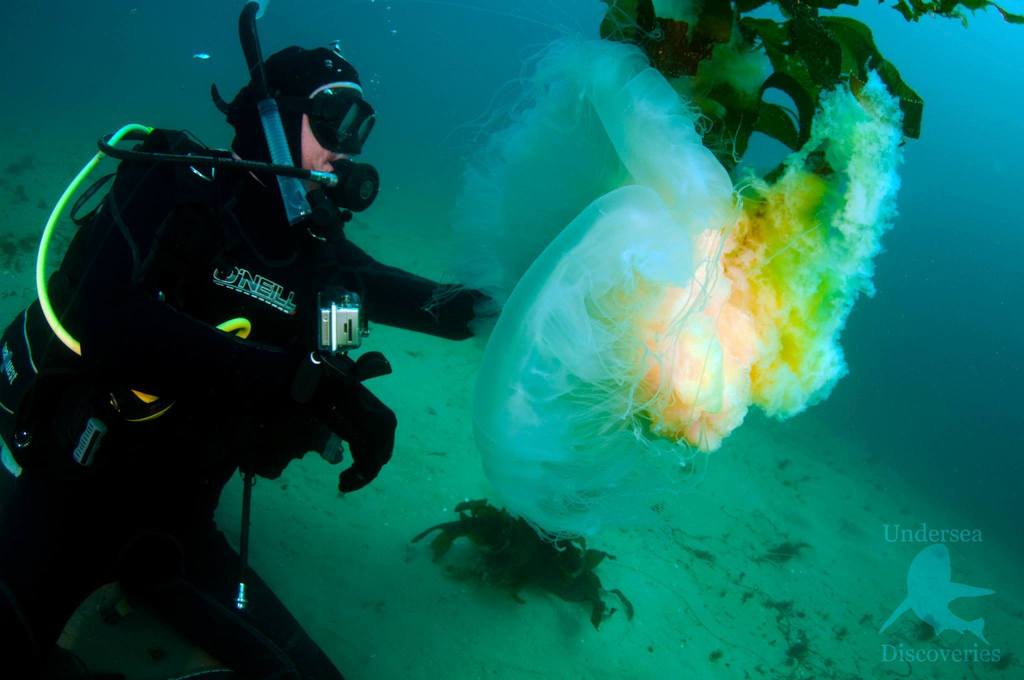
Egg-yolk jellies drift through cool pelagic waters propelled by slow, rhythmic bell contractions that trail clusters of fine, stinging tentacles. Small juvenile crustaceans and larval fish routinely seek refuge beneath their broad bells, riding safely across open oceanic expanses while hitchhiking or nibbling on food scraps. These large cnidarians prey heavily on other gelatinous zooplankton, acting as specialized top carnivores in temperate pelagic food webs.
MarinePelagicInvertebrate
—observations
—countries
—peak records
Not EvaluatedConservation statusIUCN Red List categoriesLCNTVUENCREWEXNot Evaluated — not placed on the risk ladderRed List categories, explained →
Diet & preyAurelia aurita, Beroe cucumis, Copepods
Predators
- Leatherback Sea Turtle
- Ocean Sunfish
- Chrysaora fuscescens
ThreatsOcean warming, plastic pollution, and coastal development
HabitatsPelagic open ocean, bays, and coastal temperate waters
Life span1–2 years
Classification
- OrderSemaeostomeae
- FamilyPhacellophoridae
- GenusPhacellophora
- SpeciesPhacellophora camtschatica
Range data is not available yet.
Interaction riskVery high
- Low
- Moderate
- High
- Very high
- Why interaction risk is very high
- Nematocysts deliver a mild sting that can irritate skin; avoid touching tentacles while swimming or beachcombing.
- Why it is dangerous
- Tentacles bear nematocysts that inject cnidarian venom, causing mild local skin irritation, burning sensations, and redness.
- How to recognize a risky encounter
- Recognizable by the distinct pale, translucent bell housing a central bright yellow mound like an egg yolk.
- What to do
- Give trailing tentacles plenty of clearance in the water; rinse accidental stings with saltwater and avoid rubbing the site.
Responsible observation
- Snorkeling: Keep a generous distance of several meters to avoid trailing tentacles that drift far behind the bell.
- Beachcombing: Never touch stranded jellies with bare hands, as nematocysts can still discharge when dried or dead.
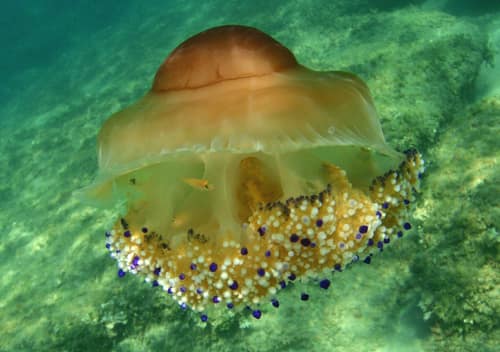
Look-Alike "Fried egg jellyfish" by Aries Tottle is licensed under CC BY 2.0. To view a copy of this license, visit https://creativecommons.org/licenses/by/2.0/. · cc-by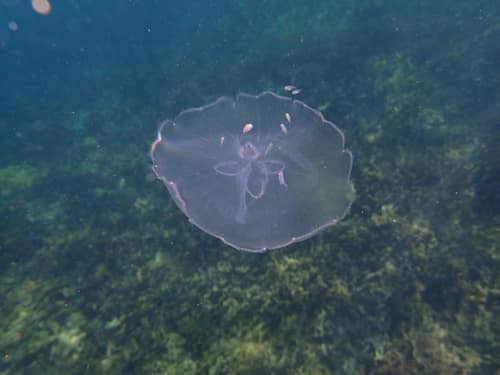
Prey (c) A H, some rights reserved (CC BY), uploaded by A H · cc-by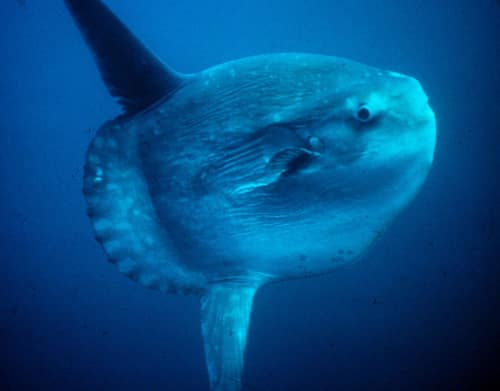
Predator U.S. National Oceanic and Atmospheric Administration / Public domain · cc0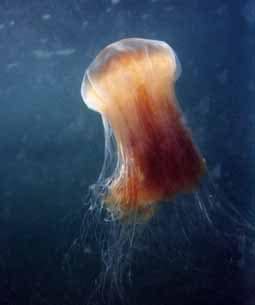
Close Relative Wikimedia Commons / CC BY-SA 3.0 · cc-by-sa
Keep collecting in Fauna
Found in Collections
Species set Pro
Ocean Creatures
Egg-yolk Jelly is found in this collection. Identify it in Fauna to fill this slot and continue your progress.
Unlock to track progress
Help improve the field guideSomething wrong?
Checking your Fauna account…Report a name, category, or profile issue for review.