Also known as Mediterranean Snakelocks Anemone, Opelet Anemone
Snakelocks anemones anchor firmly to sunlit rocks and seagrass beds, extending an undulating crown of up to two hundred tentacles that wave gracefully with the tide. Unlike many other sea anemones, they cannot fully retract their long tentacles into their column, remaining perpetually unfurled to harvest ambient sunlight. They host symbiotic dinoflagellates within their tissues, gaining vital nutrients from photosynthesis while offering protection to specialized crabs and small fish immune to their sting.
Not EvaluatedConservation statusIUCN Red List categoriesLCNTVUENCREWEXNot Evaluated — not placed on the risk ladderRed List categories, explained →
Key facts
Diet & prey
Small crustaceans
Tiny fish
Zooplankton
Predators
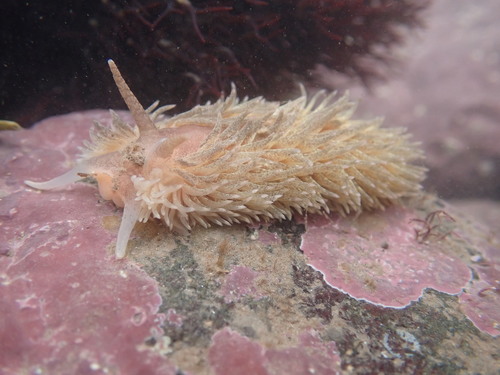
Grey Sea Slug
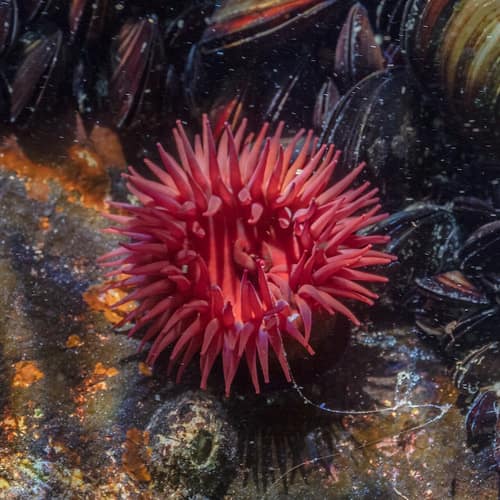
Common Sunstar
Black Bream
ThreatsCoastal pollution, sedimentation, marine heatwaves, and collection for the aquarium trade
HabitatsShallow rocky reefs, lower intertidal rockpools, and seagrass meadows
Life span10–20 years in the wild; potentially much longer due to clonal reproduction
Size / weightNot available
Classification
FamilyActiniidae
SpeciesAnemonia viridis
Range & activity
Range data is not available yet.
Safe observation
Interaction riskVery high
Low
Moderate
High
Very high
Why interaction risk is very high
Stinging tentacles can cause localized rashes; avoid handling directly with bare skin.
Why it is dangerous
Tentacles are armed with thousands of specialized stinging cells called cnidocytes that inject pore-forming peptides, causing localized burning pain, redness, and itchy skin irritation.
How to recognize a risky encounter
Look for a mass of non-retractile, grayish-green tentacles often tipped with vivid fluorescent purple or magenta.
What to do
Do not poke or dislodge them from rock faces; rinse any accidental contact area with seawater rather than fresh water.
Responsible observation
Tidepool Viewing: Search shallow, sunlit pools at low tide where clear water allows green algae in their tissue to shine.
Look But Do Not Touch: Observe without touching, as the stinging cells adhere easily to bare fingers and can trigger dermatitis.

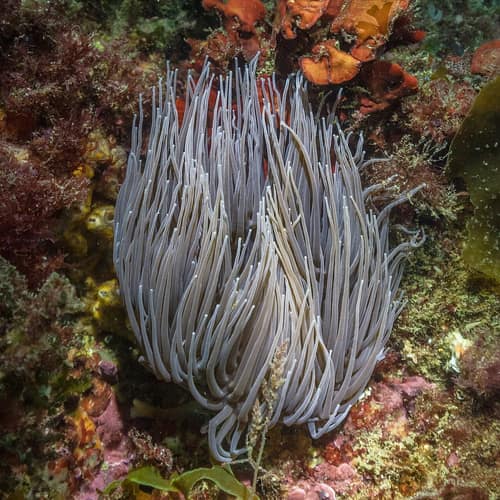
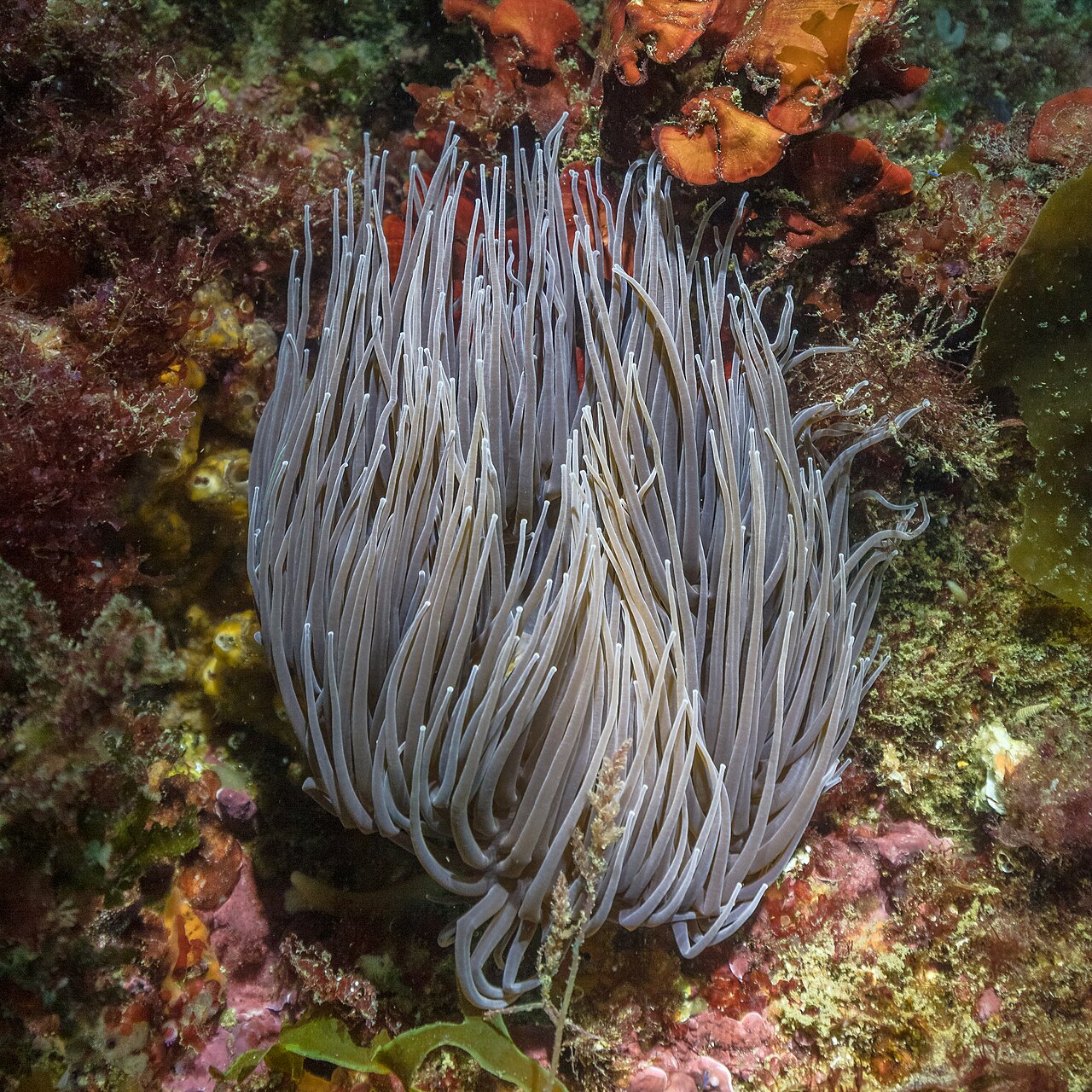
 Image unavailable