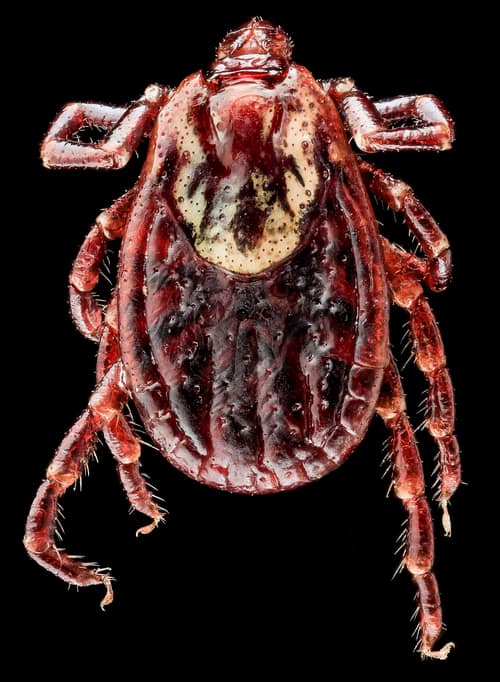
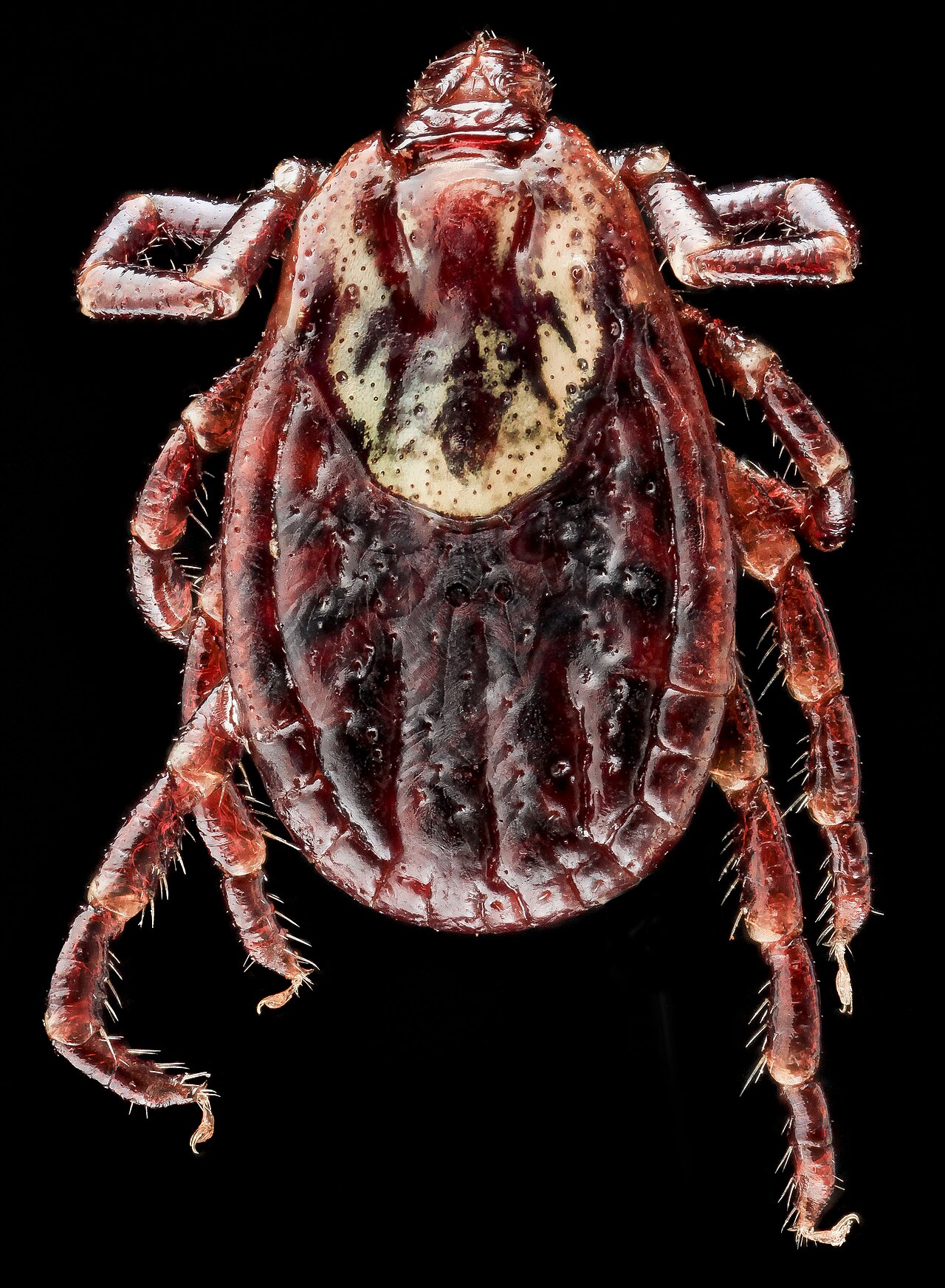
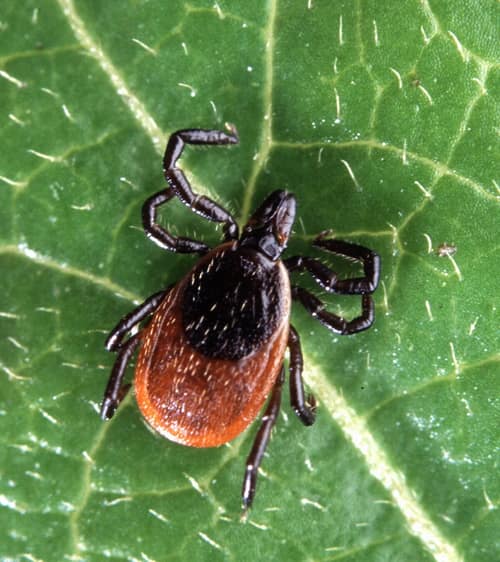
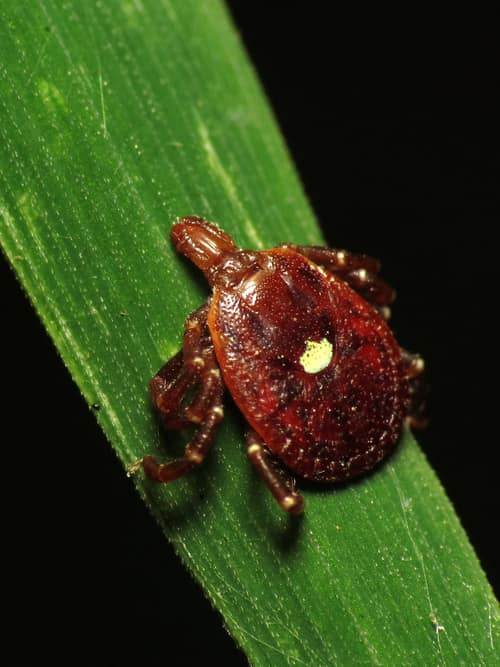
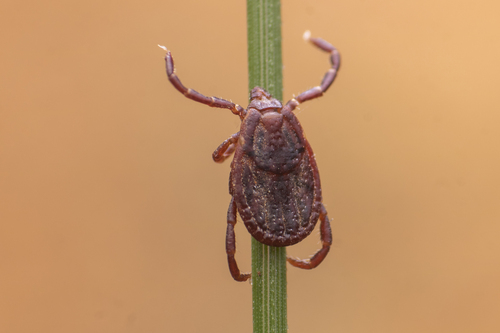
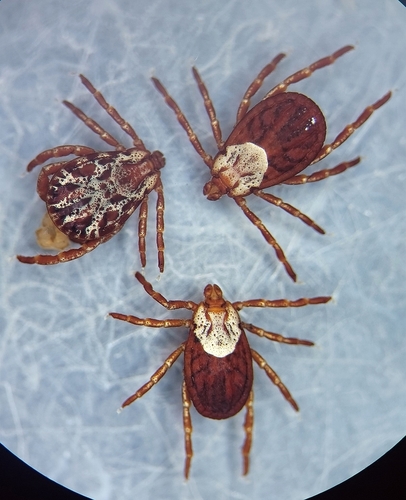
American dog ticks wait at the tips of grass blades with outstretched front legs, clinging to passing mammals to secure a blood meal. Adult females display a striking cream-colored ornate pattern on their dark brown shield that expands dramatically as they feed. Across their multi-year life cycle, these hardy arachnids transition through three distinct hosts, starting on small rodents before seeking larger mammals like dogs, deer, and humans.
Transmits pathogens causing Rocky Mountain spotted fever; inspect skin and remove attached ticks promptly with fine tweezers.
Why it is dangerous
Transmits severe bacterial pathogens including Rocky Mountain spotted fever and tularemia, and prolonged female attachment can induce tick paralysis.
How to recognize a risky encounter
Unfed adults are flat, reddish-brown, and marked with a mottled whitish pattern on the hard scutum shield behind the head.
What to do
Never squeeze or burn attached ticks; use fine tweezers to pull straight out, wash the bite site, and save the tick for identification if illness develops.
Responsible observation
Pants tucking: Tuck pants into socks when walking through tall grass or brush to keep ticks visible on outer clothing.
Prompt removal: Use fine-tipped tweezers to grasp an attached tick close to the skin and pull straight upward without twisting.
Gear checks: Inspect clothing, skin, and pets immediately after returning from brushy or grassy habitats.