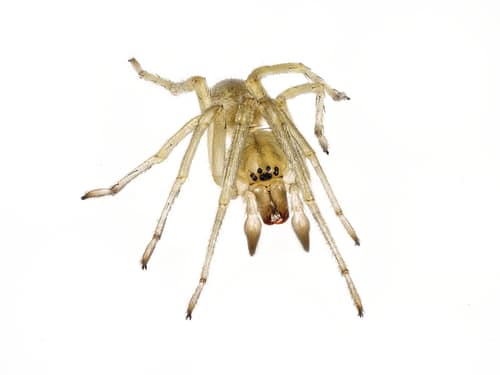
Also known as American Yellow Sac Spider, Black-Footed Yellow Sac Spider
Agrarian sac spiders construct small, silken tubular retreats among plant leaves or inside human structures rather than spinning capture webs. These active nocturnal predators stalk plant stems and foliage for small insects, playing a helpful role in controlling agricultural pests across crops and gardens. Females construct a protective silk sac to guard their egg clutches until the young spiderlings emerge and disperse.
Not EvaluatedConservation statusIUCN Red List categoriesLCNTVUENCREWEXNot Evaluated — not placed on the risk ladderRed List categories, explained →
Key facts
Diet & preyMoths, Flies, Aphids
Predators
Birds
Lizards
Larger Spiders
ThreatsWidespread chemical pesticide application
HabitatsAgricultural fields, garden foliage, shrubs, forests, and human structures
Life span1–2 years
Classification
OrderAraneae
FamilyCheiracanthiidae
GenusCheiracanthium
SpeciesCheiracanthium inclusum
Range & activity
Range data is not available yet.
Safe observation
Interaction riskVery high
Low
Moderate
High
Very high
Why interaction risk is very high
Bites cause localized pain and minor swelling; avoid handling directly or trapping against skin.
Why it is dangerous
Venom contains mild cytotoxins that cause immediate localized burning pain, redness, and minor swelling, though symptoms usually resolve within a few days.
How to recognize a risky encounter
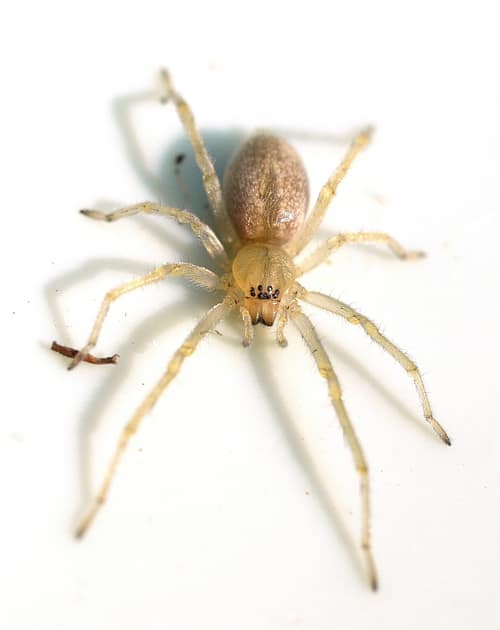
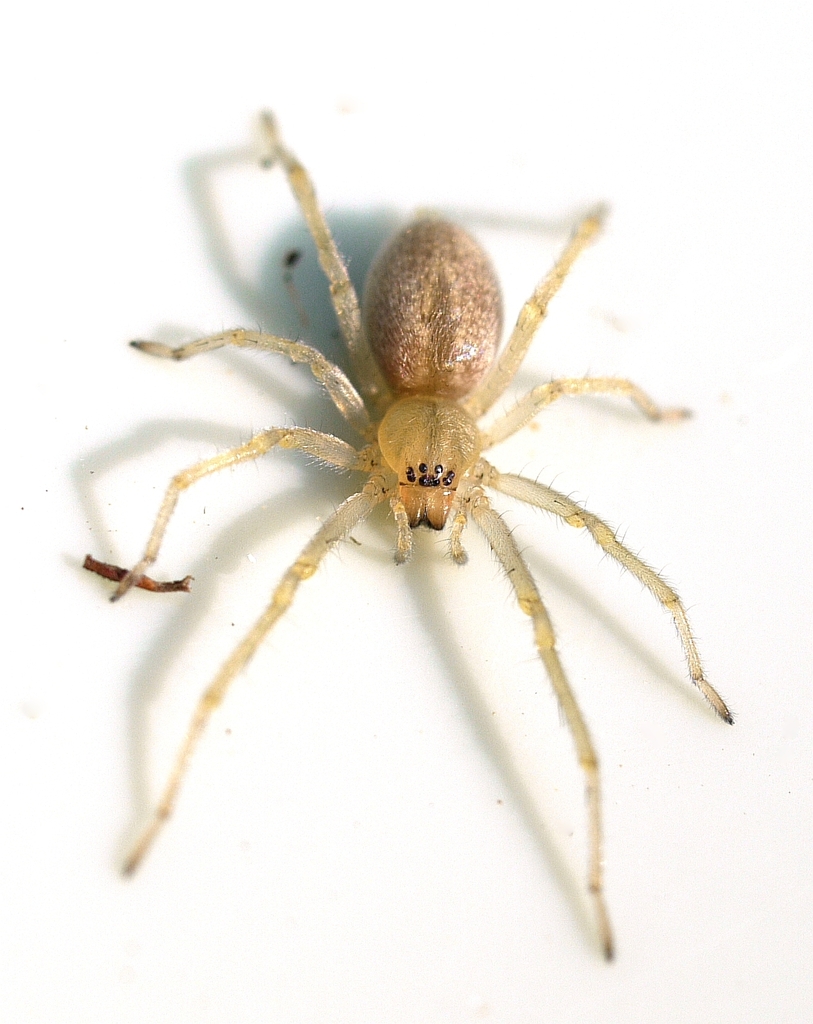
Look for a pale yellow to translucent green body with dark brown tarsal feet and long front legs.
What to do
Do not handle with bare hands; use a jar and card to safely relocate any indoor individuals.
Responsible observation
Foliage Inspection: Search under rolled leaves in garden shrubs for white silk sac retreats during daytime.
Indoor Relocation: Capture wanderers indoors with a clear glass container and stiff paper to relocate them outside.
Night Spotting: Scan garden foliage after dark with a soft flashlight to view active foraging.