
Insect
Giant Mesquite Bug
Thasus neocalifornicusGiant mesquite bugs are among the largest true bugs in North America, renowned for their striking developmental shifts. Bright crimson and yellow-striped nymphs congregate in dense clusters on mesquite branches during early summer, warning predators with vivid aposematic colors before transforming into hefty, dark brown adults with leaf-like hind legs. They feed primarily by using their piercing-sucking mouthparts to tap into tender mesquite shoots, sap, and developing seed pods.
Desert DwellerAposematicHerbivorous
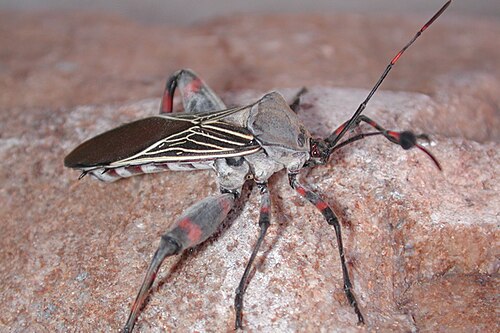
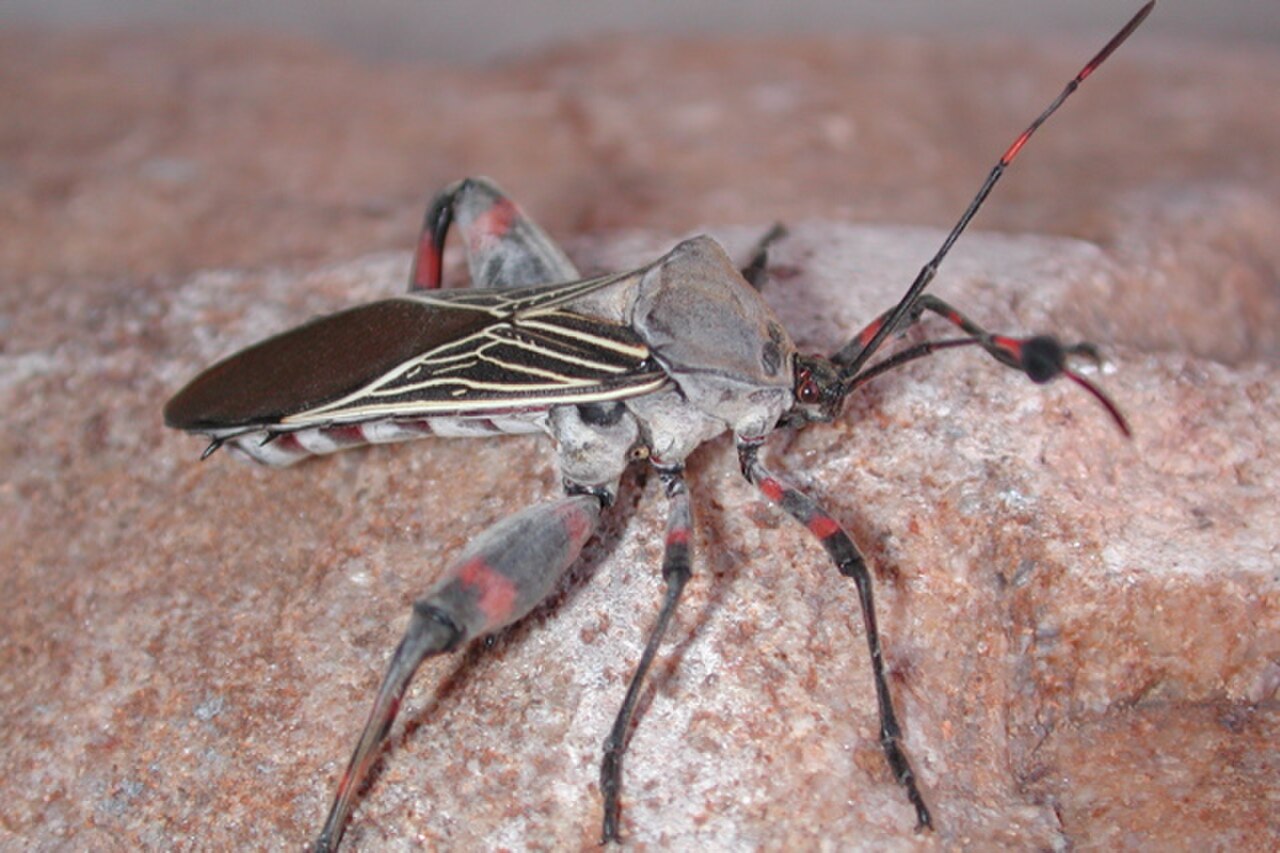
—observations
—countries
—peak records
Not EvaluatedConservation statusIUCN Red List categoriesLCNTVUENCREWEXNot Evaluated — not placed on the risk ladderRed List categories, explained →
Diet & preyMesquite sap, Mesquite seed pods, Tender mesquite shoots
Predators
- Greater Roadrunner
- Cactus Wren
- Desert spiny lizard
ThreatsHabitat clearance, broad-spectrum pesticide use, and severe drought
HabitatsArid desert scrub, washes, and riparian mesquite woodlands
Life span9–12 months
Classification
- FamilyCoreidae
- SpeciesThasus neocalifornicus
Range data is not available yet.
Interaction riskLow
- Low
- Moderate
- High
- Very high
- Why interaction risk is low
- Safe to observe; releases a pungent defensive chemical spray if handled roughly.
Responsible observation
- Spotting Nymphs: Inspect new summer mesquite branch growth for dense, bright red and yellow clusters.
- Handling Precaution: Avoid squeezing or pinching, as they release a foul, persistent alarm secretion.
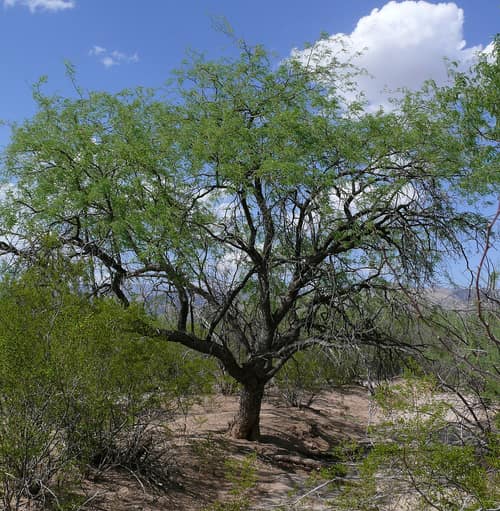
Host Plant Sue in az / CC BY-SA 3.0 · cc-by-sa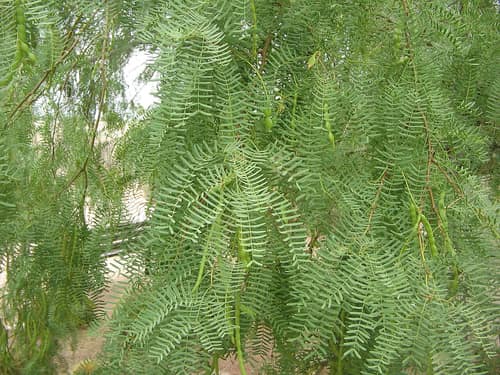
Host Plant Don A.W. Carlson / CC BY 2.5 · cc-by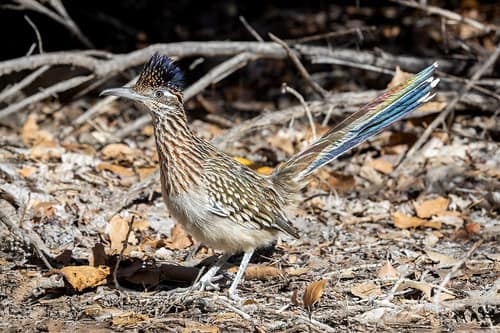
Predator Polinova / CC BY-SA 4.0 · cc-by-sa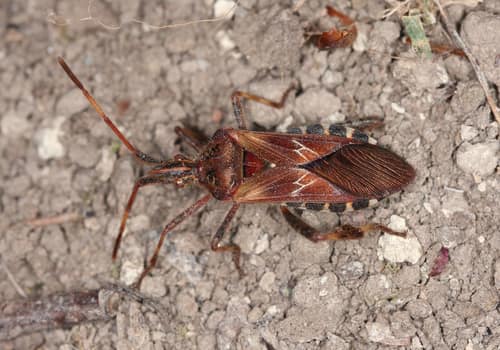
Same Family (c) Holger Krisp, some rights reserved (CC BY) · cc-by
Help improve the field guideSomething wrong?
Checking your Fauna account…Report a name, category, or profile issue for review.