
Insect
Great Mormon
Papilio memnonGreat Mormon butterflies glide through southern Asian canopy gaps and citrus groves on strikingly large wings. Males feature dark velvety black upperwings streaked with subtle blue, while females display dramatic polymorphism with dozens of distinct color forms mimicking toxic swallowtails. Caterpillars disguise themselves as fresh bird droppings before maturing into smooth green larvae on Rutaceae foliage.
PolymorphicTropicalSwallowtail
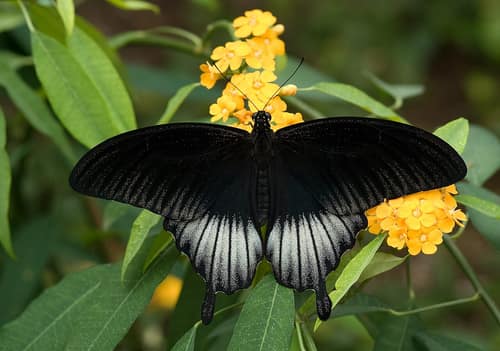

—observations
—countries
—peak records
Not EvaluatedConservation statusIUCN Red List categoriesLCNTVUENCREWEXNot Evaluated — not placed on the risk ladderRed List categories, explained →
Diet & preyCitrus foliage, Flower nectar, Mineralized damp soil
Predators
- Birds
- Lizards
- Spiders
ThreatsPesticide use in citrus agriculture and localized habitat clearance
HabitatsTropical rainforests, citrus orchards, agricultural fringes, urban gardens
Life span1–2 months as adults
Classification
- OrderLepidoptera
- FamilyPapilionidae
- GenusPapilio
- SpeciesPapilio memnon
Range data is not available yet.
Interaction riskLow
- Low
- Moderate
- High
- Very high
- Why interaction risk is low
- Safe to observe at a normal distance.
Responsible observation
- Spotting Females: Look for varied wing patterns, as females mimic several toxic swallowtails to deter predators.
- Finding Caterpillars: Check young shoots of citrus trees for bird dropping mimicking early instars.
- Mud Puddling: Watch damp soil or riverbanks where males gather to absorb essential minerals and salts.
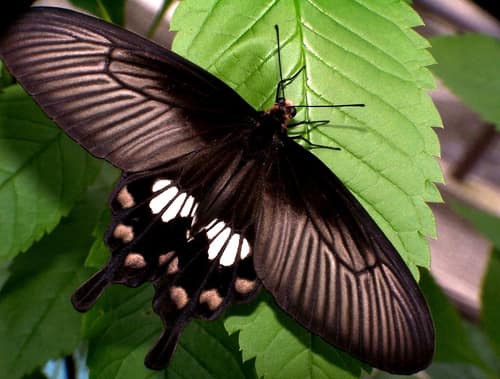
Model Species (c) Charles Lam, some rights reserved (CC BY-SA) · cc-by-sa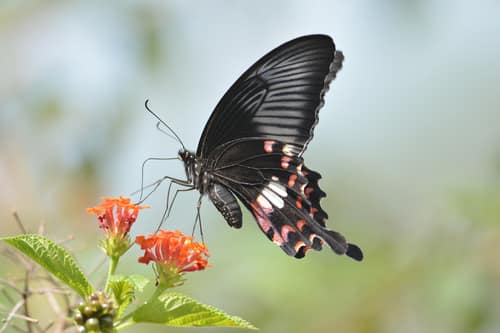
Close Relative (c) Dr. Raju Kasambe, some rights reserved (CC BY-SA) · cc-by-sa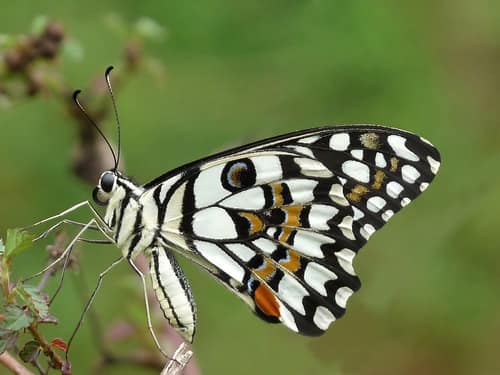
Close Relative Jeevan Jose, Kerala, India / CC BY-SA 4.0 · cc-by-sa
Keep collecting in Fauna
Found in Collections
Ecosystem chain Pro
Mystic Meadows
Great Mormon is found in this collection. Identify it in Fauna to fill this slot and continue your progress.
Unlock to track progress
Help improve the field guideSomething wrong?
Checking your Fauna account…Report a name, category, or profile issue for review.