
Insect
Red-banded Hairstreak
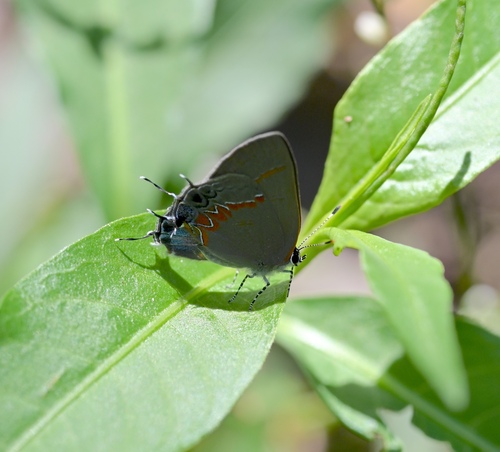
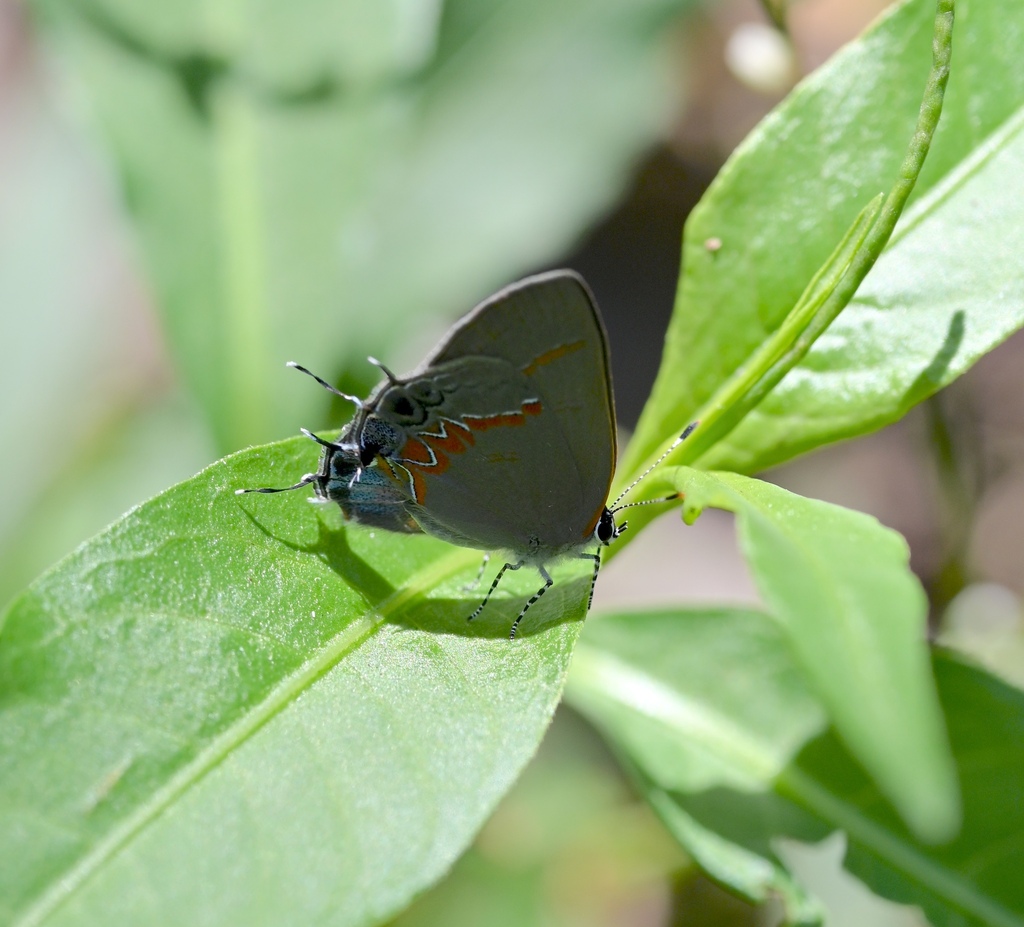
Calycopis cecropsAdults rest with wings folded tightly upright, sawing their hindwings back and forth to make the slender tails and bright orange spots mimic a twitching false head. Unlike most caterpillars that rely on living foliage, the larvae feed primarily on decaying leaf litter beneath shrubs and forest canopies. Several overlapping broods emerge each year across warm southeastern pine flatwoods, brushy clearings, and coastal edges.
Gossamer-wingedNectar FeederWoodland
—observations
—countries
—peak records
Least ConcernConservation statusIUCN Red List categoriesLCNTVUENCREWEXLeast ConcernRed List categories, explained →
Diet & preyFlower Nectar, Decaying Sumac Leaves, Fallen Tree Leaves
Predators
- Spiders
- Mantises
- Songbirds
ThreatsBroadleaf herbicide spraying, severe habitat conversion, and intense fires that consume leaf litter.
HabitatsCoastal scrub, pine flatwoods, forest edges, and brushy fields.
Life spanAdults live 1–3 weeks; life cycle spans 1 year with multiple broods.
Classification
- OrderLepidoptera
- FamilyLycaenidae
- GenusCalycopis
- SpeciesCalycopis cecrops
Range data is not available yet.
Interaction riskLow
- Low
- Moderate
- High
- Very high
- Why interaction risk is low
- Safe to observe at a normal distance.
Responsible observation
- Observation Timing: Scan sunny, low-growing vegetation and leaf litter along trail edges in early afternoon.
- Behavioral Clues: Watch for small butterflies rhythmically rubbing their hindwings together while perched.
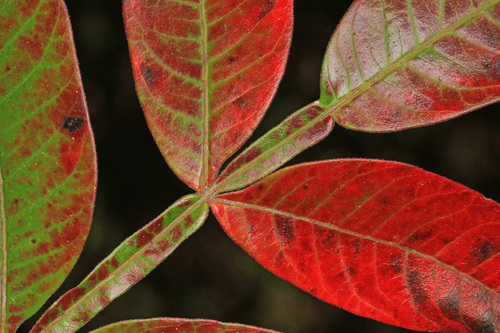
Host Plant (c) Judy Gallagher, some rights reserved (CC BY) · cc-by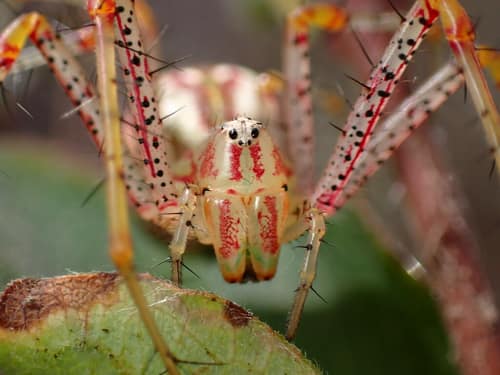
Predator (c) Cricket Raspet, some rights reserved (CC BY), uploaded by Cricket Raspet · cc-by Image unavailable
Close Relative 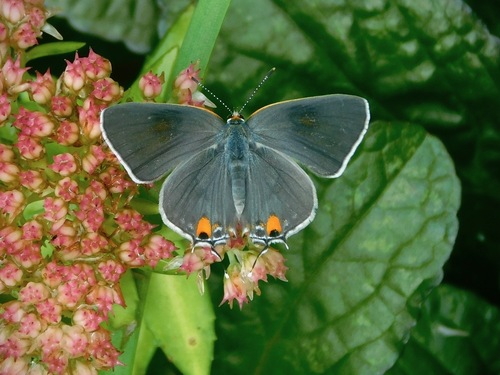
Same Family (c) Michael J. Papay, some rights reserved (CC BY), uploaded by Michael J. Papay · cc-by
Keep collecting in Fauna
Found in Collections
Ecosystem chain Pro
Mystic Meadows
Red-banded Hairstreak is found in this collection. Identify it in Fauna to fill this slot and continue your progress.
Unlock to track progress
Help improve the field guideSomething wrong?
Checking your Fauna account…Report a name, category, or profile issue for review.