
Insect · GBIF taxon 1867032
Pink-striped Oakworm Moth
Anisota virginiensisAlso known as Pink-striped Oakworm, Virginian Anisota
Female pink-striped oakworm moths sport rosy-pink margins with yellowish forewings and a distinct white dot, while smaller males feature darker brownish wings with clear translucent windows. Caterpillars consume foliage from oaks, maples, and birches before burrowing into leaf litter to pupate over winter. Adult moths lack functional mouthparts, relying entirely on stored energy reserves to mate during their brief few days of life.
NocturnalMothForest Species
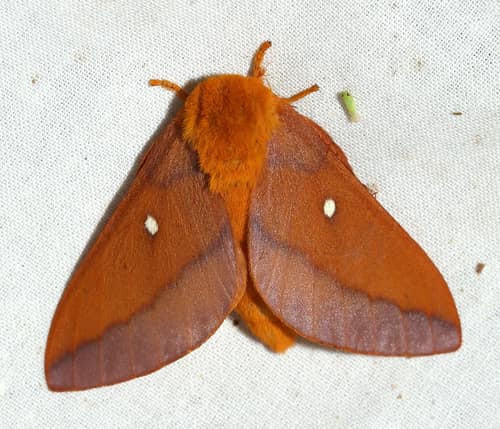
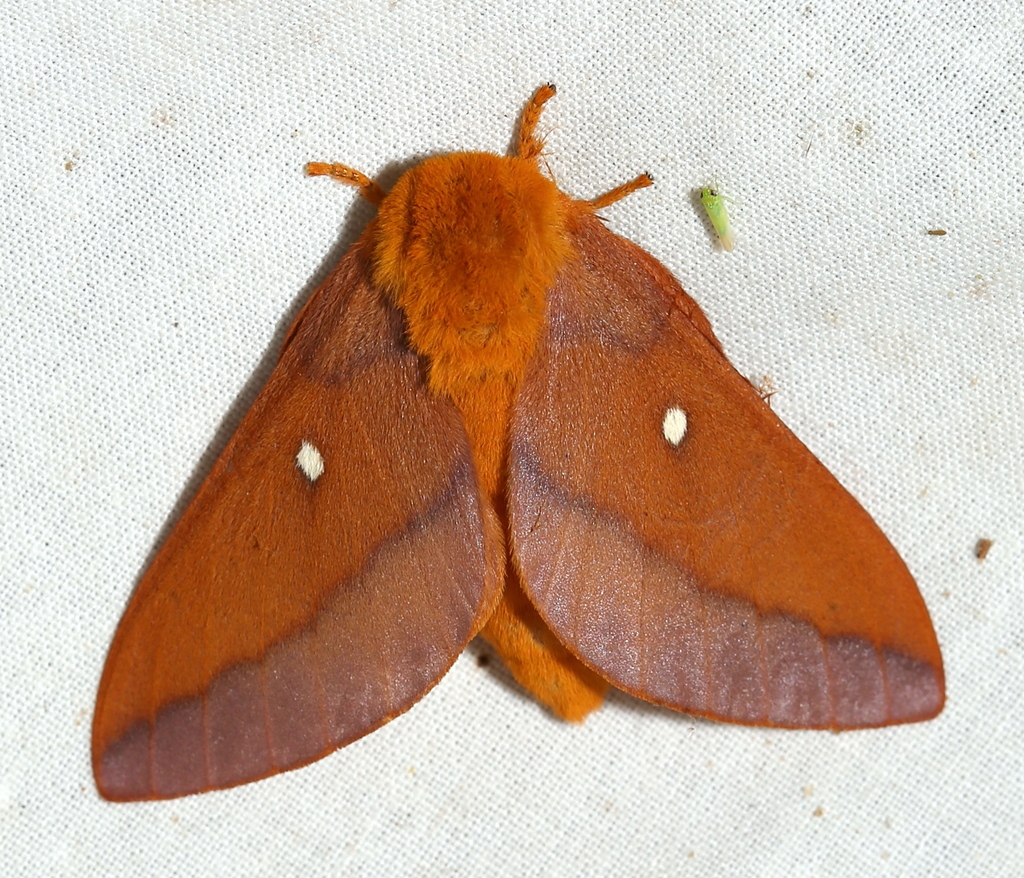
—observations
—countries
—peak records
Least ConcernConservation statusIUCN Red List categoriesLCNTVUENCREWEXLeast ConcernRed List categories, explained →
Diet & prey
- Oak leaves
- Birch leaves
- Maple leaves
Predators
- Songbirds
- Bats
- Parasitoid wasps
ThreatsPesticide spraying, habitat fragmentation, light pollution
HabitatsDeciduous forests, oak woodlands, suburban parks
Life span1–2 weeks as adults; 1 year total life cycle
Size / weightNot available
Classification
- OrderLepidoptera
- FamilySaturniidae
- GenusAnisota
- SpeciesAnisota virginiensis
Range data is not available yet.
Interaction riskLow
- Low
- Moderate
- High
- Very high
- Why interaction risk is low
- Safe to observe at a normal distance.
Responsible observation
- Attracting Adults: Set up ultraviolet light or porch lamps near woods during early summer nights.
- Finding Caterpillars: Check low oak branches in late summer for social clusters of striped larvae.
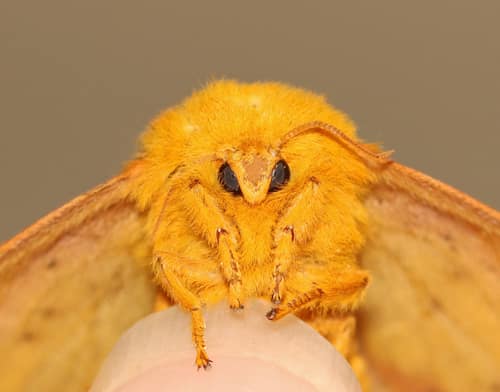
Close Relative (c) Christine Young, some rights reserved (CC BY) · cc-by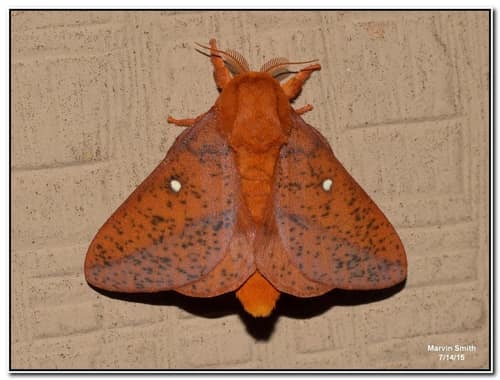
Close Relative (c) Marvin Smith, some rights reserved (CC BY-SA) · cc-by-sa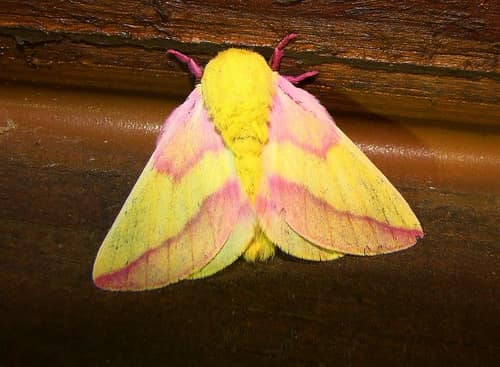
Close Relative Andy Reago & Chrissy McClarren / CC BY 2.0 · cc-by
Keep collecting in Fauna
Found in Collections
Species set
Moonlight Marvels
Pink-striped Oakworm Moth is found in this collection. Identify it in Fauna to fill this slot and continue your progress.
—/7
Help improve the field guideSomething wrong?
Checking your Fauna account…Report a name, category, or profile issue for review.