
Insect · GBIF taxon 1693708
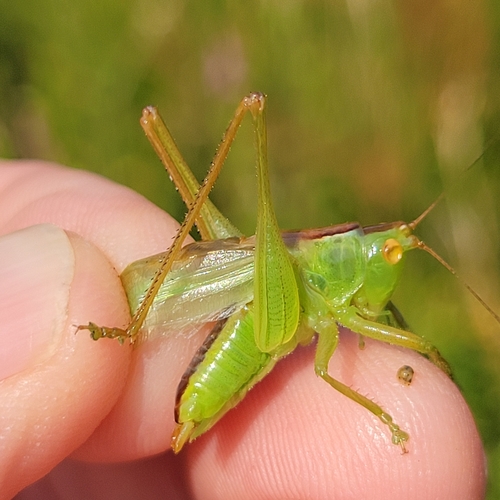
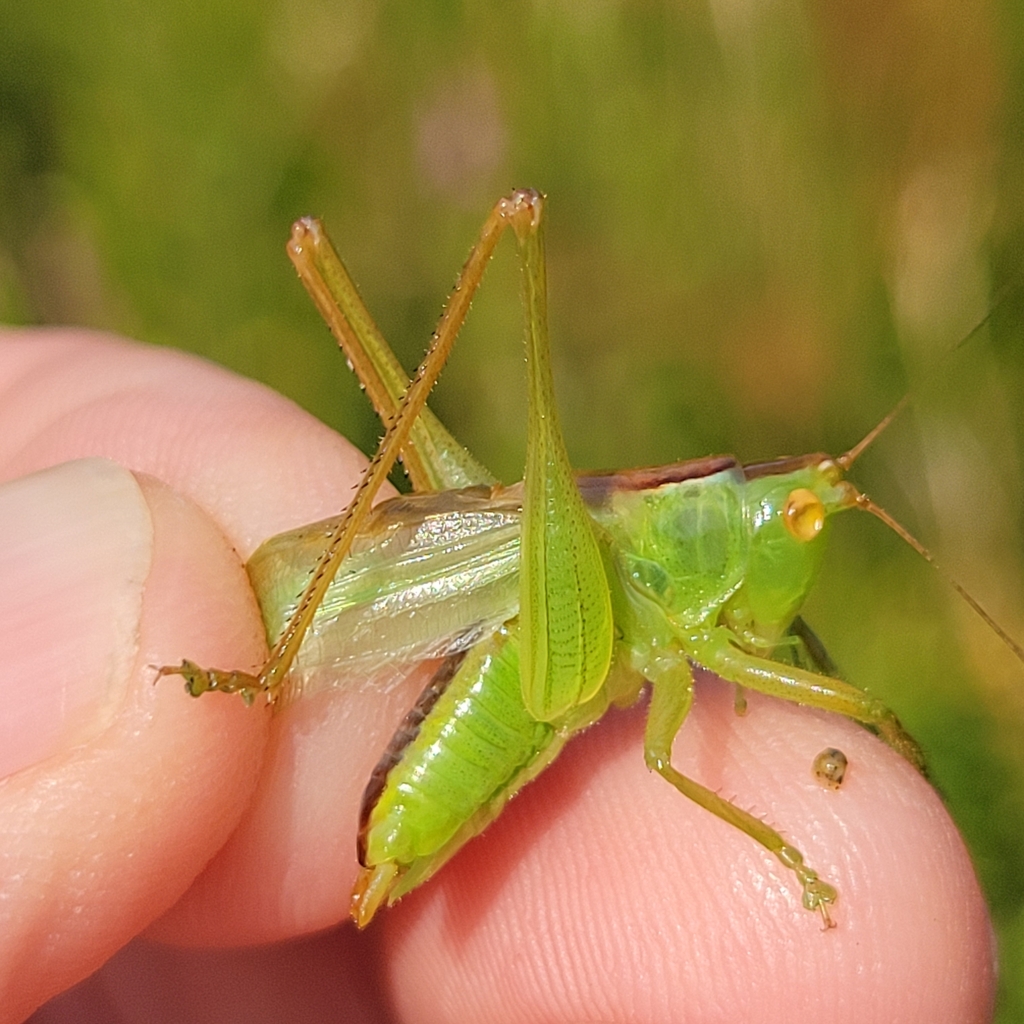
Common Meadow Katydid
Orchelimum vulgareAlso known as Meadow Katydid
Common meadow katydids dominate North American grassy fields from midsummer until the first hard freeze with their distinctive buzzy calls. Males perch atop tall grasses or weed stems during the day to sing, rubbing their forewings together to create a prolonged rasping trill that ends in a sharp tick. Females use their long curved ovipositors to insert eggs safely inside plant stems, where they overwinter until spring.
Sound MakerGrasslandDiurnal
—observations
—countries
—peak records
Not EvaluatedConservation statusIUCN Red List categoriesLCNTVUENCREWEXNot Evaluated — not placed on the risk ladderRed List categories, explained →
Diet & prey
- Grass pollen
- Flower petals
- Broadleaf foliage
Predators
- Songbirds
- Spiders
- Praying Mantises
ThreatsAgricultural mowing, pesticide use, habitat loss
HabitatsTallgrass prairies, overgrown fields, meadows, roadsides
Life span1 year
Classification
- OrderOrthoptera
- FamilyTettigoniidae
- GenusOrchelimum
- SpeciesOrchelimum vulgare
Range data is not available yet.
Interaction riskLow
- Low
- Moderate
- High
- Very high
- Why interaction risk is low
- Safe to observe at a normal distance.
Responsible observation
- Spotting by sound: Scan the tops of tall grass stems in sunny fields where males perch to sing.
- Gentle handling: Observe without squeezing, as their strong mandibles can give a mild pinch if pinched.
- Night activity: Use a red flashlight after dusk to watch females laying eggs in plant stems.
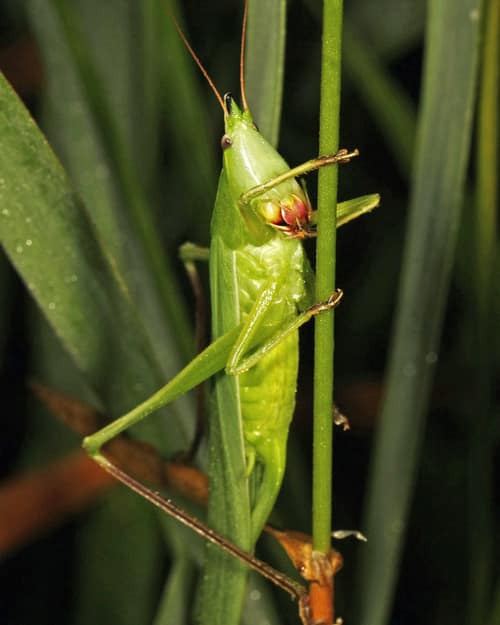
Grassland Neighbor (c) Marlo Perdicas, some rights reserved (CC BY), uploaded by Marlo Perdicas · cc-by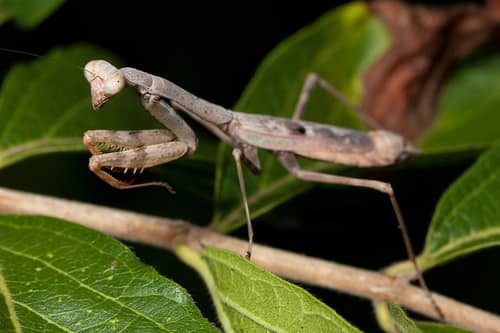
Predator Kaldari / Public domain · cc0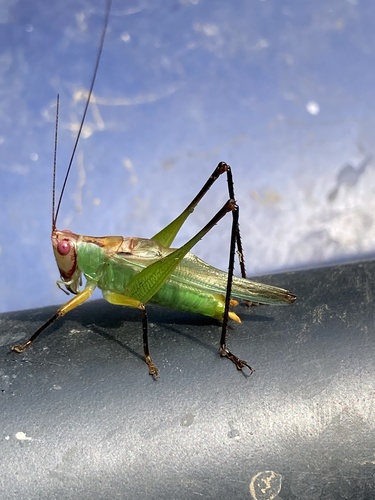
Close Relative no rights reserved · cc0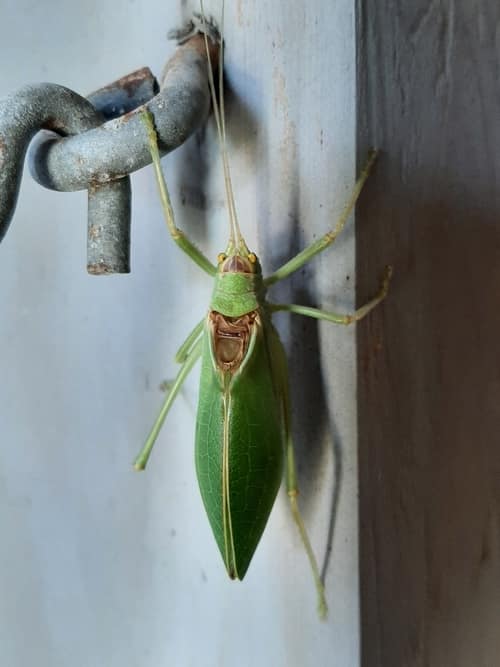
Family Member (c) florawhite, some rights reserved (CC BY) · cc-by
Keep collecting in Fauna
Found in Collections
Ecosystem chain Pro
Mystic Meadows
Common Meadow Katydid is found in this collection. Identify it in Fauna to fill this slot and continue your progress.
Unlock to track progress
Help improve the field guideSomething wrong?
Checking your Fauna account…Report a name, category, or profile issue for review.