
Insect · GBIF taxon 1665858
Tiger Bee Fly
Xenox tigrinusAlso known as Tiger Bee-Fly
Tiger bee flies are striking, stout insects best recognized by their boldly patterned, dark-mottled wings and fuzzy bodies. Females search out the entrance holes of eastern carpenter bees, hovering precisely before flicking their eggs directly into the nest tunnels. The emerging larvae then parasitize and consume the developing carpenter bee larvae, playing a key ecological role in regulating host populations.
ParasitoidPollinatorPatterned Wings
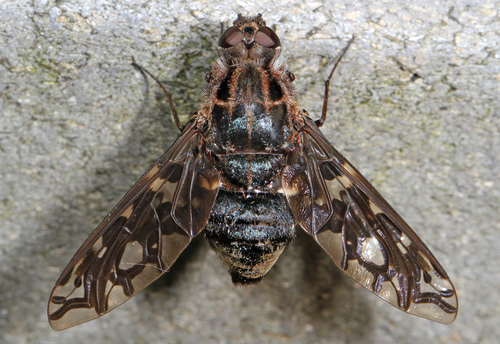
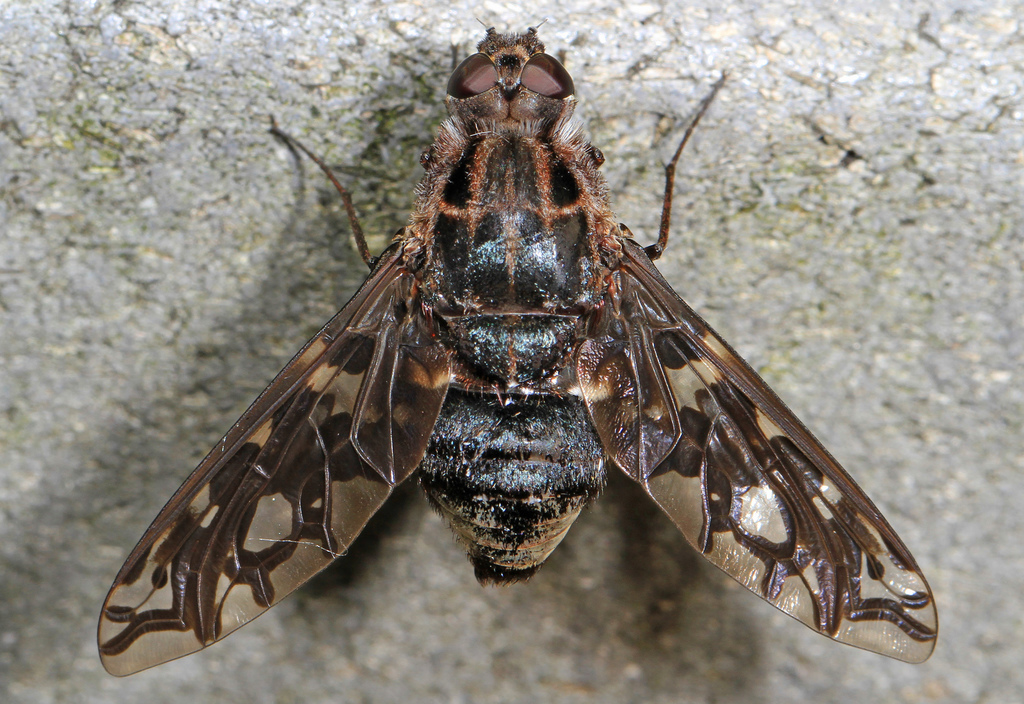 1 / 7
1 / 7—observations
—countries
—peak records
Not EvaluatedConservation statusIUCN Red List categoriesLCNTVUENCREWEXNot Evaluated — not placed on the risk ladderRed List categories, explained →
Diet & prey
- Floral nectar
- Pollen
- Carpenter bee larvae
Predators
- Birds
- Robber flies
- Spiders
ThreatsPesticide use targeting carpenter bees, habitat loss, and loss of flowering plants.
HabitatsWoodlands, forest edges, gardens, and wooden structures where carpenter bees nest.
Life span1–2 months as adults; up to 1 year total including larval stages.
Classification
- OrderDiptera
- FamilyBombyliidae
- GenusXenox
- SpeciesXenox tigrinus
Range data is not available yet.
Interaction riskLow
- Low
- Moderate
- High
- Very high
- Why interaction risk is low
- Safe to observe at a normal distance; despite their large size, they cannot sting or bite.
Responsible observation
- Watch Wooden Structures: Look for adults hovering around wooden eaves, fences, or logs where carpenter bees nest.
- Observe Egg Flicking: Watch females hover near carpenter bee burrows and flick eggs toward the tunnel openings.
- Safe Observation: Enjoy watching these agile fliers up close, as they are completely harmless to humans.
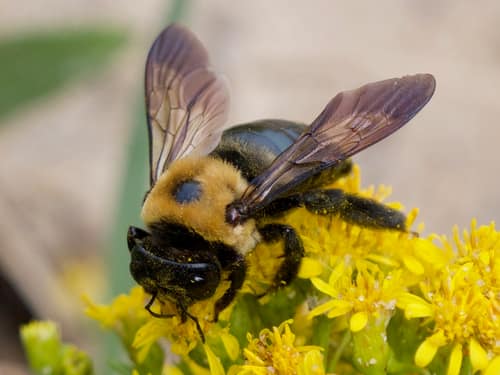
Host Species (c) Christopher Eliot, some rights reserved (CC BY), uploaded by Christopher Eliot · cc-by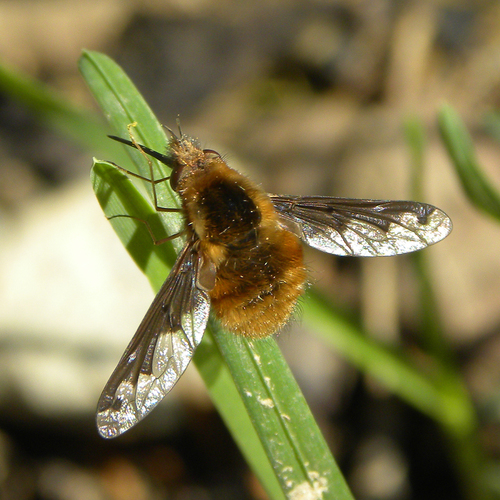
Close Relative (c) M. Whitson, some rights reserved (CC BY), uploaded by M. Whitson · cc-by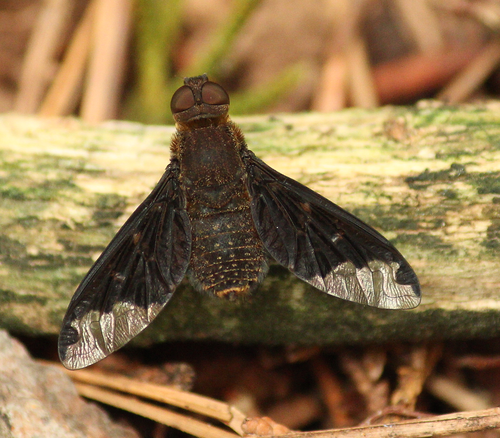
Close Relative (c) mayfly1963, some rights reserved (CC BY), uploaded by mayfly1963 · cc-by Image unavailable
Close Relative
Help improve the field guideSomething wrong?
Checking your Fauna account…Report a name, category, or profile issue for review.