
Insect · GBIF taxon 1660829
Eastern Yellow-backed Laphria
Laphria thoracicaAlso known as Bumblebee Robber Fly, Yellow-backed Robber Fly
Eastern yellow-backed Laphria flies are striking bumblebee mimics that patrol sunny woodland edges across eastern North America. They perch on high leaves or tree trunks to spot passing insects, launching swift aerial ambushes to capture prey mid-flight. After immobilizing victims with digestive saliva, adults drain them before returning to their favorite lookout post.
PredatoryMimicWoodland
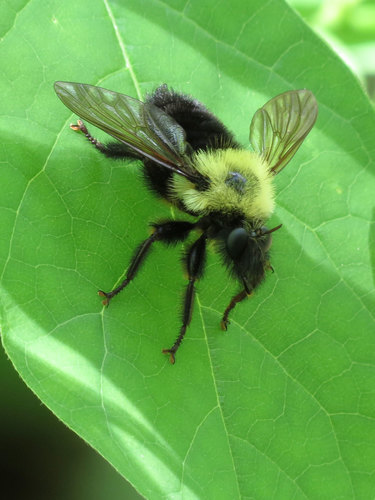
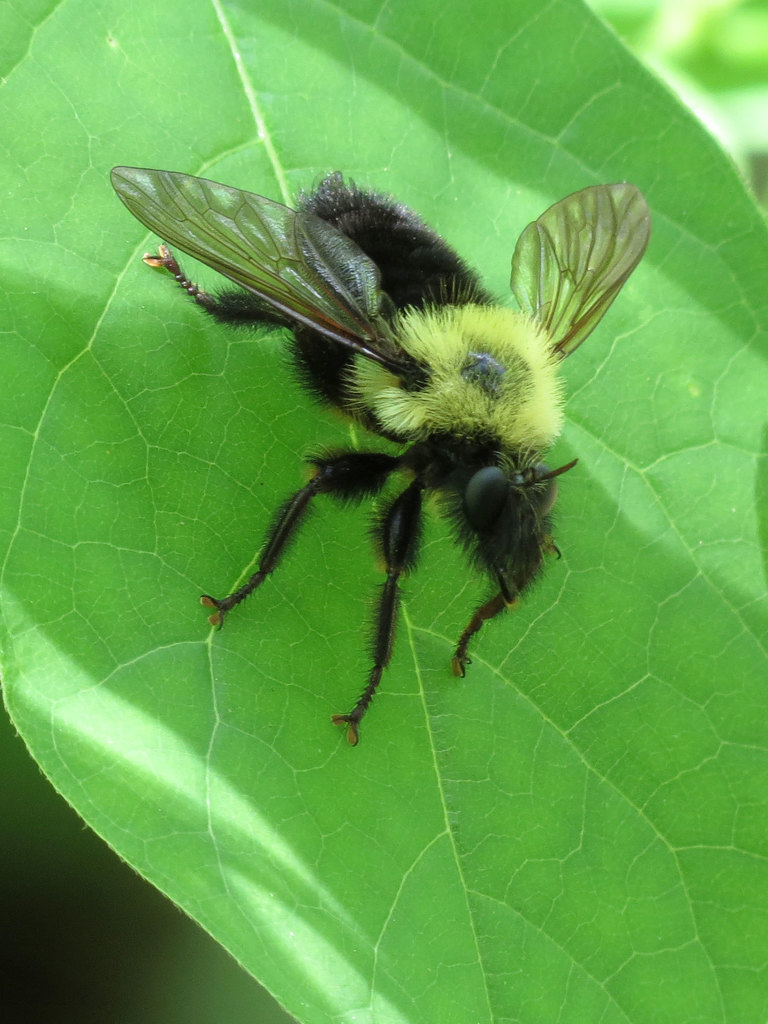
—observations
—countries
—peak records
Not EvaluatedConservation statusIUCN Red List categoriesLCNTVUENCREWEXNot Evaluated — not placed on the risk ladderRed List categories, explained →
Diet & prey
- Bees
- Beetles
- Wasps
Predators
- Birds
- Spiders
- Praying mantises
ThreatsHabitat loss, clear-cutting of old trees, and heavy pesticide use
HabitatsDeciduous forests, woodland clearings, and forest edges
Life span1–2 years (mostly as larvae in decaying wood; adults live 1–2 months)
Size / weightNot available
Classification
- OrderDiptera
- FamilyAsilidae
- GenusLaphria
- SpeciesLaphria thoracica
Range data is not available yet.
Interaction riskLow
- Low
- Moderate
- High
- Very high
- Why interaction risk is low
- Can deliver a sharp, painful jab with its proboscis if pinched or handled; observe without touching.
- Why it is dangerous
- Possesses a sturdy proboscis capable of injecting neurotoxic saliva containing digestive enzymes that cause a painful jab in humans if trapped.
- How to recognize a risky encounter
- Recognized by its thick yellow fur on the upper thorax, black glossy abdomen, single pair of wings, and large compound eyes.
- What to do
- Never try to grab or trap this fly by hand; enjoy watching its rapid aerial hunting maneuvers from a safe distance.
Responsible observation
- Spotting: Look for them perching on sunny tree trunks or broad leaves along forest paths during warm summer afternoons.
- Approach Strategy: Move slowly when taking photos, as sudden motions trigger them to fly off to a higher branch.
- Identification: Differentiate them from real bumblebees by their single pair of wings, short antennae, and prominent facial beard.
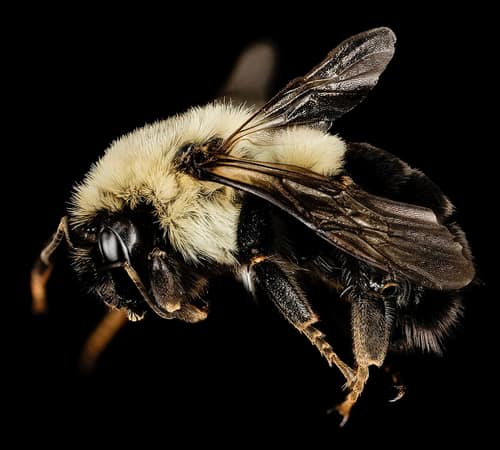
Mimicry Model USGS Bee Inventory and Monitoring Lab from Beltsville, Maryland, USA / Public domain · cc0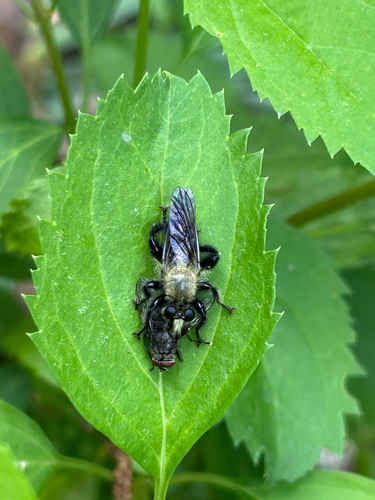
Close Relative no rights reserved · cc0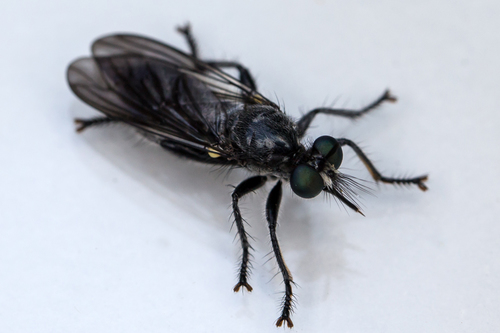
Close Relative (c) Bill Keim, some rights reserved (CC BY) · cc-by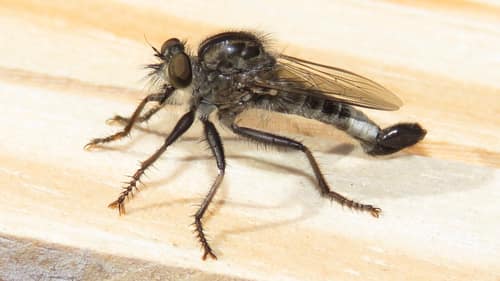
Family Member (c) Dan MacNeal, some rights reserved (CC BY), uploaded by Dan MacNeal · cc-by
Help improve the field guideSomething wrong?
Checking your Fauna account…Report a name, category, or profile issue for review.