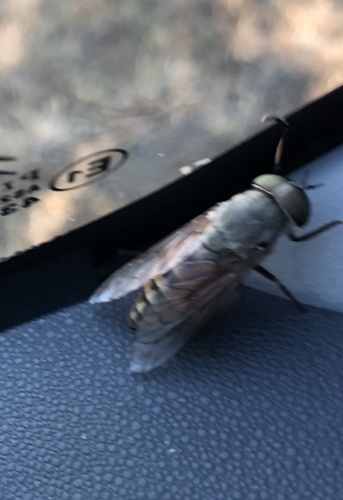
African horseflies are stout, broad-bodied biting flies known for their striking iridescent compound eyes and patterned wings. Adult females possess scissor-like mouthparts engineered to slash the skin of large mammals to pool and drink blood, a protein-rich meal essential for egg production. Males lack biting apparatus entirely, spending their days quietly sipping floral nectar and hovering near sunlit clearings in riverine woodlands.
ThreatsWetland drainage, deforestation, and widespread pesticide spraying for agricultural pests
HabitatsRiverine forests, marshes, papyrus swamps, and humid savannas
Life span1–2 years (mostly as larvae; adults survive 3–6 weeks)
Classification
FamilyTabanidae
SpeciesAncala africana
Range & activity
Range data is not available yet.
Safe observation
Interaction riskModerate
Low
Moderate
High
Very high
Why interaction risk is moderate
Females inflict a painful slashing bite to draw blood; wear thick protective clothing around wetland margins.
Why it is dangerous
Females possess bladed mouthparts that lacerate skin to feed on blood, which can produce painful welts, secondary bacterial infections, or mechanical pathogen transmission.
How to recognize a risky encounter
Recognizable by their bulky silhouette, large iridescent multi-colored eyes, and patterned or smoky wings resting flat over the abdomen.
What to do
Do not attempt to catch or handle by hand; brush flies away briskly if they land and apply insect repellent containing DEET or picaridin.
Responsible observation
Ward off bites: Wear loose, light-colored, tightly woven clothing when walking near swampy edges.
Observe resting adults: Look for basking individuals settled on tree trunks or foliage during hot midday hours.

 Image unavailable