
Insect · GBIF taxon 1415022
Northern Two-striped Walkingstick
Anisomorpha ferrugineaAlso known as Dark Walkingstick, Prairie Alligator
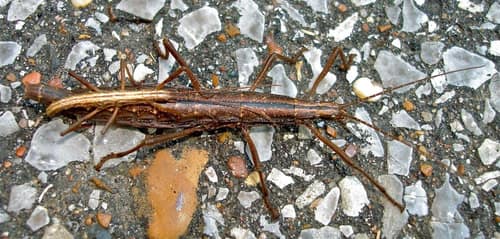
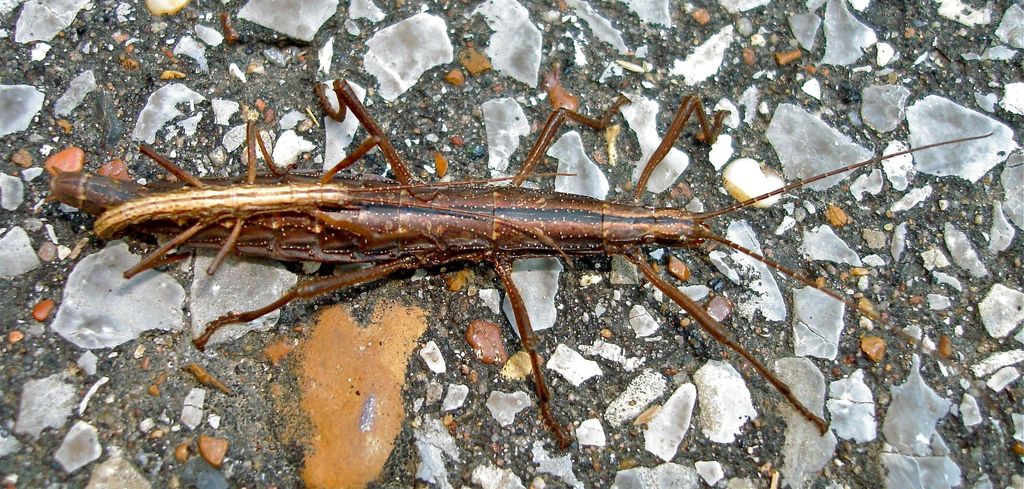
Northern two-striped walkingsticks move slowly through woodlands and prairies, using dark brown and pale tan longitudinal stripes to blend seamlessly into twigs and foliage. Adult males are dramatically smaller than females and spend days riding atop their mates to ensure paternity before egg laying. When threatened, both sexes can shoot a precise chemical spray of terpene dialdehydes directly toward an attacker's eyes, causing intense burning.
CamouflagedDefensive SprayWingless
—observations
—countries
—peak records
Not EvaluatedConservation statusIUCN Red List categoriesLCNTVUENCREWEXNot Evaluated — not placed on the risk ladderRed List categories, explained →
Diet & prey
- Oak Leaves
- Berry Shrub Foliage
- Grassland Leaves
Predators
- Birds
- Lizards
- Small Mammals
ThreatsHabitat fragmentation, pesticide spraying, and extreme weather
HabitatsDeciduous woodlands, pine forests, prairies, and coastal scrub
Life span1–2 years
Classification
- OrderPhasmida
- FamilyPseudophasmatidae
- GenusAnisomorpha
- SpeciesAnisomorpha ferruginea
Range data is not available yet.
Interaction riskLow
- Low
- Moderate
- High
- Very high
- Why interaction risk is low
- Sprays an irritating chemical mist that causes intense burning if contact is made with eyes; observe from a distance.
- Why it is dangerous
- Sprays a defensive mist containing terpene dialdehydes that causes severe pain, inflammation, and temporary sight impairment upon eye contact.
- How to recognize a risky encounter
- Look for a slender, wingless body marked by prominent light and dark longitudinal stripes.
- What to do
- Maintain a safe distance of at least one meter and avoid placing your face near the insect.
Responsible observation
- Safe Distance: Maintain at least one meter of space to stay safely out of range of defensive sprays.
- Mating Observation: Look for tiny males riding continuously on the upper abdomen of larger females.
- Night Spotting: Use a flashlight after dusk when these nocturnal insects actively feed on foliage.
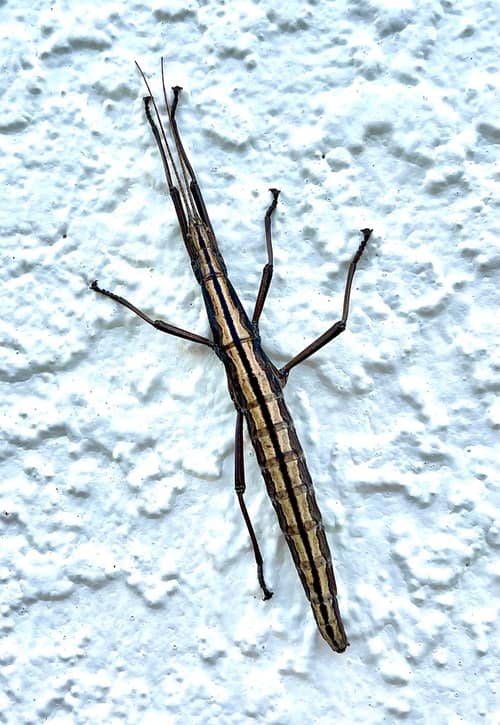
Close Relative (c) James Rogers, some rights reserved (CC BY) · cc-by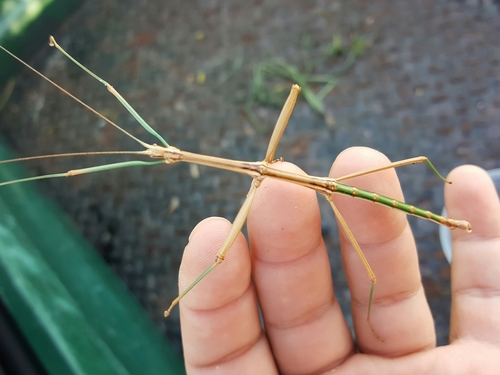
Co-Occurring Relative (c) Justin Quintanilla, some rights reserved (CC BY), uploaded by Justin Quintanilla · cc-by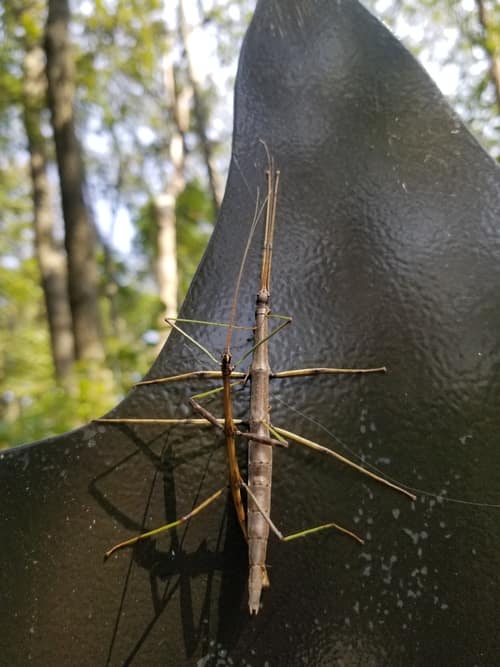
Regional Relative (c) Jason E. Farabaugh, some rights reserved (CC BY) · cc-by
Help improve the field guideSomething wrong?
Checking your Fauna account…Report a name, category, or profile issue for review.