Also known as Devil Rider, Musk Mare, Two-striped Walkingstick, Florida Stick Insect
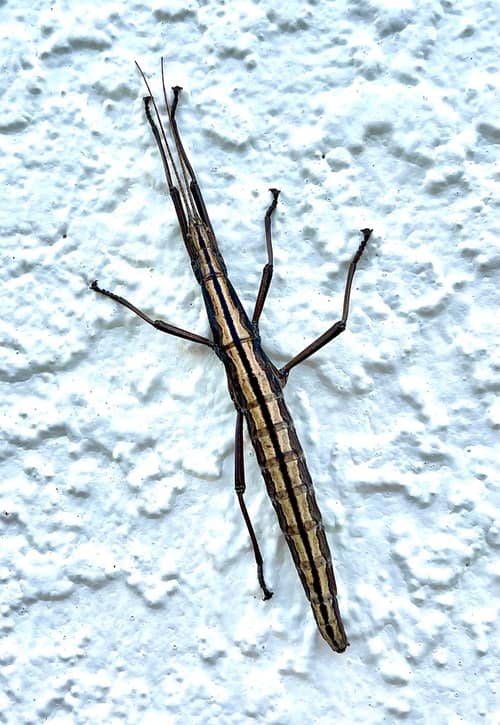
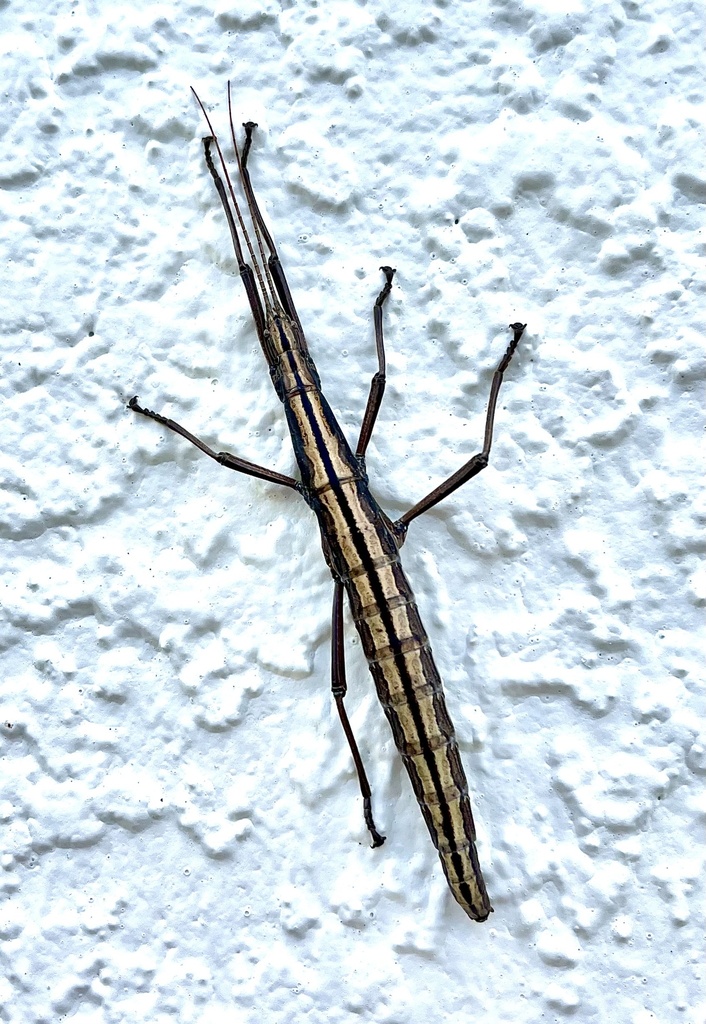
Southern two-striped walkingsticks are heavy-bodied, flightless insects recognized by the dark longitudinal stripes stretching down their dorsum. They are frequently found in breeding pairs, with the much smaller male riding atop the female's back for extended periods. When threatened, adults can accurately aim a chemical spray from glands behind their head to deter predators.
Not EvaluatedConservation statusIUCN Red List categoriesLCNTVUENCREWEXNot Evaluated — not placed on the risk ladderRed List categories, explained →
Key facts
Diet & prey
Oak leaves
Rosemary leaves
Blueberry foliage
Predators
Lizards
Birds
Spiders
ThreatsLocal pesticide application and habitat loss
HabitatsSubtropical oak scrub, pine flatwoods, and coastal forests
Life span1–2 years
Size / weightNot available
Classification
OrderPhasmida
FamilyPseudophasmatidae
GenusAnisomorpha
SpeciesAnisomorpha buprestoides
Range & activity
Range data is not available yet.
Safe observation
Interaction riskLow
Low
Moderate
High
Very high
Why interaction risk is low
Sprays a strong liquid defense that causes severe eye irritation; keep face at least a meter away.
Why it is dangerous
Produces a high-pressure aerosol spray containing anisomorphal, causing extreme burning pain and temporary blindness if contact occurs with human eyes.
How to recognize a risky encounter
Look for a thick, stout stick insect with dark parallel stripes along its body, often seen as a riding pair.
What to do
Do not lean closely over these insects, and never attempt to pick them up or bring them near your face.
Responsible observation
Maintain distance: Keep your face at least one meter away to avoid defensive spray.
Look low on leaves: Search scrub oaks and low shrubbery around dusk when they feed actively.
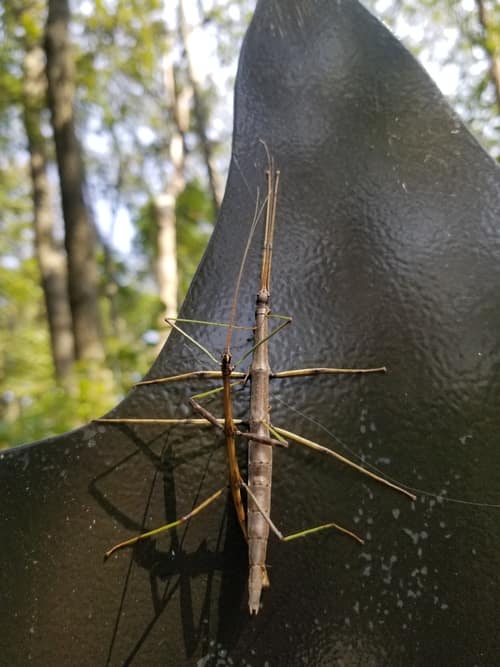
Watch for pairs: Look for the small male hitchhiking on the back of the larger female.