
Insect · GBIF taxon 1409474
Northern Walkingstick
Diapheromera femorataAlso known as Common Walkingstick, Stick Insect, Stick Bug
Northern walkingsticks are master imitators that spend their lives seamlessly blending into the foliage of eastern North American deciduous forests. Emerging as green nymphs in spring, adults shift to rich brown shades by autumn to match changing oak and hazelnut leaves. Females casually drop eggs from tree canopies to the forest floor, where they overwinter beneath leaf litter before hatching the following spring.
CamouflagedHerbivorousNocturnal
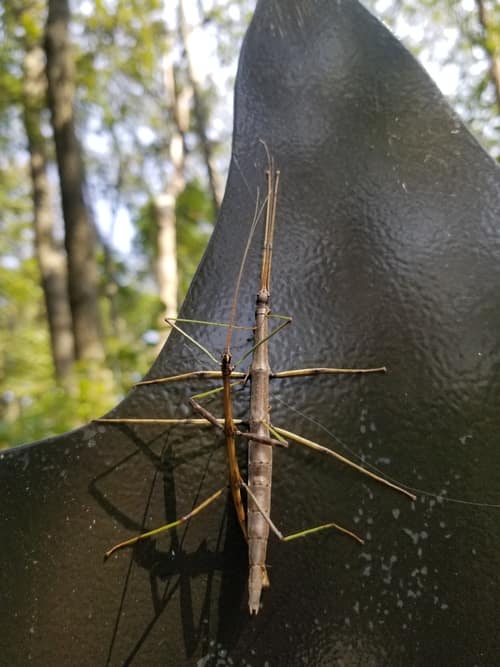
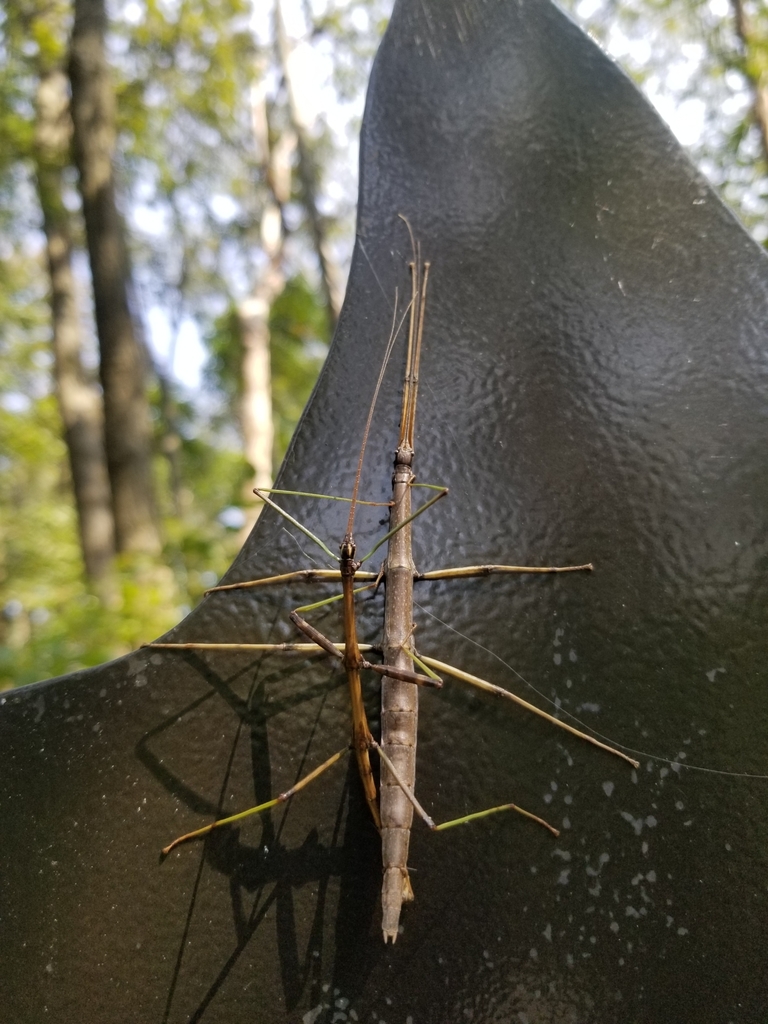
—observations
—countries
—peak records
Not EvaluatedConservation statusIUCN Red List categoriesLCNTVUENCREWEXNot Evaluated — not placed on the risk ladderRed List categories, explained →
Diet & prey
- Oak leaves
- Hazelnut leaves
- Maple leaves
Predators
- Songbirds
- Rodents
- Spiders
ThreatsPesticide spraying, severe spring freezes, and woodland habitat fragmentation
HabitatsDeciduous forests, rich woodlands, and suburban forest edges
Life span1 year
Size / weightNot available
Classification
- OrderPhasmida
- FamilyDiapheromeridae
- GenusDiapheromera
- SpeciesDiapheromera femorata
Range data is not available yet.
Interaction riskLow
- Low
- Moderate
- High
- Very high
- Why interaction risk is low
- Safe to observe at a normal distance.
Responsible observation
- Spotting: Scan oak and hazelnut branches at night using a soft flashlight to catch their movement.
- Handling: Gently place a flat palm in their path rather than pulling, as their delicate legs break easily.
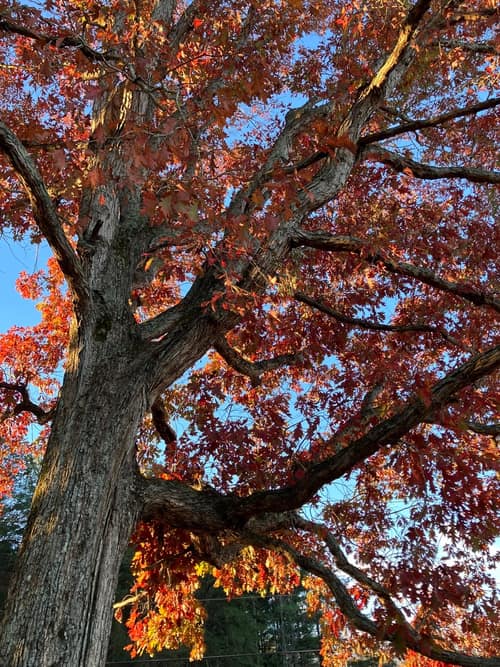
Host Plant (c) Alicia Ballard, some rights reserved (CC BY) · cc-by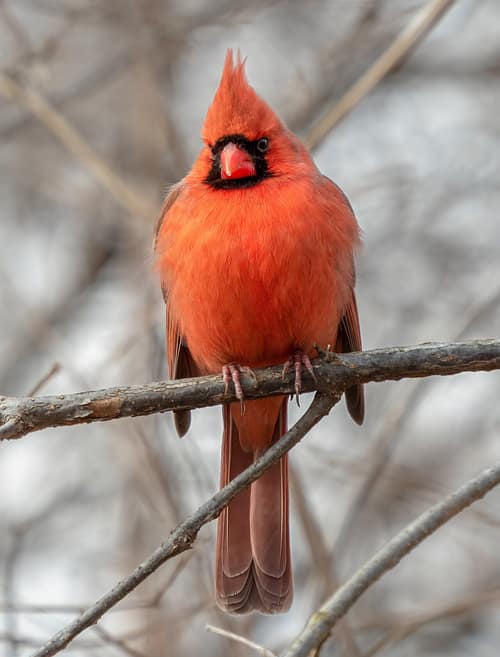
Predator Rhododendrites / CC BY-SA 4.0 · cc-by-sa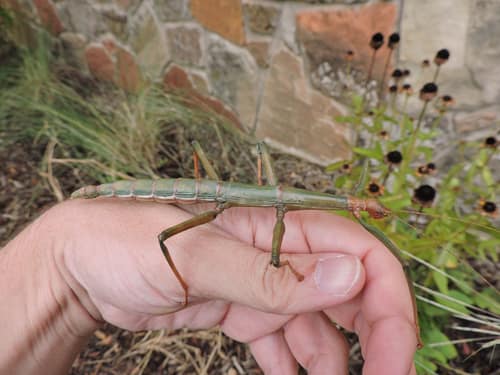
Close Relative (c) Sam Kieschnick, some rights reserved (CC BY), uploaded by Sam Kieschnick · cc-by
Help improve the field guideSomething wrong?
Checking your Fauna account…Report a name, category, or profile issue for review.