
Insect · GBIF taxon 1347304
Common Blue Mud-dauber Wasp
Chalybion californicumAlso known as Nearctic Blue Mud-Dauber Wasp, Blue Mud Wasp
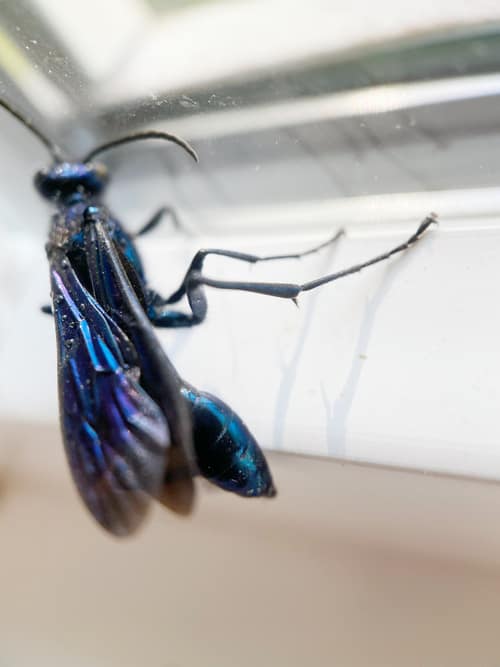
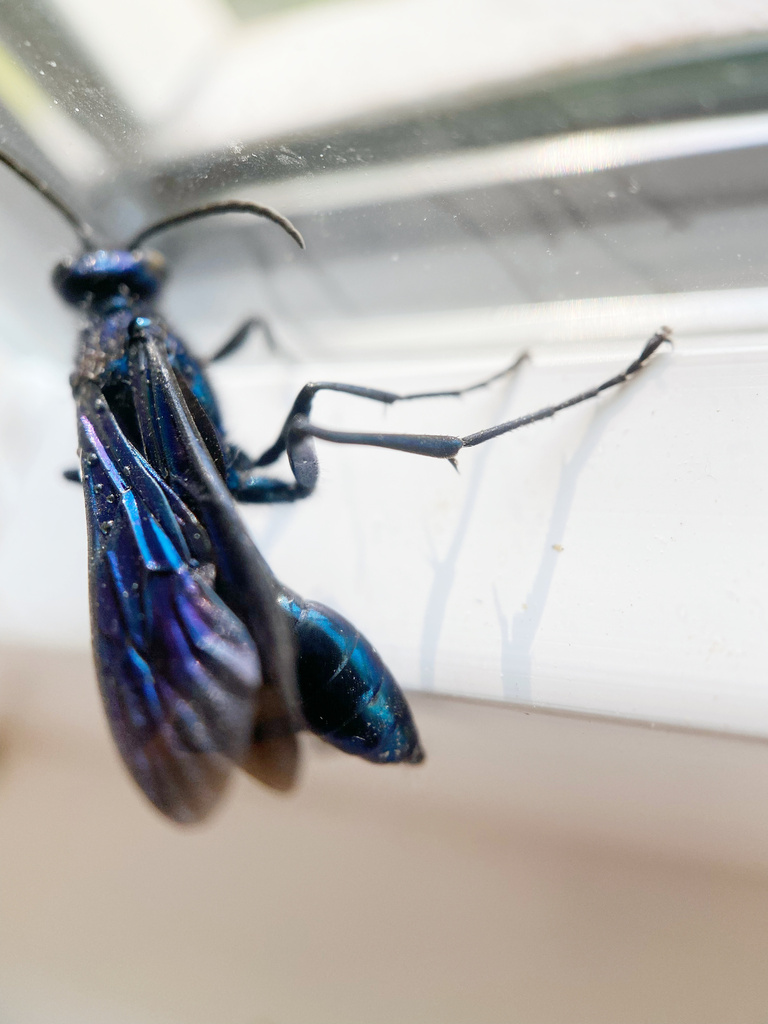
Common blue mud-dauber wasps shine with a brilliant metallic navy sheen as they search out sheltered eaves, barns, and porches. Unlike typical mud daubers that build nests directly from wet soil, females usually usurp or refurbish existing mud nests, filling each cell with paralyzed spiders to feed their developing larvae. Adults feed harmlessly on flower nectar and honeydew, acting as beneficial garden neighbors that naturally control black widow populations.
Metallic BlueSpider HunterSolitary Wasp
—observations
—countries
—peak records
Not EvaluatedConservation statusIUCN Red List categoriesLCNTVUENCREWEXNot Evaluated — not placed on the risk ladderRed List categories, explained →
Diet & prey
- Black widow spiders
- Comb-footed spiders
- Orb-weaver spiders
Predators
- Birds
- Robber flies
- Mantises
ThreatsInsecticide spraying, nest destruction, and extreme weather
HabitatsGardens, meadows, open woodlands, and human structures
Life span1 year
Classification
- OrderHymenoptera
- FamilySphecidae
- GenusChalybion
- SpeciesChalybion californicum
Range data is not available yet.
Interaction riskVery high
- Low
- Moderate
- High
- Very high
- Why interaction risk is very high
- Females can sting if handled or crushed; observe calmly from a small distance.
Responsible observation
- Observe Nests: Look for iridescent blue bodies around porch eaves, sheds, and old mud nests during warm summer months.
- Provide Space: Females are non-aggressive and rarely sting unless directly crushed or handled.
- Support Habitat: Leave abandoned mud nests intact, as females reuse them to lay eggs and provision larvae.
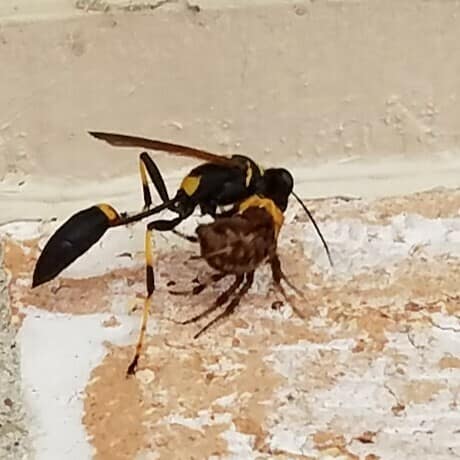
Nest Provider (c) dhasdf, some rights reserved (CC BY) · cc-by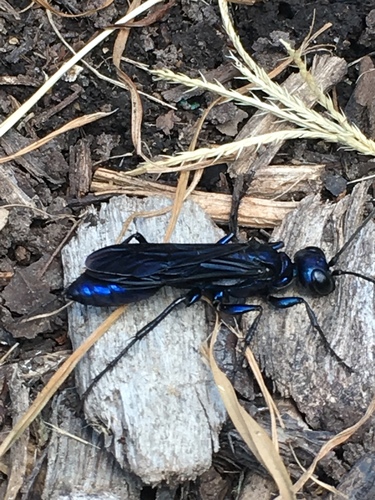
Look-alike (c) bg1159, some rights reserved (CC BY), uploaded by bg1159 · cc-by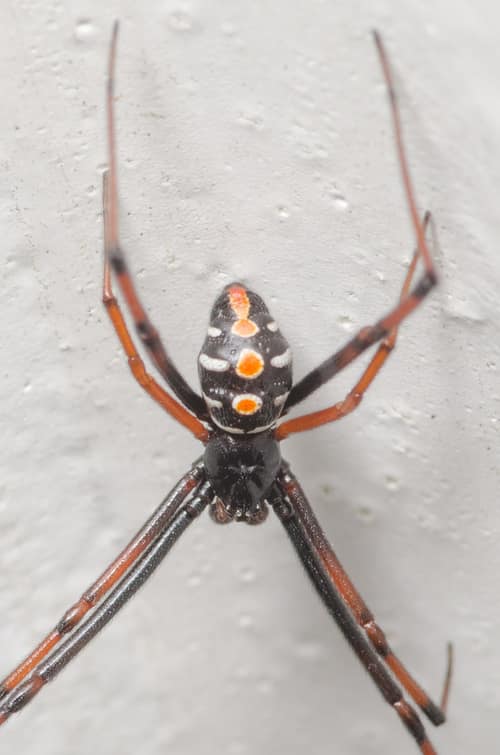
Prey (c) Justin Williams, some rights reserved (CC BY), uploaded by Justin Williams · cc-by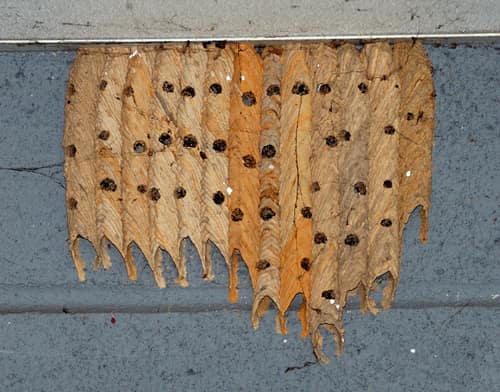
Close Relative (c) Michael K. Oliver, Ph.D., some rights reserved (CC BY), uploaded by Michael K. Oliver, Ph.D. · cc-by
Help improve the field guideSomething wrong?
Checking your Fauna account…Report a name, category, or profile issue for review.