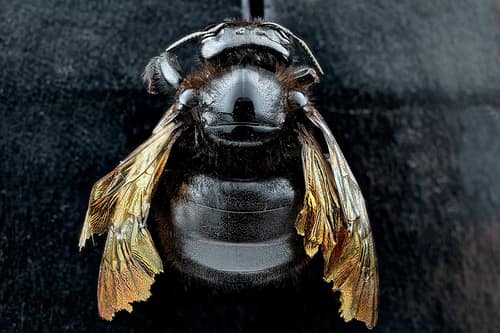
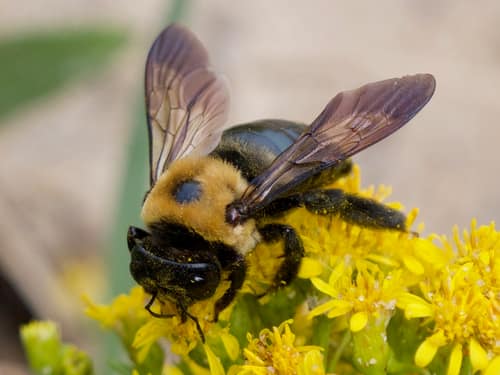
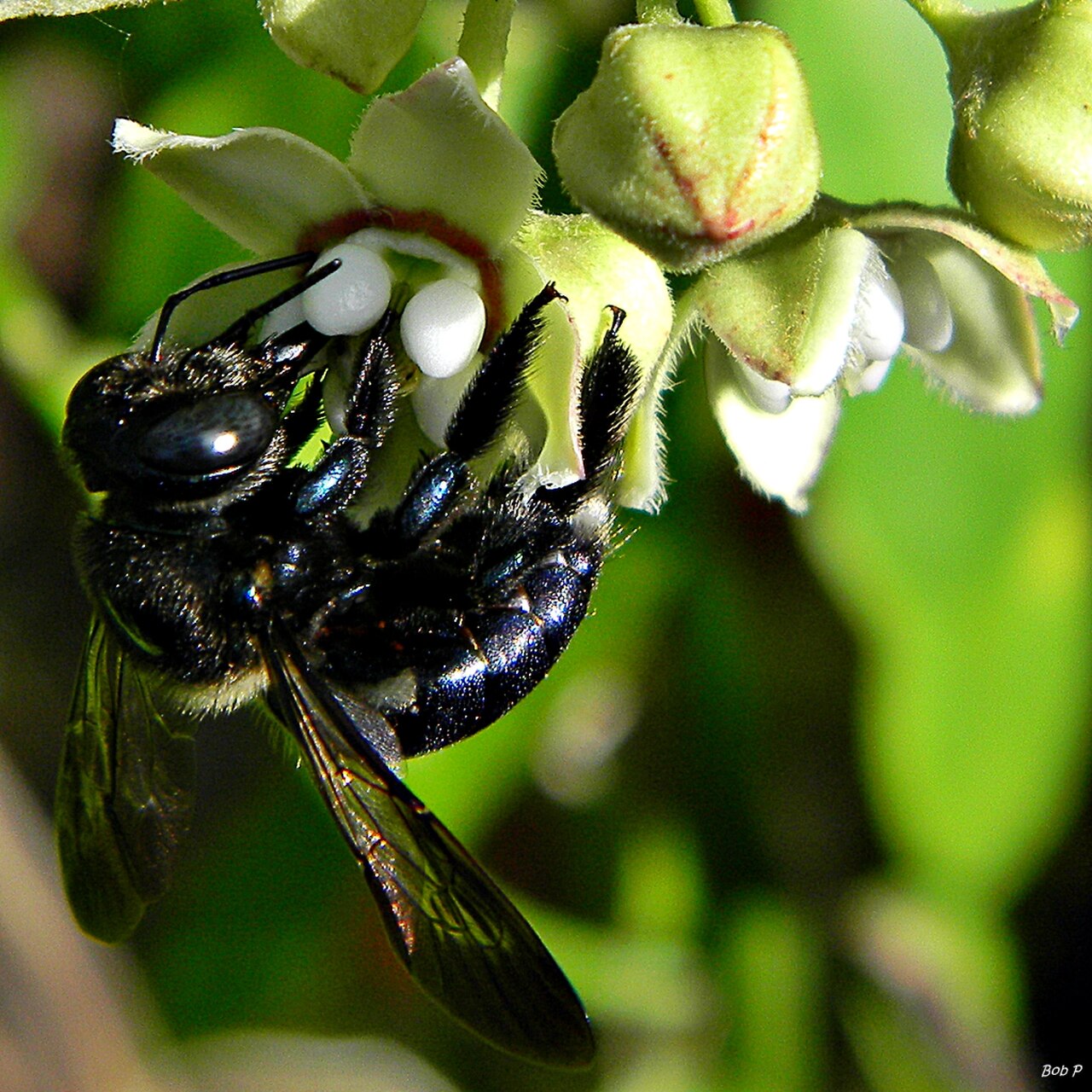
Southern carpenter bees flash brilliant metallic blue-green and purplish highlights across their dark, robust bodies as they buzz energetically between flowering coastal shrubs. Females bore neat nesting tunnels into dead hardwood branches, woody vines, and decaying stalks, where they seal individual brood cells provisioned with pollen loaves. Territorial males often hover motionless in midair during spring, darting out aggressively to intercept rivals, passing insects, and potential mates.
Not EvaluatedConservation statusIUCN Red List categoriesLCNTVUENCREWEXNot Evaluated — not placed on the risk ladderRed List categories, explained →
Key facts
Diet & prey
Flower Nectar
Floral Pollen
Predators
Woodpeckers
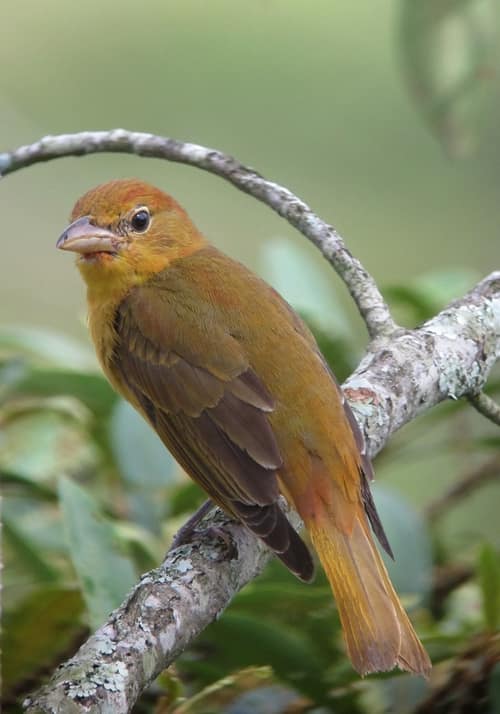
Summer Tanagers
Robber Flies
ThreatsPesticide use, clearing of dead wood, and habitat loss
HabitatsCoastal scrub, maritime forests, pine flatwoods, and gardens
Life spanAround 1 year
Size / weightNot available
Classification
FamilyApidae
SpeciesXylocopa micans
Range & activity
Range data is not available yet.
Safe observation
Interaction riskVery high
Low
Moderate
High
Very high
Why interaction risk is very high
Females can sting if handled or crushed, posing severe risks for individuals allergic to bee venom.
Why it is dangerous
Female bees can deliver an apitoxin sting that causes localized pain and swelling, which may trigger life-threatening anaphylaxis in allergic individuals.
How to recognize a risky encounter
Look for a chunky, bumblebee-sized silhouette with dark wings, a hairless shiny black abdomen, and iridescent blue-green sheen.
What to do
Maintain a calm demeanor and avoid swatting at foraging bees; allow them to move past freely and never grasp them in hands.
Responsible observation
Flower Watching: Observe foraging bees on large blossoms, where they actively gather nectar without paying attention to quiet onlookers.
Deciphering Flights: Ignore hovering bees that charge close to your head, as these are harmless stingless males defending territories.
Habitat Protection: Leave dead tree limbs and woody garden stalks standing to provide natural nesting tunnels away from homes.


 1 / 7
1 / 7 Image unavailable