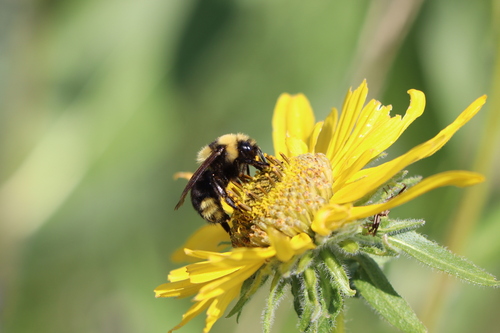
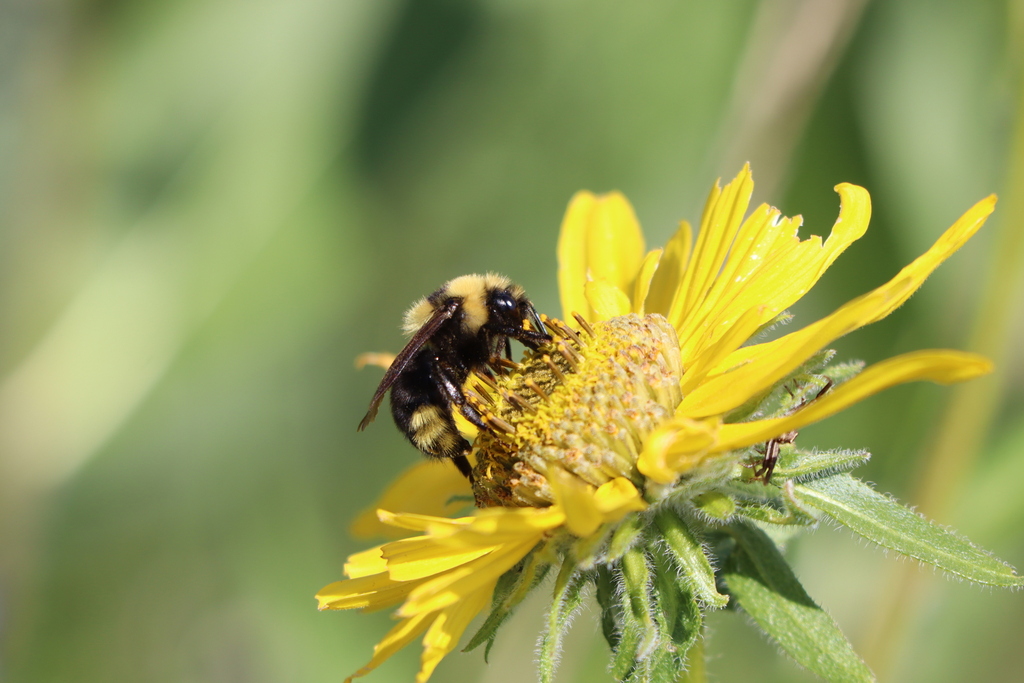
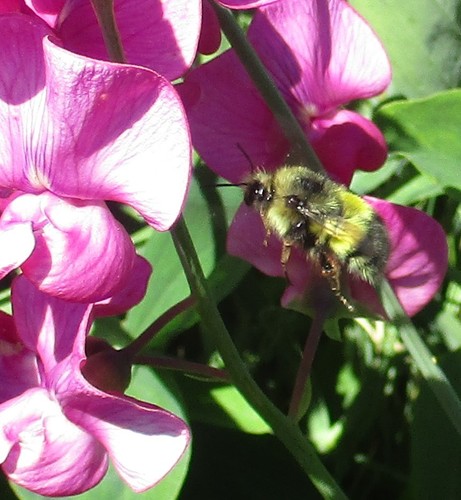
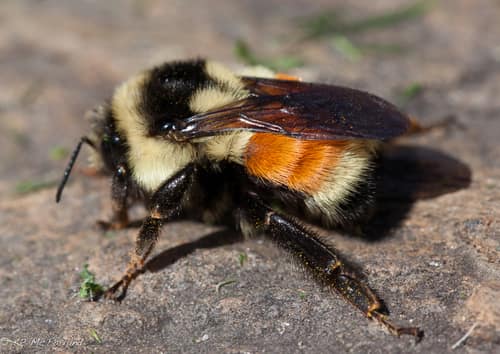
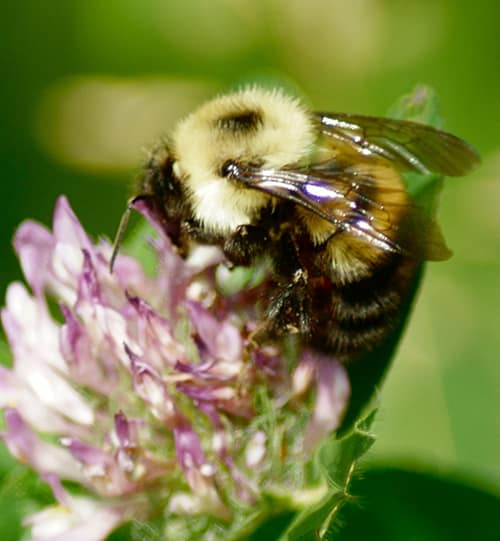
Indiscriminate cuckoo bumble bees are obligate nest parasites that produce no worker caste of their own. Mated females emerge late in spring, infiltrate the colonies of other bumble bee species, and assassinate or subdue the resident queen to enslave her workforce. Using their heavily armored cuticles and powerful stings to survive hostile takeovers, these usurpers compel host workers to rear their offspring until a new generation of males and fertile females departs in late summer.
ThreatsDecline of host bee populations, habitat loss, pesticide use, and climate change
HabitatsBoreal forests, montane meadows, subalpine scrub, open woodlands, and prairies
Life spanMated females live up to 1 year; males live 1 to 2 months
Classification
FamilyApidae
SpeciesBombus insularis
Range & activity
Range data is not available yet.
Safe observation
Interaction riskLow
Low
Moderate
High
Very high
Why interaction risk is low
Females possess a functional sting; can trigger allergic reactions in sensitized individuals if handled.
Why it is dangerous
Females possess an unbarbed stinger that can deliver mellitin and apamin venoms repeatedly, causing local pain, swelling, or systemic anaphylaxis in sensitized individuals.
How to recognize a risky encounter
Look for a robust bumble bee lacking pollen baskets on the outer hind tibiae, displaying a hairless, shiny patch instead.
What to do
Do not attempt to catch or squeeze the bee in bare hands; allow it to forage unmolested on blossoms.
Responsible observation
Floral Viewing: Look for foraging adults on composite wildflowers like goldenrods and asters during mid to late summer.
Gentle Observation: Maintain a respectful distance while they forage, as foraging bumble bees are placid unless physically disturbed.
Host Identification: Check nearby bumble bee nests or worker activity to determine which local species are serving as hosts.