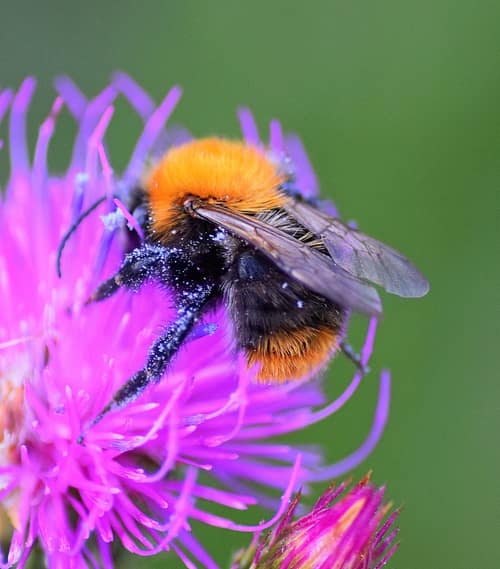
Also known as Stone Bumblebee, Large Red-tailed Bumblebee
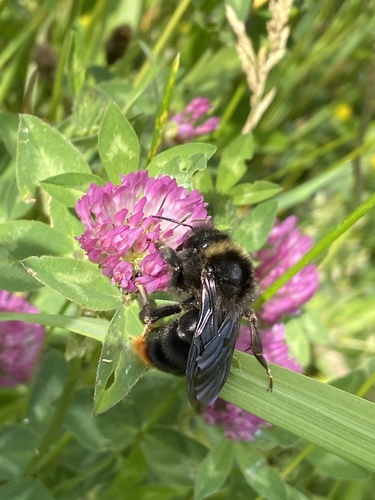
Large, velvety queens emerge from winter hibernation in early spring to establish subterranean colonies beneath rock piles, dry-stone walls, or abandoned rodent burrows. Workers energetically harvest nectar and pollen from legumes and composites, performing essential buzz pollination across wild meadows and farmland. A single colony flourishes with several hundred individuals before releasing new queens and males in late summer.
ThreatsAgricultural intensification, floral loss, and pesticide exposure
HabitatsMeadows, grasslands, hedgerows, and urban gardens
Life spanWorkers 2–4 weeks; queens up to 1 year
Classification
FamilyApidae
SpeciesBombus lapidarius
Range & activity
Range data is not available yet.
Safe observation
Interaction riskVery high
Low
Moderate
High
Very high
Why interaction risk is very high
Females possess a defensive sting; observe peacefully without handling or disturbing nests.
Why it is dangerous
Females inject apitoxin venom through a smooth stinger that can sting multiple times, causing sharp pain, localized swelling, and potential anaphylaxis in sensitized individuals.
How to recognize a risky encounter
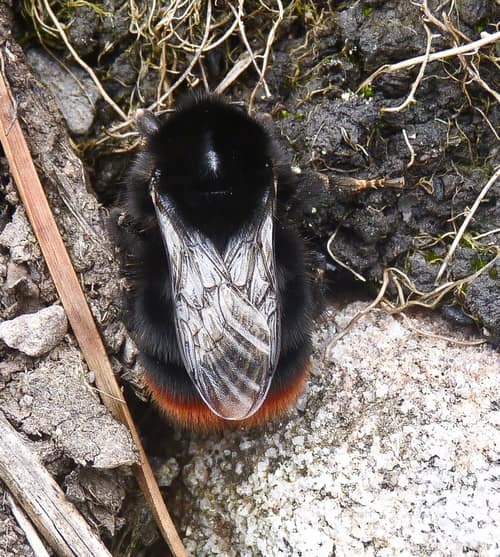
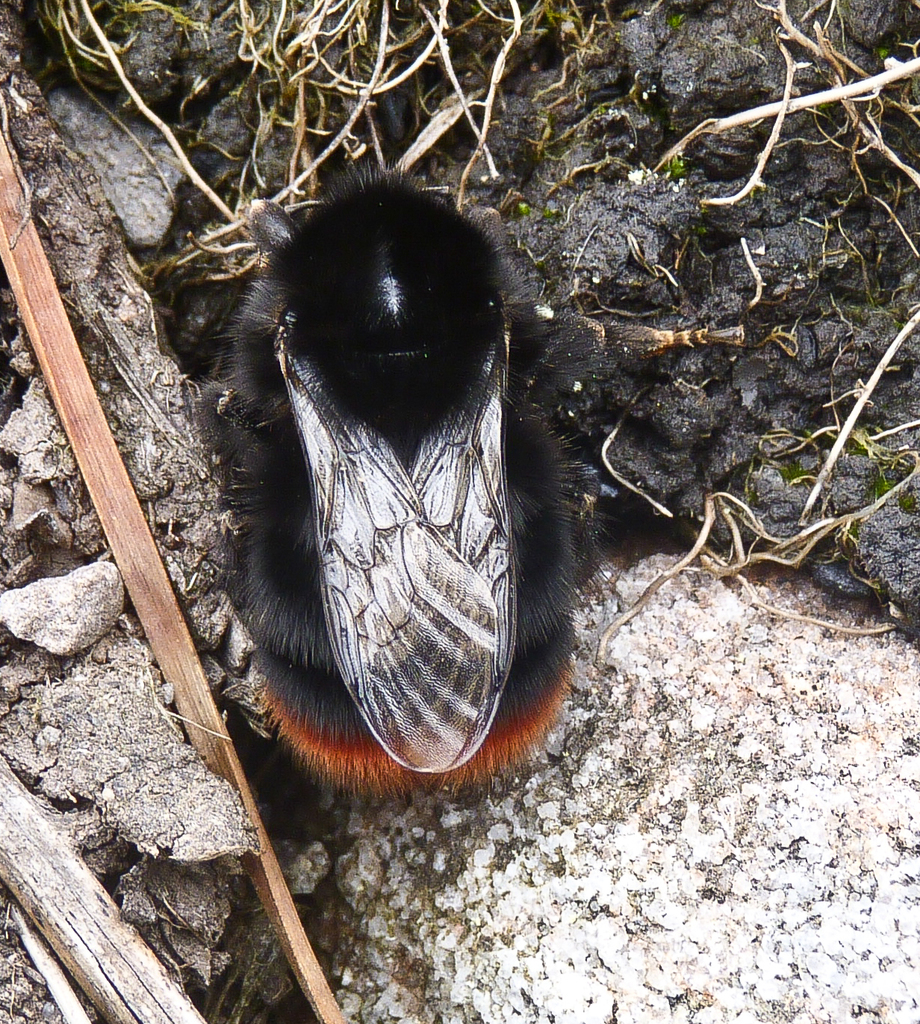
Look for an all-black body ending in a distinctive, fiery orange-red tail, with males showing a prominent yellow facial tuft.
What to do
Maintain a calm distance while watching flower visits, and never swat at flying bees or disturb subterranean nest burrows.
Responsible observation
Garden Planting: Grow deep-throated legumes like clovers and vetches to provide vital foraging corridors.
Nest Protection: Leave undisturbed stone piles or rockeries where fertile queens can safely found nests.
Quiet Observation: Watch foraging adults closely on sunny afternoons without casting sudden overhead shadows.